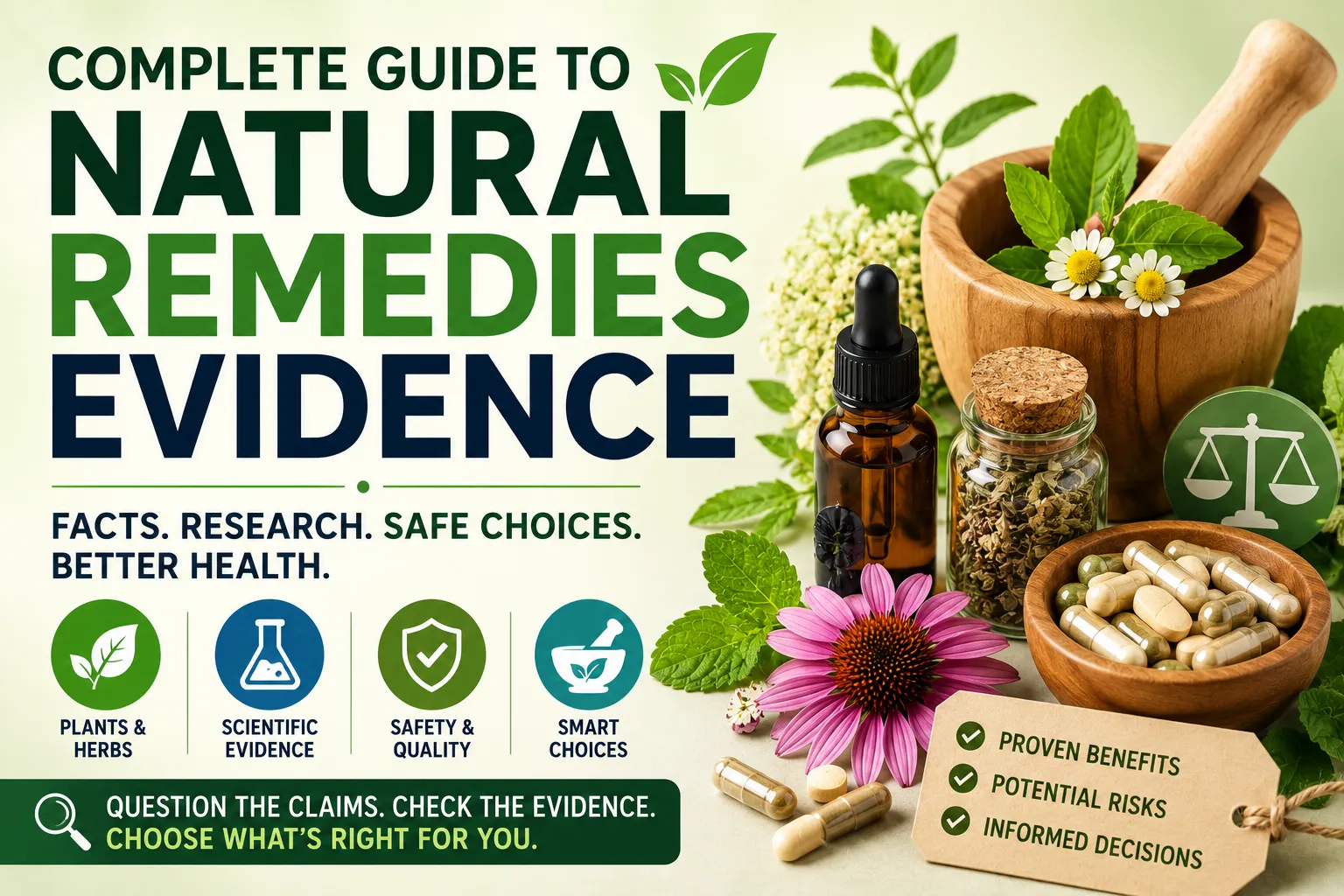

Complete Guide to Natural Remedies Evidence
Natural remedies have been used for centuries across cultures, from herbal teas and plant extracts to traditional healing practices, meditation and other complementary approaches.
Today, the market is enormous. Shelves and online stores are filled with products promising better sleep, easier digestion, improved immunity, lower stress, weight loss, pain relief and protection from disease. Some remedies have genuine evidence behind specific uses. Others have limited or conflicting research. Some have been studied extensively and found to offer little or no meaningful benefit.
That makes one question more important than whether a remedy is “natural”:
What does the evidence actually show?
The answer is rarely as simple as a social-media post, product label or enthusiastic testimonial suggests.
This complete guide explains how to evaluate evidence for natural remedies, what scientific research can and cannot tell us, why “natural” does not automatically mean safe, how herbal supplements can interact with medicines, and how to make more informed decisions about complementary health approaches.
For a closer look at the broader field of herbs and plant-based approaches, see Herbal Medicine Explained. If you’re specifically interested in preparing plant-based beverages, Complete Guide to Herbal Teas and Infusions provides a more focused guide.
Important: This article provides general health information and is not a substitute for medical advice. Natural products can have side effects and interact with prescription and over-the-counter medicines. If you are pregnant, breastfeeding, giving a product to a child, preparing for surgery, managing a medical condition or taking medication, consult an appropriate healthcare professional before using a new supplement or remedy.
What Are Natural Remedies?
“Natural remedy” is a broad term rather than a precise medical category.
It can refer to products or practices derived from nature, including:
- Herbs
- Plant extracts
- Herbal teas
- Essential oils
- Vitamins and minerals
- Foods used for therapeutic purposes
- Traditional medicines
- Acupuncture
- Meditation
- Yoga
- Massage
- Other complementary practices
Some natural remedies are used as foods or beverages, while others contain concentrated biologically active compounds.
That distinction matters.
A small amount of a plant used as a culinary ingredient isn’t necessarily equivalent to a concentrated extract taken in capsule form.
The dose, preparation, route of administration and individual health circumstances can all affect both effectiveness and safety.
For example, essential oils are highly concentrated plant products and deserve separate consideration. The Essential Oils Guide explains why their concentration, intended use and safety considerations differ from simply using the original plant.
Natural Does Not Automatically Mean Safe
One of the biggest misconceptions about natural remedies is that they are inherently safer than conventional medicines.
They aren’t.
Plants contain biologically active chemicals. Some can have useful effects, while others can cause side effects or interact with medications.
The National Center for Complementary and Integrative Health (NCCIH) specifically warns that “natural” does not necessarily mean safe. It notes that some natural products can cause serious adverse effects, while the safety of many supplements remains incompletely understood.
Examples illustrate the point.
Kava, for instance, has been associated with severe liver injury, while products containing ephedra have been associated with serious cardiovascular problems.
The lesson isn’t that all natural remedies are dangerous.
It is that each remedy needs to be evaluated on its own evidence and safety profile.
For a dedicated discussion of risks, interactions and precautions, see the Natural Remedies Safety Guide.
What Does “Evidence-Based” Mean?
Evidence-based health care means making decisions using the best available scientific evidence while also considering:
- Individual circumstances
- Patient preferences
- Potential benefits
- Potential risks
- Practical considerations
Evidence isn’t simply a yes-or-no concept.
A remedy may have:
- Strong evidence of benefit
- Moderate evidence
- Preliminary evidence
- Conflicting evidence
- Little evidence
- Evidence suggesting no meaningful benefit
- Evidence suggesting potential harm
Understanding where a remedy falls on this spectrum is much more useful than simply asking whether studies exist.
The Evidence Hierarchy
Not all studies provide the same level of evidence.
A typical evidence hierarchy looks something like this:
- Systematic reviews and meta-analyses
- Well-designed randomized controlled trials
- Controlled clinical studies
- Observational studies
- Case-control or cohort research
- Case reports
- Laboratory studies
- Animal studies
- Traditional use
- Personal testimonials
This doesn’t mean lower-level evidence is worthless.
It means it generally cannot establish effectiveness as reliably as well-designed human clinical research.
Why Randomized Controlled Trials Matter
A randomized controlled trial, or RCT, is one of the most useful designs for determining whether a treatment actually causes an outcome.
Participants may be randomly assigned to receive:
- The treatment
- A placebo
- Another treatment
- Standard care
Randomization helps reduce the influence of differences between groups.
Well-designed clinical trials can provide much stronger evidence about whether a treatment works than testimonials or uncontrolled observations.
NCCIH notes that well-planned clinical trials provide some of the clearest information about whether treatments are effective and safe, although no single study should normally be treated as the final word.
Why One Positive Study Isn’t Enough
Imagine a small study finds that an herbal supplement improves sleep.
That sounds promising.
But several questions remain:
- How many people participated?
- Was there a placebo group?
- Was the study randomized?
- How long did it last?
- Were participants blinded?
- How large was the improvement?
- Were side effects measured?
- Has another research team reproduced the result?
A single positive study can generate a hypothesis.
It doesn’t necessarily establish a treatment as effective.
NCCIH emphasizes that the strongest evidence generally comes from multiple studies conducted by different investigators rather than one isolated experiment.
What Is a Systematic Review?
A systematic review collects and evaluates research addressing a specific question.
Researchers establish criteria for:
- Which studies to include
- How to assess study quality
- How to compare findings
A systematic review can provide a broader picture than an individual study.
However, its conclusions are only as reliable as the research it includes.
If most available studies are small or poorly designed, a systematic review cannot magically turn weak evidence into strong evidence.
What Is a Meta-Analysis?
A meta-analysis uses statistical methods to combine results from multiple studies.
This can increase the precision of an estimated treatment effect.
But again, more data doesn’t automatically mean better evidence.
If the underlying studies are highly biased or inconsistent, the resulting estimate may still be uncertain.
That’s why researchers evaluate both:
How much evidence exists?
and
How good is that evidence?
Traditional Use Is Not the Same as Clinical Evidence
Many natural remedies have long histories of traditional use.
That history can be valuable.
It may help researchers identify substances worth studying and provide clues about possible applications.
But traditional use doesn’t prove that a remedy works for a particular medical condition.
A remedy can have been used for generations without being demonstrated to outperform placebo in controlled clinical trials.
The distinction is important:
Traditional use = historical experience
Clinical evidence = results from scientific investigation
The two can overlap, but they are not interchangeable.
The distinction is particularly useful when examining Traditional Remedies Versus Modern Research, where historical practices can be considered alongside what modern research actually demonstrates.
Personal Testimonials Are Weak Evidence
“I took this herb and felt better” may be a genuine experience.
But it doesn’t prove that the herb caused the improvement.
Symptoms can change naturally.
Other treatments may be responsible.
Placebo effects can influence how people perceive symptoms.
People can also experience regression to the mean—symptoms may improve after reaching an unusually severe point even without effective treatment.
Testimonials can be useful for generating questions.
They are not strong evidence of effectiveness.
Placebo Effects Matter
A placebo is an inactive treatment designed to resemble the treatment being studied.
People can report improvements after receiving placebos, particularly for subjective symptoms such as:
- Pain
- Nausea
- Fatigue
- Anxiety
- Some sleep problems
This doesn’t mean the symptoms aren’t real.
It means that perceived improvement can result from several factors beyond the specific biological action of a treatment.
That is one reason controlled trials are so important.
Statistical Significance Isn’t the Same as Meaningful Benefit
A study may report a statistically significant result.
That doesn’t necessarily mean the treatment produces a benefit large enough to matter to patients.
For example, suppose a treatment improves a measurement by a tiny amount.
The difference might be statistically detectable but practically unimportant.
When evaluating evidence, ask:
How large was the benefit, and would I actually notice or value it?
That’s often more useful than focusing solely on whether a study reported a “significant” result.
Safety Evidence Matters as Much as Effectiveness
Consumers often ask:
“Does it work?”
A better set of questions is:
- Does it work?
- How much does it help?
- For whom?
- How long does the benefit last?
- What are the risks?
- What dose was studied?
- Does the studied product match the one being sold?
- Could it interact with other medicines?
A treatment with modest benefits and substantial risks may not be worthwhile.
A treatment with modest benefits and very low risks may be more reasonable in some circumstances.
Herbal Supplements Are Not All the Same
The word “herbal” can create a false impression of consistency.
Two products with the same name may differ in:
- Plant species
- Plant part used
- Extraction method
- Concentration
- Active compounds
- Manufacturing process
- Contaminants
- Dosage
NCCIH notes that supplements available commercially can differ in important ways from products tested in research studies.
This creates an important problem:
Evidence for one product doesn’t automatically prove that every product carrying the same ingredient name works the same way.
Product Quality Can Change the Evidence
Suppose researchers test a standardized extract containing a particular concentration of an active compound.
A consumer later buys a supplement containing the same plant name.
That doesn’t necessarily mean they’re taking the same thing.
The commercial product could have:
- A different concentration
- Different extraction method
- Additional ingredients
- Less active compound
- Contamination
- Substitution with another plant
This is one reason consumers should be cautious about applying study results directly to every supplement on the market.
Supplements and Regulation
Regulation varies considerably between countries.
In the United States, dietary supplements are regulated differently from prescription medicines. NCCIH notes that manufacturers generally don’t have to demonstrate a supplement’s safety and effectiveness before it reaches the market in the same way required for drugs.
That doesn’t mean every supplement is unsafe.
It means consumers should understand that:
“It’s available for sale” does not necessarily mean “its effectiveness has been proven in clinical trials.”
Contamination Is a Real Concern
Some supplements can contain substances that aren’t clearly listed on the label.
NCCIH warns that certain supplements have been found to contain hidden prescription drugs or other undeclared compounds, particularly in categories such as weight loss, sexual enhancement and bodybuilding products.
This makes product sourcing important.
Be especially cautious about products making dramatic promises such as:
- “Instant weight loss”
- “Guaranteed cure”
- “Detoxes all toxins”
- “Works like prescription medicine”
- “No side effects”
- “Clinically proven” without providing credible evidence
How to Evaluate a Natural Remedy
Before trying a natural remedy, work through a simple checklist.
1. What Exactly Is It?
Identify the:
- Ingredient
- Species
- Plant part
- Extract
- Dose
- Formulation
2. What Is It Supposed to Treat?
Be specific.
“Boosts health” is too vague.
Ask whether it is intended for:
- Insomnia
- Anxiety
- Pain
- Digestive symptoms
- Blood sugar
- Blood pressure
- A particular disease
3. What Does Human Research Show?
Prioritize studies involving people.
4. How Strong Is the Evidence?
Look for multiple well-designed studies.
5. What Are the Risks?
Consider both common and serious side effects.
6. Could It Interact With Medication?
This is particularly important.
7. Is the Product Similar to What Was Studied?
Don’t assume.
8. Could Delaying Proven Treatment Cause Harm?
This may be the most important question of all.
Natural Remedies With Some Evidence
The evidence varies considerably among natural and complementary approaches.
Some have evidence supporting specific uses, while evidence for other claimed benefits may be weak.
Examples include:
- Certain forms of acupuncture for specific pain conditions
- Some mindfulness-based approaches for stress-related outcomes
- Certain physical practices for specific symptoms
- Some plant products for narrowly defined uses
The important point is specificity.
A remedy shouldn’t be considered generally effective just because it has evidence for one particular condition.
Acupuncture
Acupuncture involves inserting very thin needles at specific points on the body.
Research has examined acupuncture for several conditions, particularly pain.
Evidence varies depending on:
- Condition
- Type of acupuncture
- Study design
- Comparison treatment
- Outcome measured
Safety also depends on how it is performed.
NCCIH notes that acupuncture is generally considered safe when performed appropriately by an experienced practitioner using sterile needles, while serious adverse events are uncommon but possible.
Meditation and Mindfulness
Meditation and mindfulness practices have been studied for:
- Stress
- Anxiety symptoms
- Sleep
- Pain
- General psychological wellbeing
These practices are different from taking a drug or supplement because they are behavioral approaches.
They also tend to have relatively different risk profiles when practiced appropriately.
NCCIH notes that practices such as meditation and yoga are generally considered safe for healthy people when practiced appropriately.
However, “safe” doesn’t automatically mean “effective for every condition.”
For readers interested specifically in plant-based and relaxation-oriented approaches, How Plant Aromas Are Used for Relaxation and Wellness explores another complementary approach while emphasizing the distinction between wellness practices and proven medical treatments.
Yoga
Yoga combines physical postures, breathing and sometimes meditation.
Research has examined its potential role in:
- Physical function
- Stress management
- Certain types of pain
- Balance
- General wellbeing
The evidence depends heavily on the specific condition and the type of yoga intervention.
People with injuries or certain medical conditions may need modified practices or professional guidance.
Peppermint Oil
Peppermint products have been studied for some digestive symptoms.
For example, certain formulations of peppermint oil have been investigated for irritable bowel syndrome.
But formulation matters.
NCCIH notes that non-enteric-coated peppermint oil can cause or worsen heartburn in some people.
This illustrates a broader principle:
A natural product can have both potential benefits and potential drawbacks.
Cranberry
Cranberry is one example where the evidence is specific rather than universal.
Research suggests cranberry products may reduce the risk of recurrent symptomatic urinary tract infections in some women with a history of recurrent UTIs.
However, cranberry is not recommended as a treatment for an existing UTI, and evidence remains inconsistent in some populations.
That distinction is crucial.
A product potentially useful for prevention is not automatically an appropriate treatment for an active infection.
Cinnamon
Cinnamon is widely promoted for blood sugar control and weight loss.
But current evidence doesn’t clearly establish cinnamon supplementation as an effective treatment for a specific health condition.
NCCIH reports that research is difficult to interpret because studies don’t always use the same species or parts of the plant, and higher-quality research is needed to clarify potential benefits.
Using cinnamon as a culinary spice is very different from taking concentrated cinnamon supplements.
For a more focused examination of the research surrounding this widely discussed spice, see What Research Says About Cinnamon.
Sage
Sage has traditional uses and has been studied for several purposes.
However, NCCIH notes that the available research remains limited and that sage has not been clearly shown to be beneficial for a specific health condition.
High-dose or prolonged use may also raise safety concerns because some sage species contain thujone.
This is another example of why “used traditionally” shouldn’t automatically become “scientifically proven.”
Elderberry
Elderberry has long been used traditionally for respiratory illnesses.
Some preliminary research suggests it may help with symptoms of colds, flu or other upper-respiratory infections, but evidence remains insufficient for many claimed uses.
There is also an important safety issue:
Raw or unripe elderberries and parts of the elder plant can contain toxic compounds.
Proper preparation matters.
This is one reason evidence and safety need to be considered together when evaluating products marketed for cold and respiratory comfort.
Echinacea
Echinacea is commonly marketed for the common cold.
However, evidence has not consistently demonstrated meaningful benefits.
NCCIH notes that several major studies have failed to find evidence that echinacea prevents or treats the common cold.
This is a useful reminder that popularity isn’t evidence.
Ginkgo Biloba
Ginkgo is often marketed for memory and cognitive health.
But large research has not shown that ginkgo supplements prevent or slow dementia or cognitive decline.
A product can therefore have a long history of marketing and widespread use without demonstrating the claimed benefit in rigorous research.
St. John’s Wort
St. John’s wort is one of the better-known herbal products for depression.
It has also become a textbook example of why natural remedies require careful medication review.
It can interact with numerous medicines by affecting drug metabolism and transport pathways.
NCCIH reports clinically important interactions involving drugs including certain antidepressants, oral contraceptives, warfarin, digoxin and other medicines.
Anyone taking prescription medication should consult a healthcare professional before using St. John’s wort.
Herb-Drug Interactions
Interactions can happen when a natural product changes the effect of a medication.
An interaction can:
- Increase medication levels
- Decrease medication levels
- Increase side effects
- Reduce effectiveness
- Create a new health risk
The risk is especially important for medicines with a narrow therapeutic range, where relatively small changes in drug concentration can matter.
For a dedicated examination of these risks, see Natural Remedies vs Conventional Medicine, which provides a broader framework for considering complementary approaches alongside conventional treatment.
Medicines That Deserve Particular Caution
Potential interactions can be particularly important with medicines such as:
- Blood thinners
- Certain antidepressants
- Some heart medicines
- Diabetes medicines
- Immunosuppressants
- Certain cancer medicines
- Hormonal contraceptives
This is not an exhaustive list.
Always check the specific supplement against your medication list.
Why Interaction Evidence Can Be Complicated
Not every claimed herb-drug interaction has been proven in humans.
Some interaction warnings are based on:
- Laboratory studies
- Animal studies
- Theoretical mechanisms
- Case reports
NCCIH notes that well-designed clinical studies evaluating many herb-drug interactions remain limited and sometimes inconclusive.
That doesn’t mean interaction warnings should be ignored.
It means the level of certainty should be considered.
Natural Remedies Before Surgery
Tell your healthcare team about all supplements and herbal products you use before surgery.
Some may affect:
- Bleeding
- Blood pressure
- Blood sugar
- Sedation
- Drug metabolism
NCCIH specifically recommends considering supplement use in the context of surgery and discussing it with healthcare professionals.
Pregnancy and Breastfeeding
Pregnancy changes the safety equation.
Many herbal supplements haven’t been adequately studied in pregnant or breastfeeding people.
NCCIH notes that many supplements have not been sufficiently tested in pregnant women, nursing mothers or children.
That means “I’ve used it before without a problem” isn’t enough evidence to establish safety during pregnancy.
Talk with a qualified healthcare professional before taking herbal products during pregnancy or breastfeeding.
Natural Remedies for Children
Children aren’t simply smaller adults.
Their:
- Metabolism
- Organ development
- Medication sensitivity
- Nutritional requirements
can differ from adults.
The NHS advises against herbal medicines for children because there isn’t enough information about their safety.
Parents should therefore avoid assuming that a remedy is safe for a child simply because adults use it.
Natural Remedies and Chronic Disease
People with chronic conditions should be particularly careful.
Examples include:
- Diabetes
- Kidney disease
- Liver disease
- Heart disease
- High blood pressure
- Epilepsy
- Autoimmune conditions
A supplement can affect the disease itself or interfere with treatment.
For someone managing a chronic illness, “natural” isn’t a substitute for medication review.
Natural Remedies Shouldn’t Delay Necessary Treatment
One of the biggest risks of unproven remedies isn’t necessarily the remedy itself.
It can be delaying effective treatment.
For example, a person with a serious infection may try an herbal product instead of seeking medical care.
Someone with cancer may replace evidence-based treatment with an unproven supplement.
Someone with dangerously high blood pressure may rely on a supplement instead of appropriate treatment.
The longer effective treatment is delayed, the greater the potential harm can become.
Beware of “Cure-All” Claims
Be skeptical of products advertised as capable of treating dozens of unrelated conditions.
Warning signs include claims that a product:
- Cures everything
- Eliminates toxins
- Replaces all medications
- Has zero side effects
- Works instantly
- Has been “suppressed” by doctors
- Is guaranteed to work
- Works for everyone
Real medical treatments rarely have universal effects.
A product that claims to cure nearly everything should trigger skepticism rather than excitement.
“Clinically Proven” Doesn’t Always Tell You Enough
A marketing label saying “clinically proven” sounds impressive.
But ask:
Proven by what?
Look for:
- Published studies
- Human participants
- Appropriate comparison groups
- Sample size
- Duration
- Relevant outcomes
- Independent replication
A company-sponsored study isn’t automatically invalid.
But funding source and potential conflicts of interest should be considered when evaluating evidence.
How to Spot Weak Health Claims
Be cautious when an advertisement relies heavily on phrases such as:
- “Ancient secret”
- “Miracle cure”
- “Detox”
- “Doctor-approved”
- “All-natural”
- “No chemicals”
- “Thousands of years of proof”
- “Guaranteed”
- “Big Pharma doesn’t want you to know”
These phrases aren’t substitutes for clinical evidence.
The “Chemical-Free” Myth
Everything is made of chemicals.
Water is a chemical.
Vitamin C is a chemical.
Plant compounds are chemicals.
The distinction that matters is what substance is present, at what dose, and what it does in the body.
“Chemical-free” is therefore not a meaningful scientific description of a health product.
Dose Makes the Difference
The same substance can have different effects at different doses.
A plant may be safe when used as food but potentially problematic when concentrated into a supplement.
This is why you shouldn’t automatically assume:
“I’ve eaten this plant before, so a concentrated extract must be safe.”
The preparation can fundamentally change exposure.
Food vs. Supplement
Consider turmeric.
Using turmeric as a spice in food exposes you to a relatively small amount.
A concentrated turmeric or curcumin supplement can deliver a much larger dose.
The safety and effectiveness evidence for one form shouldn’t automatically be applied to the other.
This distinction applies to many herbs and botanicals.
Essential Oils Require Special Care
Essential oils are highly concentrated plant extracts.
They are not simply equivalent to the plants from which they originate.
Potential concerns include:
- Skin irritation
- Allergic reactions
- Toxicity if swallowed
- Interactions
- Risks to children and pets
- Unsafe use around sensitive populations
Never assume that an essential oil is safe to ingest simply because it comes from an edible plant.
Detoxes and Cleanses
“Detox” products are among the most aggressively marketed natural remedies.
They may promise to remove:
- Toxins
- Heavy metals
- Waste
- “Bad bacteria”
- Chemicals
But the body already has organs and biological systems that process and eliminate many substances, particularly the liver and kidneys.
A product claiming to perform a broad “detox” should therefore be evaluated carefully.
Some detox products can also cause problems through dehydration, diarrhea, excessive nutrient intake or interactions with medicines.
Natural Weight-Loss Remedies
Weight-loss supplements deserve particular caution.
The market contains products claiming to:
- Burn fat
- Suppress appetite
- Increase metabolism
- Block carbohydrates
- Eliminate toxins
NCCIH warns that some supplements marketed for weight loss have been found to contain undeclared prescription drugs or other potentially unsafe ingredients.
A rapid weight-loss claim should be treated as a warning sign, not evidence of effectiveness.
“Immunity-Boosting” Claims
The immune system is extraordinarily complex.
Products marketed as “immune boosters” may imply that taking a particular herb or supplement will dramatically increase protection against disease.
The reality is more nuanced.
Healthy immune function depends on many factors, including:
- Nutrition
- Sleep
- Physical activity
- Vaccination where appropriate
- Underlying health
- Infection exposure
- Genetics
A supplement shouldn’t be treated as a replacement for evidence-based preventive healthcare.
Natural Remedies and Mental Health
Herbs and supplements are frequently marketed for:
- Anxiety
- Depression
- Stress
- Sleep
- Mood
Some have been studied, but evidence varies widely.
Mental health symptoms also deserve proper evaluation because they can arise from many causes.
Someone experiencing persistent depression, severe anxiety, suicidal thoughts or major sleep disruption should not rely solely on an unproven supplement.
Natural approaches such as mindfulness, relaxation techniques and exercise can sometimes complement professional care, but they should not automatically replace appropriate treatment.
Natural Remedies for Sleep
Sleep products are another area where marketing can outrun evidence.
Commonly promoted remedies include:
- Valerian
- Chamomile
- Melatonin
- Magnesium
- Lavender
- Various herbal blends
Evidence differs substantially between products and conditions.
NCCIH notes that valerian, chamomile and kava have not been clearly demonstrated to be effective treatments for insomnia, while kava carries important safety concerns.
Persistent insomnia should also prompt consideration of underlying causes rather than simply adding more supplements.
For a broader look at natural approaches people commonly consider for sleep and relaxation, see Natural Remedies for Sleep and Relaxation.
Natural Remedies for Pain
Pain is another area where people frequently turn to complementary approaches.
Depending on the condition, approaches such as:
- Exercise
- Physical therapy
- Mindfulness
- Acupuncture
- Massage
may have a role as complementary treatments.
The evidence needs to be evaluated for the specific type of pain.
A treatment that may help one condition doesn’t automatically help another.
For a more detailed examination of evidence-based options, see Natural Pain Relief: Evidence-Based Complete Guide and Natural Approaches to Headache Relief.
How to Read a Natural Remedy Study
When you encounter a study supporting a natural remedy, ask:
Who Was Studied?
Adults? Children? Older people?
How Many Participants?
A study with 20 participants provides a different level of confidence from one involving thousands.
What Was the Comparison?
Placebo? No treatment? Standard treatment?
How Long Was the Study?
A two-week study may not tell you much about a product intended for years of use.
What Was Measured?
Did researchers measure an objective health outcome or simply ask people how they felt?
Who Funded It?
Funding doesn’t determine whether a study is correct, but it is relevant context.
Has It Been Repeated?
Independent replication strengthens confidence.
Look Beyond Headlines
A headline might say:
“Study Finds Herb May Fight Disease”
Read the actual research before reaching a conclusion.
The study might have:
- Been conducted in cells
- Used animals
- Included very few people
- Tested a concentrated extract
- Produced a small effect
- Not demonstrated clinical benefit
The headline may be technically based on the research while still giving a misleading impression about what the evidence means for consumers.
Human Studies Matter Most for Human Decisions
Laboratory studies are useful.
Animal research is useful.
They help scientists understand mechanisms and determine whether a substance deserves further investigation.
But if you’re deciding whether to take a supplement, evidence from well-designed human studies is usually more directly relevant.
A substance that kills cancer cells in a laboratory dish isn’t automatically an effective cancer treatment in people.
The human body is considerably more complicated than a laboratory experiment.
Mechanism Doesn’t Equal Outcome
A common marketing strategy is to explain how a product supposedly works biologically.
For example:
“This herb contains antioxidants that neutralize free radicals.”
That may sound persuasive.
But demonstrating a biological mechanism doesn’t prove that taking the supplement improves a meaningful health outcome.
The important question is:
Does taking the product actually improve health in humans?
Antioxidant Claims Need Context
“Antioxidant” is frequently used as a marketing term.
Many foods contain antioxidant compounds.
But more antioxidant activity isn’t automatically better.
The human body has complex antioxidant systems, and supplementing isolated compounds doesn’t necessarily reproduce the benefits of eating a varied diet rich in fruits and vegetables.
How to Compare a Natural Remedy With Standard Treatment
Don’t ask only:
“Does the natural remedy work?”
Ask:
“How does it compare with the treatment I could otherwise use?”
A treatment may have a modest benefit.
Another treatment may have a much larger benefit.
Even if both technically “work,” they aren’t equivalent.
Consider:
- Effectiveness
- Side effects
- Cost
- Convenience
- Quality of evidence
- Long-term safety
- Interaction with existing treatments
Cost Is Part of the Evidence-Based Decision
A supplement costing $50 per month may appear inexpensive compared with a medical appointment.
But if it doesn’t work, it’s still an expensive intervention.
Over one year:
$50 × 12 = $600
Consumers should therefore consider whether the evidence justifies the financial cost.
Convenience Matters Too
A remedy that requires:
- Multiple daily doses
- Special preparation
- Strict timing
- Refrigeration
- Complex combinations
may be difficult to maintain.
Even an effective treatment has limited practical value if people cannot realistically follow it.
Quality of Life Is an Important Outcome
Research shouldn’t focus only on laboratory numbers.
For many conditions, meaningful outcomes include:
- Less pain
- Better sleep
- Greater mobility
- Improved daily function
- Fewer symptoms
- Better quality of life
A change in a laboratory marker doesn’t necessarily translate into a noticeable health benefit.
A Five-Step Natural Remedy Evidence Check
Before buying a natural remedy, try this simple process.
Step 1: Identify the Claim
What exactly does the product promise?
Step 2: Search for Human Evidence
Look for controlled clinical studies.
Step 3: Check the Overall Evidence
Don’t rely on one positive study.
Step 4: Investigate Safety
Look for side effects and interactions.
Step 5: Discuss It With a Professional
Especially if you’re taking medication or managing a health condition.
This process can eliminate many misleading health claims before they become expensive or risky decisions.
Reliable Places to Research Natural Remedies
Consumers should prioritize authoritative sources.
Useful resources include:
- National Center for Complementary and Integrative Health
- National Institutes of Health
- PubMed
- Major medical organizations
- Government health agencies
- Pharmacists
- Registered dietitians
- Qualified healthcare professionals
NCCIH provides evidence reviews and research resources covering many complementary products and practices.
The NHS also provides practical safety information about herbal medicines and complementary therapies.
Why Social Media Can Be Misleading
Social platforms reward attention.
A nuanced statement such as:
“Preliminary evidence suggests a possible modest benefit in a specific population, but more research is needed.”
is unlikely to spread as widely as:
“This natural remedy cures the problem.”
The most viral health claim isn’t necessarily the most scientifically reliable.
Treat dramatic health content as a starting point for investigation rather than proof.
Be Careful With Influencer Recommendations
Influencers may genuinely believe in a product.
But they may also receive:
- Sponsorship
- Affiliate commissions
- Free products
- Advertising revenue
Even an honest personal experience cannot establish whether a product works for everyone.
Ask whether the person has a financial relationship with the company and whether independent research supports the claim.
“Doctors Hate This Trick” Is a Red Flag
Claims suggesting that medical professionals are hiding an easy cure should immediately raise skepticism.
Scientific medicine changes when evidence changes.
A genuinely effective treatment can be investigated, reproduced and adopted.
A claim doesn’t become more credible because it is supposedly being suppressed.
How to Talk to Your Doctor About Natural Remedies
You don’t need to hide supplement use from your healthcare provider.
Bring the product or provide:
- Exact product name
- Ingredients
- Dose
- Frequency
- Reason for taking it
Also provide a complete list of prescription medicines, over-the-counter drugs and other supplements.
This gives your healthcare professional a better chance of identifying potential interactions.
NCCIH specifically recommends discussing complementary health approaches with healthcare providers before making decisions about their use.
Pharmacists Can Be Valuable Sources of Information
Pharmacists are particularly useful for questions about:
- Drug interactions
- Supplement interactions
- Dosing
- Side effects
- Medication timing
The NHS recommends checking with a pharmacist before taking herbal medicines if you’re already taking other medicines.
Don’t Stop Prescription Medication Without Advice
Finding a natural remedy you like doesn’t mean you should suddenly stop prescribed treatment.
Stopping some medicines abruptly can cause serious problems.
If you want to reduce or replace a medication, discuss the decision with the clinician who manages your treatment.
The appropriate approach may involve gradual changes, monitoring or alternative therapies.
What “Evidence-Based Natural Health” Really Looks Like
Evidence-based natural health doesn’t mean believing everything natural is good.
It also doesn’t mean rejecting everything natural.
It means asking the same rigorous questions you would ask about any treatment:
- Does it work?
- How well does it work?
- Who benefits?
- What are the risks?
- What dose is appropriate?
- How reliable is the evidence?
- Does the commercial product match the research?
- Could it interact with other treatments?
- Is there a safer or more effective alternative?
This approach avoids both extremes:
blind enthusiasm and automatic dismissal.
A Practical Natural Remedies Decision Matrix
| Question | What to Look For |
|---|---|
| What is the claim? | A specific, measurable health outcome |
| Human evidence? | Well-designed clinical trials |
| Multiple studies? | Consistent results across researchers |
| Benefit size? | A meaningful improvement, not just statistical significance |
| Safety? | Known and potential adverse effects |
| Interactions? | Medication and supplement compatibility |
| Product quality? | Reliable ingredients and manufacturing |
| Long-term data? | Evidence beyond short-term use |
| Cost? | Reasonable relative to expected benefit |
| Alternative options? | Compare against proven treatments |
If several answers are uncertain, that doesn’t necessarily mean the product is useless.
It means you should be more cautious about drawing strong conclusions.
The Difference Between “Promising” and “Proven”
These words are often confused.
Promising
Early evidence suggests a possibility worth investigating.
Supported
Several studies provide evidence of benefit.
Well Established
A substantial body of high-quality evidence consistently supports a particular use.
Proven
Even this word should be used carefully in health reporting because scientific conclusions can evolve as better evidence becomes available.
A responsible health article should distinguish between these levels rather than presenting every preliminary result as a breakthrough.
What to Do When Evidence Is Conflicting
Conflicting studies are common.
When that happens, look at:
- Study quality
- Sample size
- Population
- Dosage
- Product formulation
- Duration
- Outcome measures
One study might find a benefit while another doesn’t because they used different products or studied different populations.
The correct conclusion may simply be:
“The evidence is currently uncertain.”
That’s a legitimate scientific answer.
Science Changes—and That’s a Strength
Medical knowledge is not fixed.
New studies can:
- Confirm earlier findings
- Challenge them
- Identify previously unknown risks
- Clarify who benefits
- Change recommended doses
- Reveal that an apparently promising treatment doesn’t work
NCCIH emphasizes that research evidence evolves as new information becomes available.
Changing a recommendation when better evidence emerges isn’t a failure of science.
It is one of science’s greatest strengths.
A Balanced Approach to Natural Remedies
Natural remedies shouldn’t be viewed through an all-or-nothing lens.
Some can be useful.
Some may be harmless but ineffective.
Some have limited evidence.
Some have meaningful benefits for specific conditions.
Some can cause serious harm.
The only reliable way to distinguish between them is to examine the evidence and safety profile of the specific product or practice for the specific purpose.
This same principle applies when considering natural approaches for common everyday concerns. For example, Natural Remedies for Skin and Hair Health examines a specific area where product claims should be separated from evidence.
Research into a specific botanical can also illustrate why individual remedies deserve their own evidence assessment. For example, What Research Says About Aloe Vera focuses on the evidence surrounding a commonly used plant rather than assuming that traditional popularity establishes effectiveness.
For seasonal symptoms and respiratory discomfort, Natural Ways to Reduce Seasonal Allergy Symptoms and Natural Ways to Support Comfort During a Common Cold apply the same evidence-focused framework to narrower health questions.
For energy-related claims, Natural Ways to Support Healthy Energy Levels provides another example of why the specific claim, ingredients and evidence all matter.
The broadest practical application of these principles can also be found in The Complete Guide to Home Remedies, where traditional household approaches can be considered without assuming that familiarity automatically establishes effectiveness or safety.
The Bottom Line: Follow the Evidence, Not the Label
The appeal of natural remedies is understandable. Many people want approaches that feel familiar, accessible, affordable and less dependent on conventional medicines.
But nature doesn’t provide a guarantee of safety, effectiveness or quality.
The evidence surrounding natural remedies ranges from strong to nonexistent, and even products with legitimate benefits may have limitations or interactions. NCCIH and the NHS both emphasize the importance of checking evidence, considering safety and discussing herbal products with healthcare professionals when appropriate.
The smartest approach is neither to believe every natural-health claim nor to dismiss every traditional remedy.
Instead, look for good human evidence, understand how large the benefit actually is, investigate potential risks, verify the quality of the product and consider whether it could interfere with proven treatment.
When the evidence is strong, a natural remedy may deserve a place in a sensible health plan.
When the evidence is weak, uncertainty should be acknowledged.
And when the risks are significant or the remedy could delay effective treatment, caution should come first.
That’s the real meaning of evidence-based natural health: not choosing between “natural” and “modern,” but choosing what has the best balance of evidence, safety and value for the person who will actually use it.
Continue Reading
Similar Posts
How Traditional African Herbal Medicine Works
Understanding how these remedies work requires looking at both traditional knowledge and modern scientific research. Some medicinal plants contain compounds with biological effects that researchers can study, while evidence for other traditional uses remains limited or uncertain.
Read article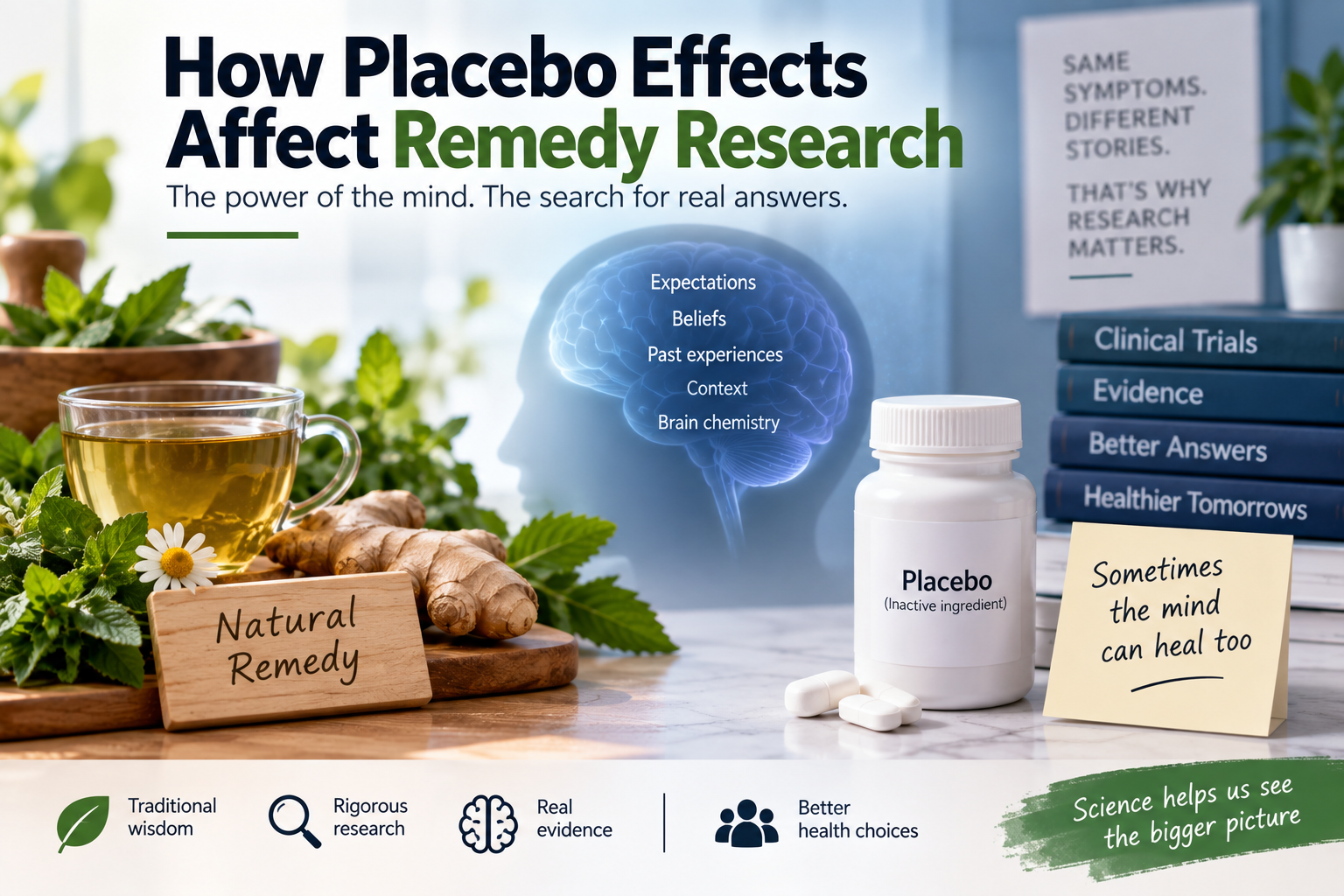
How Placebo Effects Affect Remedy Research
For natural remedies, this distinction can be particularly important. Many remedies have long histories of traditional use, and people may have strong expectations about their effectiveness. Carefully designed research is therefore needed to determine whether improvements are caused by the remedy, the context surrounding its use, natural changes in symptoms or some combination of factors
Read article
Are Natural Remedies Safe During Pregnancy
The safest approach is not to assume that a remedy is harmless simply because it is natural. Instead, its ingredients, dose, purpose, evidence, and potential risks should all be considered.
Read article

Join 10,000+ Readers Building Healthier Habits
Get actionable wellness tips every week plus our newest articles delivered straight to your inbox.