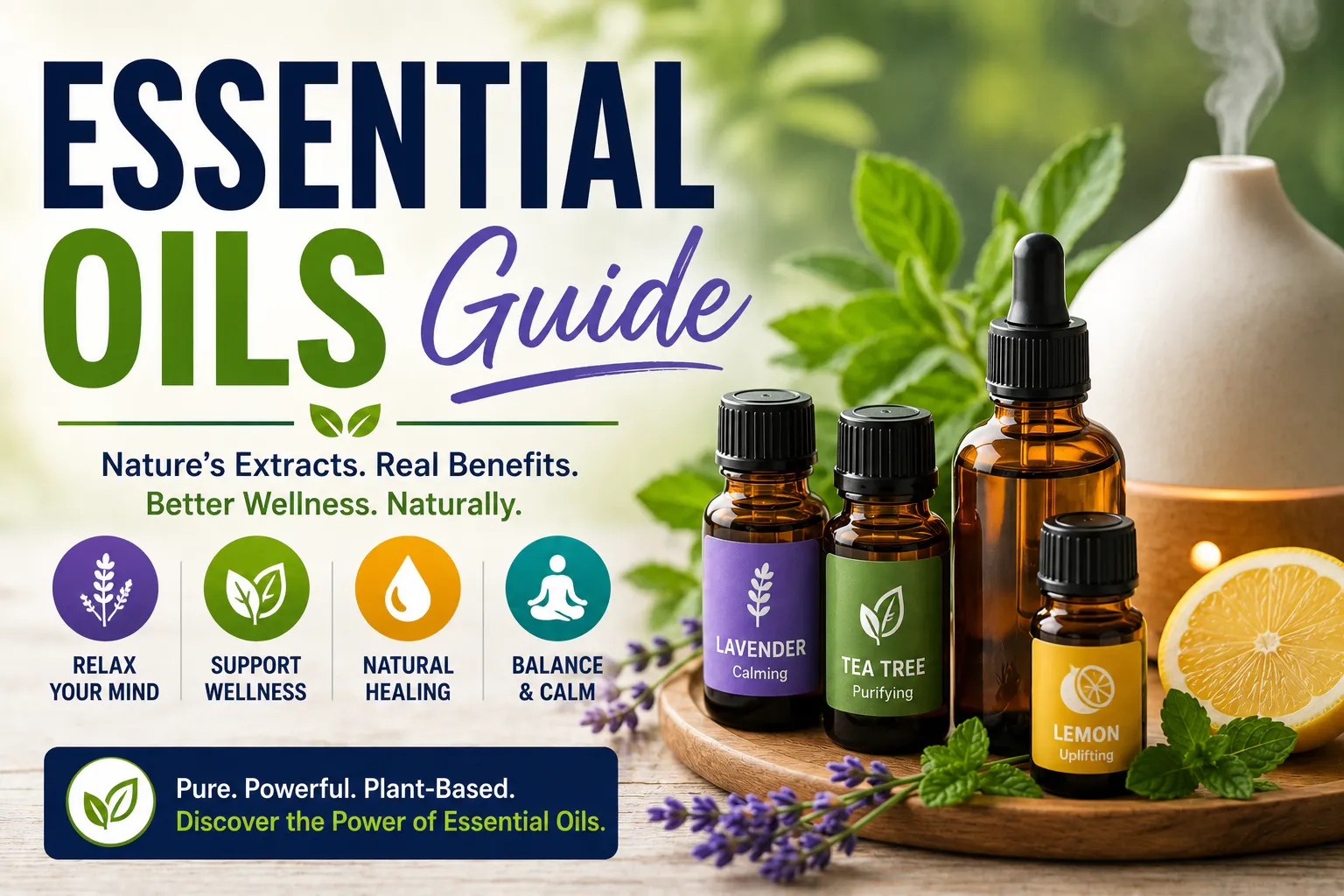

Essential Oils Guide
Essential oils have been used for centuries in traditional wellness practices, personal care, and aromatherapy. Extracted from various parts of plants—including flowers, leaves, bark, roots, and citrus peels—these concentrated oils contain natural aromatic compounds that give plants their distinctive scents. Today, essential oils remain popular for their pleasant fragrances and their use in relaxation, massage, and home aromatherapy.
While many people incorporate essential oils into their wellness routines, it is important to understand their proper use and limitations. Although some essential oils have been studied for certain therapeutic properties, they should not be considered replacements for evidence-based medical treatment. Safe use, proper dilution, and realistic expectations are key to enjoying their benefits responsibly.
This guide explains what essential oils are, how they are produced, common types, potential benefits, safety considerations, and how to use them effectively. For a broader look at how essential oils fit into the wider category of plant-based wellness approaches, see this complete guide to natural remedies evidence.
Note: This article is for educational purposes only and should not replace professional medical advice. Essential oils should never be used as a substitute for medical diagnosis or treatment.
What Are Essential Oils?
Essential oils are highly concentrated plant extracts that capture a plant’s natural aroma and chemical compounds.
They may be extracted from:
- Flowers
- Leaves
- Bark
- Roots
- Seeds
- Citrus peels
- Herbs
- Wood
Each essential oil contains a unique blend of naturally occurring compounds that contribute to its scent and characteristics.
Why Essential Oils Matter
Many people use essential oils as part of their wellness and self-care routines.
They are commonly used for:
- Aromatherapy
- Relaxation
- Massage
- Home fragrance
- Personal care
- Bath products
- Meditation
- Skin care (when properly diluted)
For many users, essential oils provide an enjoyable sensory experience that supports relaxation and comfort. Their role in relaxation and wellness is also closely related to the broader use of plant aromas for relaxation and wellness.
How Essential Oils Are Made
Most essential oils are extracted using specialized methods that preserve their aromatic compounds.
Common extraction methods include:
- Steam distillation
- Cold pressing
- Solvent extraction
- Carbon dioxide extraction
The extraction method depends on the type of plant and the desired characteristics of the finished oil.
Popular Essential Oils
Many different essential oils are available.
Common examples include:
- Lavender
- Peppermint
- Tea tree
- Eucalyptus
- Lemon
- Orange
- Frankincense
- Chamomile
Each oil has its own aroma, traditional uses, and recommended applications.
Aromatherapy
Aromatherapy involves using essential oils through inhalation or diffusion.
People commonly use aromatherapy to create a pleasant environment that may promote:
- Relaxation
- Calmness
- Stress relief
- Better sleep routines
- Improved mood
- Meditation
- Home comfort
- Personal well-being
Individual experiences with aromatherapy can vary.
Common Ways to Use Essential Oils
Essential oils can be used in several ways.
Popular methods include:
- Diffusers
- Personal inhalers
- Massage oils
- Bath products
- Room sprays
- Roller blends
- Scented candles
- Homemade cleaning products
Always follow product instructions and recommended safety guidelines.
Essential Oils for Massage
Many massage therapists incorporate diluted essential oils into massage treatments.
Carrier oils commonly used include:
- Sweet almond oil
- Jojoba oil
- Coconut oil
- Grapeseed oil
- Olive oil
Essential oils should generally be diluted before being applied to the skin.
Essential Oils in Personal Care
Many cosmetic and personal care products include essential oils for fragrance and sensory appeal.
Examples include:
- Soap
- Shampoo
- Conditioner
- Lotion
- Lip balm
- Facial cleansers
- Body oils
- Bath salts
Consumers should check ingredient labels, especially if they have sensitive skin.
For broader information about plant-based approaches to maintaining skin and hair, see natural remedies for skin and hair health.
Safety First
Essential oils are highly concentrated and require careful handling.
General safety recommendations include:
- Dilute before skin application
- Avoid contact with eyes
- Keep out of reach of children
- Store away from heat and sunlight
- Follow product instructions
- Perform a patch test before topical use
- Do not ingest unless specifically directed by a qualified healthcare professional
- Stop use if irritation occurs
Safe use depends on the oil, the individual, and the intended application. A broader natural remedies safety guide provides additional context on responsible use, interactions, and potential risks associated with natural products.
Choosing Quality Essential Oils
Not all essential oils are produced to the same quality standards.
When shopping, consider:
- Botanical name
- Ingredient transparency
- Purity
- Manufacturing standards
- Packaging quality
- Expiration information
- Third-party testing
- Reputable manufacturers
High-quality products are more likely to provide consistent results.
Storage Tips
Proper storage helps preserve essential oil quality.
Best practices include:
- Store in dark glass bottles
- Keep lids tightly closed
- Protect from sunlight
- Avoid excessive heat
- Store in a cool, dry place
- Prevent contamination
- Keep away from moisture
- Check expiration dates periodically
Correct storage helps maintain aroma and stability over time.
Common Myths About Essential Oils
Several misconceptions surround essential oils.
Myth: Natural Always Means Safe
Natural products can still cause allergic reactions, skin irritation, or interactions depending on the individual and the oil.
Myth: More Oil Produces Better Results
Using excessive amounts does not necessarily improve effectiveness and may increase the risk of irritation.
Myth: Essential Oils Cure Diseases
While some essential oils may support relaxation or comfort, they should not replace evidence-based medical treatment for illnesses.
Myth: Every Oil Works the Same Way
Different essential oils have different chemical compositions, aromas, and traditional uses.
Tips for Using Essential Oils Responsibly
Enjoy essential oils safely by:
- Following label instructions.
- Diluting oils appropriately.
- Performing a skin patch test.
- Using clean diffusers.
- Storing oils correctly.
- Purchasing from reputable brands.
- Keeping oils away from children and pets.
- Consulting a healthcare professional if you are pregnant, breastfeeding, or have underlying medical conditions.
- Avoiding contact with eyes and mucous membranes.
- Using essential oils as part of a balanced wellness routine.
Responsible use helps maximize enjoyment while minimizing unnecessary risks.
The Future of Essential Oil Research
Research into plant-derived compounds continues to grow.
Emerging areas of study include:
- Aromatherapy science
- Plant chemistry
- Sustainable cultivation
- Improved extraction methods
- Personalized wellness
- Quality testing
- Clinical research
- Natural product innovation
As scientific evidence expands, researchers continue exploring how essential oils may complement broader wellness practices.
Making Essential Oils Part of Responsible Wellness
Essential oils have earned a lasting place in modern wellness through their pleasant aromas, versatility, and long history of traditional use. Whether incorporated into aromatherapy, massage, personal care, or home fragrance, they offer many people an enjoyable way to support relaxation and everyday well-being.
The safest approach is to use essential oils responsibly, purchase high-quality products, and understand that they complement—rather than replace—healthy lifestyle habits and professional medical care. When used thoughtfully and according to recommended guidelines, essential oils can be a valuable addition to a balanced wellness routine.
Continue Reading
Similar Posts
How Traditional African Herbal Medicine Works
Understanding how these remedies work requires looking at both traditional knowledge and modern scientific research. Some medicinal plants contain compounds with biological effects that researchers can study, while evidence for other traditional uses remains limited or uncertain.
Read article
How Placebo Effects Affect Remedy Research
For natural remedies, this distinction can be particularly important. Many remedies have long histories of traditional use, and people may have strong expectations about their effectiveness. Carefully designed research is therefore needed to determine whether improvements are caused by the remedy, the context surrounding its use, natural changes in symptoms or some combination of factors
Read article
Are Natural Remedies Safe During Pregnancy
The safest approach is not to assume that a remedy is harmless simply because it is natural. Instead, its ingredients, dose, purpose, evidence, and potential risks should all be considered.
Read article

Join 10,000+ Readers Building Healthier Habits
Get actionable wellness tips every week plus our newest articles delivered straight to your inbox.