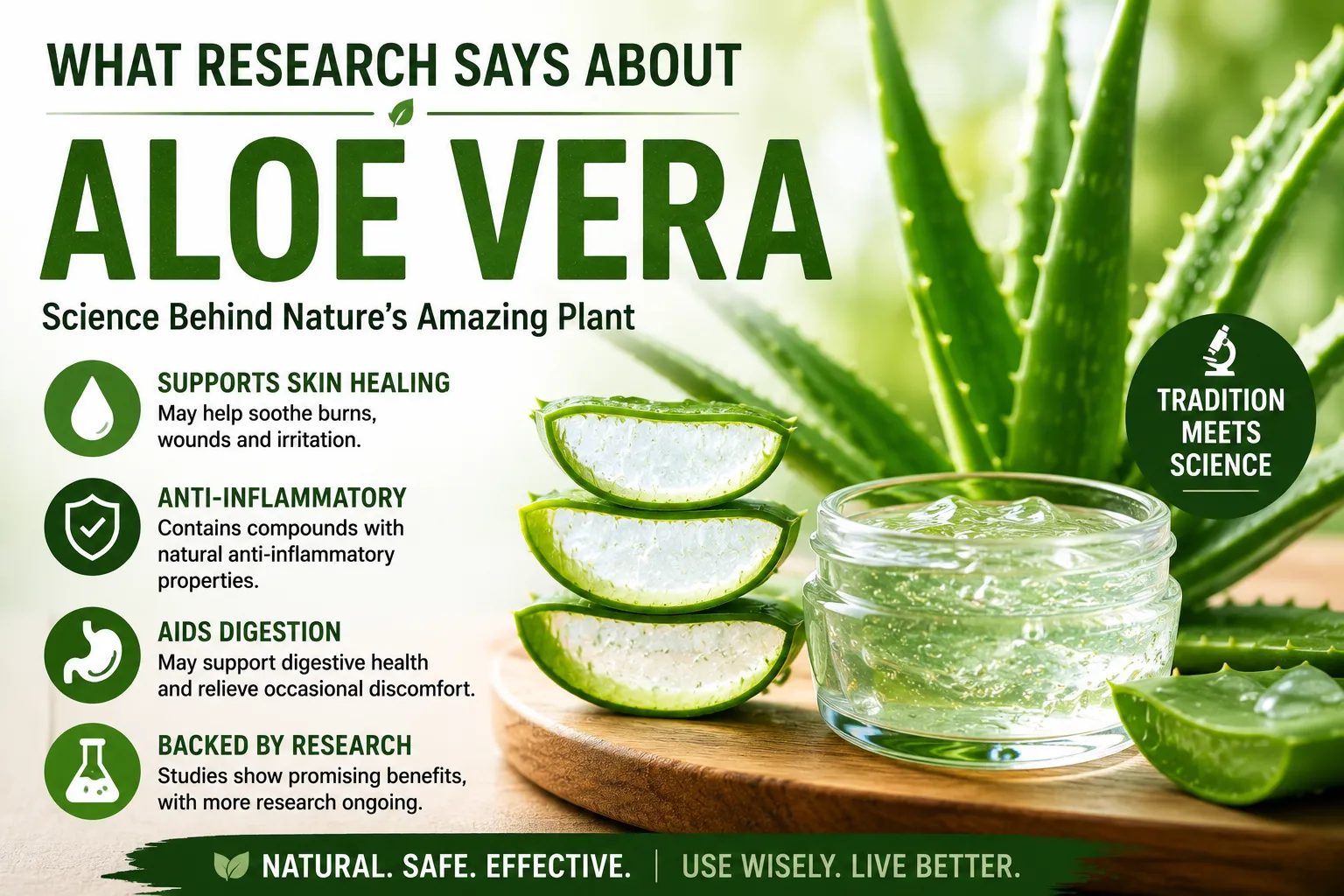

What Research Says About Aloe Vera
Aloe vera has been used for centuries in traditional health practices, particularly for soothing the skin and treating minor burns. Today, it appears in everything from moisturizers and gels to drinks, supplements and cosmetics.
Its popularity has created a familiar question: does aloe vera actually work, or is its reputation mostly based on tradition and marketing?
Research offers a more nuanced answer.
Some clinical evidence supports specific uses of topical aloe vera, particularly as an aid in the healing of certain burns. There is also preliminary evidence for a handful of other applications. But many of the broader health claims surrounding aloe—including claims about weight loss, digestive disorders and general detoxification—remain poorly supported.
Just as importantly, “aloe vera” is not a single substance. Products can contain inner-leaf gel, latex from the outer leaf or whole-leaf extracts, and these forms can have very different effects and safety profiles.
This distinction is consistent with the broader evidence-based approach to natural remedies discussed in the complete guide to natural remedies evidence.
What Is Aloe Vera?
Aloe vera is a succulent plant that grows naturally in hot, dry climates and is now cultivated in many parts of the world.
The thick leaves contain a clear inner gel surrounded by a layer that contains yellowish latex. The plant’s outer portions contain compounds known as anthraquinones, including aloin.
That distinction matters.
A commercial aloe product may contain:
- Inner-leaf gel
- Aloe latex
- Whole-leaf extract
- Decolorized aloe preparations
- Combinations of aloe with other ingredients
These products should not automatically be treated as interchangeable.
Much of the modern research has focused on topical aloe gel or specially processed oral products rather than raw material taken directly from the plant.
Why Aloe Vera Became So Popular
Aloe has a long history of traditional use for skin problems and wounds. Modern interest has focused on its potentially soothing, moisturizing and anti-inflammatory properties.
The gel contains numerous compounds, including polysaccharides and other plant constituents that researchers have investigated for their possible biological effects.
Laboratory findings can help explain why aloe might have therapeutic potential.
But laboratory activity does not automatically translate into a proven treatment for people.
The strongest evidence comes from well-designed clinical studies involving humans.
What the Research Says About Burns
Burn treatment is one of the areas where aloe vera has attracted the most clinical research.
A 2024 systematic review and meta-analysis of randomized controlled trials found that topical aloe vera was associated with a shorter healing time for second-degree burns compared with control treatments. Across the studies included in the analysis, the average reduction in healing time was about 3.8 days. The researchers did not find a significant difference in pain reduction or wound-infection risk.
An earlier systematic review and meta-analysis also found evidence favoring topical aloe vera for second-degree burn healing, although the researchers noted limitations in the available studies.
This suggests that aloe vera may have a legitimate role as a supportive topical treatment for certain burns.
However, that does not mean aloe should replace standard medical treatment for serious burns.
Deep burns, extensive burns, burns involving sensitive areas or wounds showing signs of infection require appropriate medical assessment.
Aloe Vera and Wound Healing
Researchers have also investigated aloe for wounds beyond burns.
A systematic review of 23 clinical trials examined aloe vera gel, creams and related preparations for different skin and wound applications. The review reported potential benefits in areas including wound healing and maintaining skin moisture and integrity, although the studies varied considerably in their methods and applications.
This is an important distinction.
Research suggesting that aloe may support healing is not the same as proving that it can independently treat every type of wound.
The quality, concentration and formulation of the aloe product can also influence results.
What About Skin Conditions?
Aloe is commonly marketed for conditions such as acne, psoriasis and other skin problems.
There is some preliminary evidence for topical aloe in several skin-related conditions, but the evidence is generally much less substantial than the marketing surrounding these products might suggest.
The National Center for Complementary and Integrative Health notes that small studies have investigated topical aloe for acne and several other skin conditions, but emphasizes that there is not enough reliable evidence to draw firm conclusions for many of these uses.
That means aloe may be worth researching as a complementary option in some circumstances, but it should not automatically be considered a proven treatment.
Aloe Vera and Oral Health
Another area of research involves the mouth.
A systematic review and meta-analysis published in 2022 examined randomized controlled trials involving aloe vera for oral ulcers. The researchers specifically evaluated whether aloe could be useful in treating these painful lesions.
The research is promising enough to justify continued investigation, but evidence for aloe in oral health remains considerably narrower than the broad claims sometimes made about aloe-based mouth products.
People with persistent or recurring mouth ulcers should also consider whether an underlying condition is responsible rather than relying solely on a topical herbal product.
Can Drinking Aloe Vera Improve Blood Sugar?
This is one of the more interesting areas of research into oral aloe.
According to NCCIH, a small body of clinical research suggests that orally consumed aloe may reduce blood glucose and HbA1c in people with diabetes. However, the evidence remains limited.
This does not mean people with diabetes should replace prescribed treatment with aloe vera.
Blood glucose management can involve medication, nutrition, physical activity and other factors, and changing established treatment without medical guidance can be dangerous.
Aloe may eventually prove useful as a complementary intervention, but substantially more high-quality research is needed.
Does Aloe Vera Help With Weight Loss?
Aloe drinks and supplements are sometimes marketed as weight-loss products.
The scientific evidence does not support treating aloe as a reliable weight-loss solution.
NCCIH notes that one small study found that a particular aloe gel product taken orally for eight weeks modestly reduced body weight and fat mass in adults with overweight or obesity who also had diabetes or prediabetes. But this was a small study involving a specific product and should not be interpreted as proof that aloe generally causes meaningful weight loss.
There is an important difference between an interesting preliminary finding and an established weight-management strategy.
What About Digestion and “Detox”?
Aloe is frequently promoted for digestion, constipation and detoxification.
This is where understanding the different parts of the plant becomes particularly important.
Aloe latex contains compounds that have laxative effects. Oral aloe latex can cause abdominal cramping and diarrhea, and regulators have previously taken action concerning its use in over-the-counter laxative products because of safety concerns.
A laxative effect should not automatically be interpreted as “detoxification.”
The body already has sophisticated systems for processing and eliminating waste, primarily involving organs such as the liver and kidneys.
There is also insufficient reliable evidence to conclude that drinking aloe provides a broad digestive “cleanse.”
For context on other plant-based approaches to digestive concerns, see this guide to natural remedies for digestion.
Aloe Vera and Inflammatory Conditions
Researchers have investigated aloe for inflammatory bowel diseases and other digestive conditions, including Crohn’s disease and ulcerative colitis.
But the evidence remains insufficient to determine whether oral aloe is an effective treatment for these conditions.
This is particularly important because inflammatory bowel diseases can require carefully managed medical treatment.
Using an unproven supplement in place of established therapy could allow inflammation and complications to worsen.
The Difference Between Aloe Gel and Aloe Latex
This may be the most important fact for consumers to understand.
Aloe gel and aloe latex are not the same thing.
The clear gel found inside the leaf is commonly used in topical products.
The latex is derived from the leaf’s outer layer and contains anthraquinones that can produce a laxative effect.
Whole-leaf extracts can contain components from both areas.
The safety profile can therefore vary significantly depending on which part of the plant was used and how the product was processed.
When evaluating an aloe product, the label matters.
Is Aloe Vera Safe on the Skin?
For most people, topical aloe gel appears to be reasonably well tolerated.
However, it is not completely free of side effects.
NCCIH reports occasional reactions including burning, itching, rash and eczema following topical use.
People with sensitive skin should therefore be cautious, particularly when using concentrated products or products containing multiple botanical ingredients.
Testing a product on a small area before more extensive use can be a reasonable precaution for people who are concerned about skin sensitivity.
For a broader discussion of plant-based approaches involving the skin, see natural remedies for skin and hair health.
Is Drinking Aloe Vera Safe?
The answer depends heavily on the preparation.
Short-term oral use of aloe gel has been studied and appears to be reasonably well tolerated in some research, but oral aloe latex carries greater risks.
NCCIH notes that aloe latex can cause abdominal pain, cramps and diarrhea. There have also been reports linking oral aloe leaf extracts with cases of acute hepatitis.
That is very different from applying a small amount of aloe gel to the skin.
Consumers should therefore avoid assuming that because topical aloe is generally well tolerated, drinking aloe products must also be harmless.
Concerns About Long-Term Oral Use
Long-term consumption is an area where caution is particularly important.
Non-decolorized whole-leaf aloe extracts contain anthraquinone compounds, and the International Agency for Research on Cancer has classified non-decolorized whole-leaf extract of aloe vera as possibly carcinogenic to humans. Animal research has also raised concerns about gastrointestinal tumors associated with certain non-decolorized extracts.
This does not mean every aloe drink or supplement causes cancer.
Commercial products can undergo processing intended to reduce compounds such as aloin, and different formulations have different compositions.
The key lesson is that product form and processing matter enormously.
Could Aloe Vera Interact With Medicines?
Herbal products can interact with medications, and aloe is no exception.
NCCIH specifically advises people taking medications to speak with a healthcare professional before using aloe or other herbal products. Excessive aloe latex use may also increase the risk of adverse effects involving certain heart medications, including cardiac glycosides such as digoxin.
This is particularly relevant for people taking multiple medications.
A supplement may appear harmless because it is sold over the counter, but “natural” does not automatically mean pharmacologically inactive.
Aloe Vera During Pregnancy and Breastfeeding
Oral aloe products are another area requiring caution.
NCCIH states that aloe taken by mouth—in gel, latex or whole-leaf form—may be unsafe during pregnancy and breastfeeding and recommends consulting a healthcare professional.
People who are pregnant or breastfeeding should therefore avoid treating aloe supplements as automatically safe simply because they are plant-based.
Why Research Results Can Be Confusing
One reason aloe research can seem contradictory is that scientists are often studying different products.
One study may examine purified inner-leaf gel.
Another may use a whole-leaf preparation.
A third may test a commercial product with a specific concentration.
These products can have substantially different chemical compositions.
Researchers may also measure different outcomes.
One study might measure wound-healing time, while another looks at pain, inflammation, blood glucose or skin symptoms.
Consequently, the results cannot always be combined into one simple statement such as “aloe works” or “aloe doesn’t work.”
The Quality of the Evidence Matters
A single positive study can generate headlines, but it does not necessarily establish that a treatment works.
The strongest evidence generally comes from multiple well-designed studies that produce consistent results.
NCCIH emphasizes that clinical trials can vary in size and design, and that conclusions become more reliable when findings are reproduced by different researchers.
This is especially important with natural remedies, where traditional use and anecdotal reports can sometimes be mistaken for clinical evidence.
Traditional use can provide a reason to investigate a plant.
It does not by itself prove effectiveness.
Aloe Vera Is Not a Cure-All
Aloe’s reputation has expanded far beyond the uses supported by clinical evidence.
It has been promoted for everything from detoxification and weight loss to digestive health, blood sugar management, skin conditions and general wellness.
Some of these areas have produced interesting preliminary findings.
Others have little reliable human evidence.
A more accurate way to view aloe is as a plant with specific areas of promising research rather than a universal health remedy.
How to Choose an Aloe Product
If you decide to use an aloe product, pay attention to what is actually in it.
Look for information about:
- Whether it contains inner-leaf gel or whole-leaf extract
- Whether it is intended for topical or oral use
- How the product has been processed
- The presence of aloin or anthraquinones when relevant
- Other active ingredients
- Directions for use
- Warnings and contraindications
- Manufacturer information
For oral products, additional caution is appropriate because safety can vary considerably between formulations.
A product marketed simply as “aloe” does not provide enough information to determine its potential effects.
When Aloe Should Not Replace Medical Care
Aloe may have a place as a complementary product for certain minor problems, but it should not delay appropriate medical care.
Seek professional attention for serious burns, deep or extensive wounds, signs of infection, persistent skin problems or unexplained digestive symptoms.
Likewise, people managing conditions such as diabetes or inflammatory bowel disease should not substitute aloe for prescribed treatment without discussing it with their healthcare provider.
Natural remedies can sometimes complement conventional care, but they should not automatically replace treatments with stronger evidence.
The Research Gives Aloe a More Nuanced Reputation
Aloe vera is neither the miracle ingredient sometimes portrayed in advertisements nor a completely ineffective traditional remedy.
The evidence is more interesting than either extreme.
Research provides meaningful support for some topical applications, particularly as an aid to healing certain second-degree burns. There are also early findings worth investigating in areas such as oral health and blood glucose management.
At the same time, evidence remains insufficient for many of the broader claims surrounding aloe.
And safety cannot be separated from the question of effectiveness. The difference between inner-leaf gel, latex and whole-leaf extract can dramatically change the risk profile.
The most sensible takeaway is therefore simple: use aloe vera for what research actually supports, pay attention to the form and preparation, and be cautious about claims that promise broad health benefits from a single plant.
For a natural remedy that has been used for centuries, the modern scientific picture is still developing—but the research already shows why both its potential benefits and its limitations deserve attention.
Continue Reading
Similar Posts
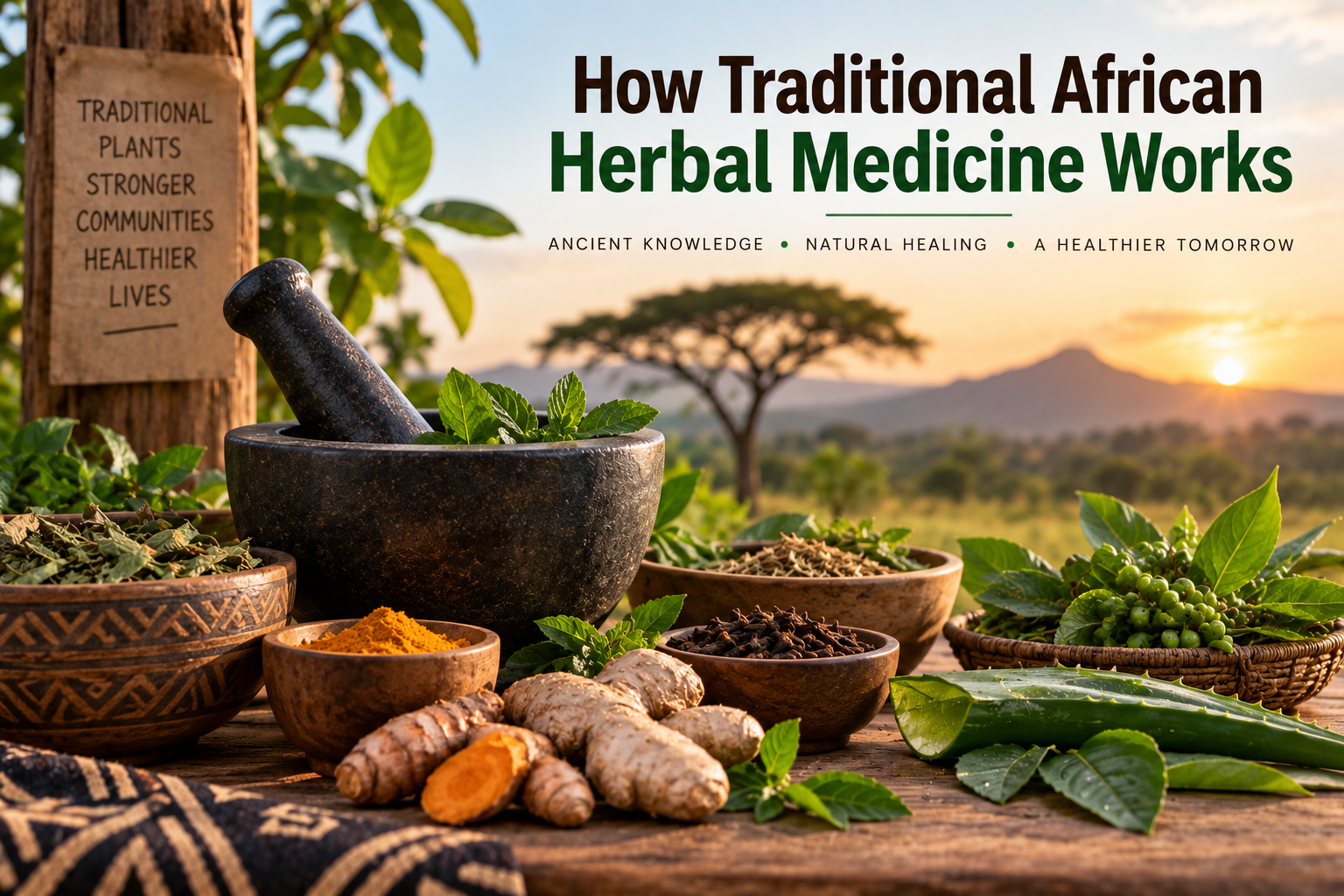
How Traditional African Herbal Medicine Works
Understanding how these remedies work requires looking at both traditional knowledge and modern scientific research. Some medicinal plants contain compounds with biological effects that researchers can study, while evidence for other traditional uses remains limited or uncertain.
Read article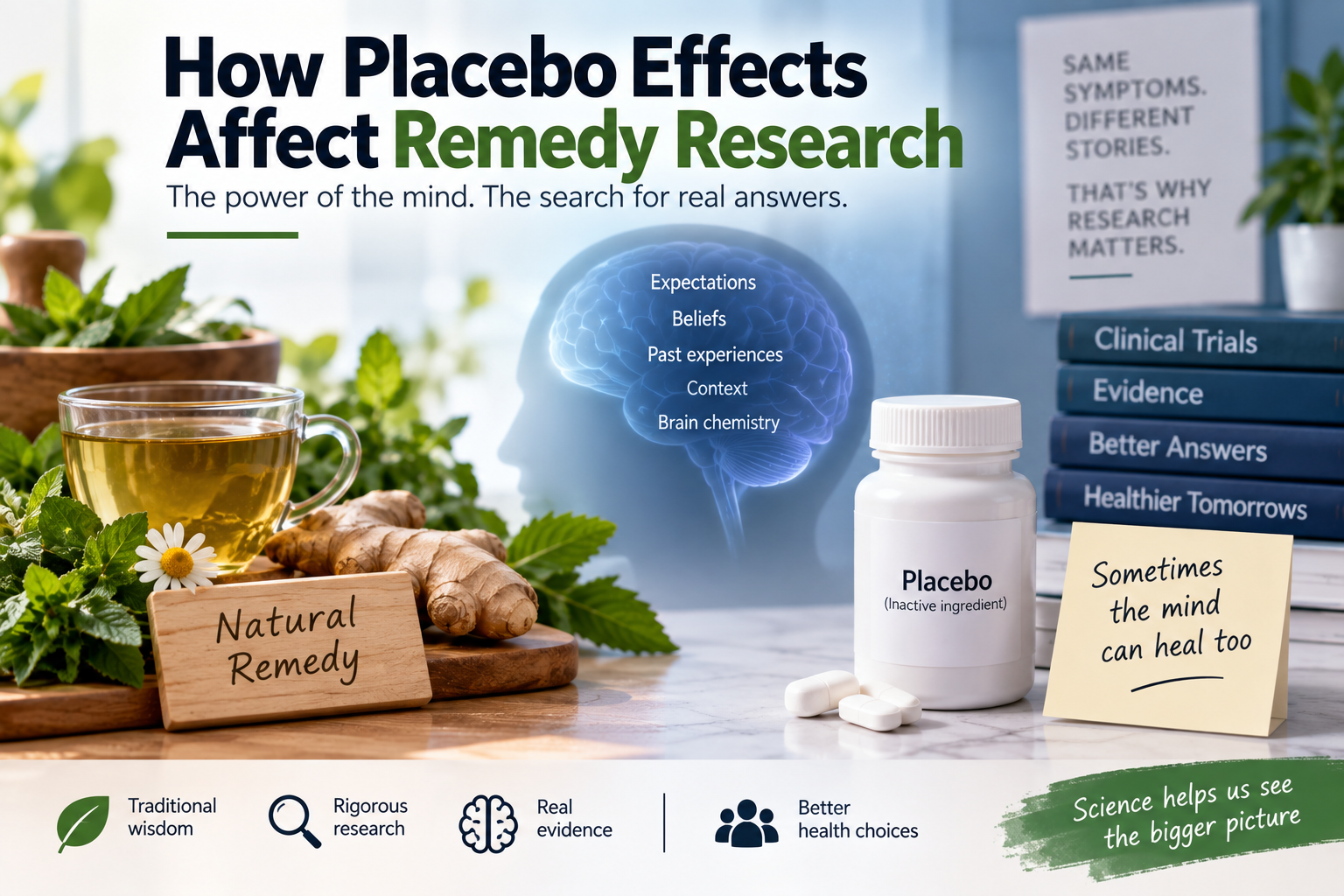
How Placebo Effects Affect Remedy Research
For natural remedies, this distinction can be particularly important. Many remedies have long histories of traditional use, and people may have strong expectations about their effectiveness. Carefully designed research is therefore needed to determine whether improvements are caused by the remedy, the context surrounding its use, natural changes in symptoms or some combination of factors
Read article
Are Natural Remedies Safe During Pregnancy
The safest approach is not to assume that a remedy is harmless simply because it is natural. Instead, its ingredients, dose, purpose, evidence, and potential risks should all be considered.
Read article

Join 10,000+ Readers Building Healthier Habits
Get actionable wellness tips every week plus our newest articles delivered straight to your inbox.