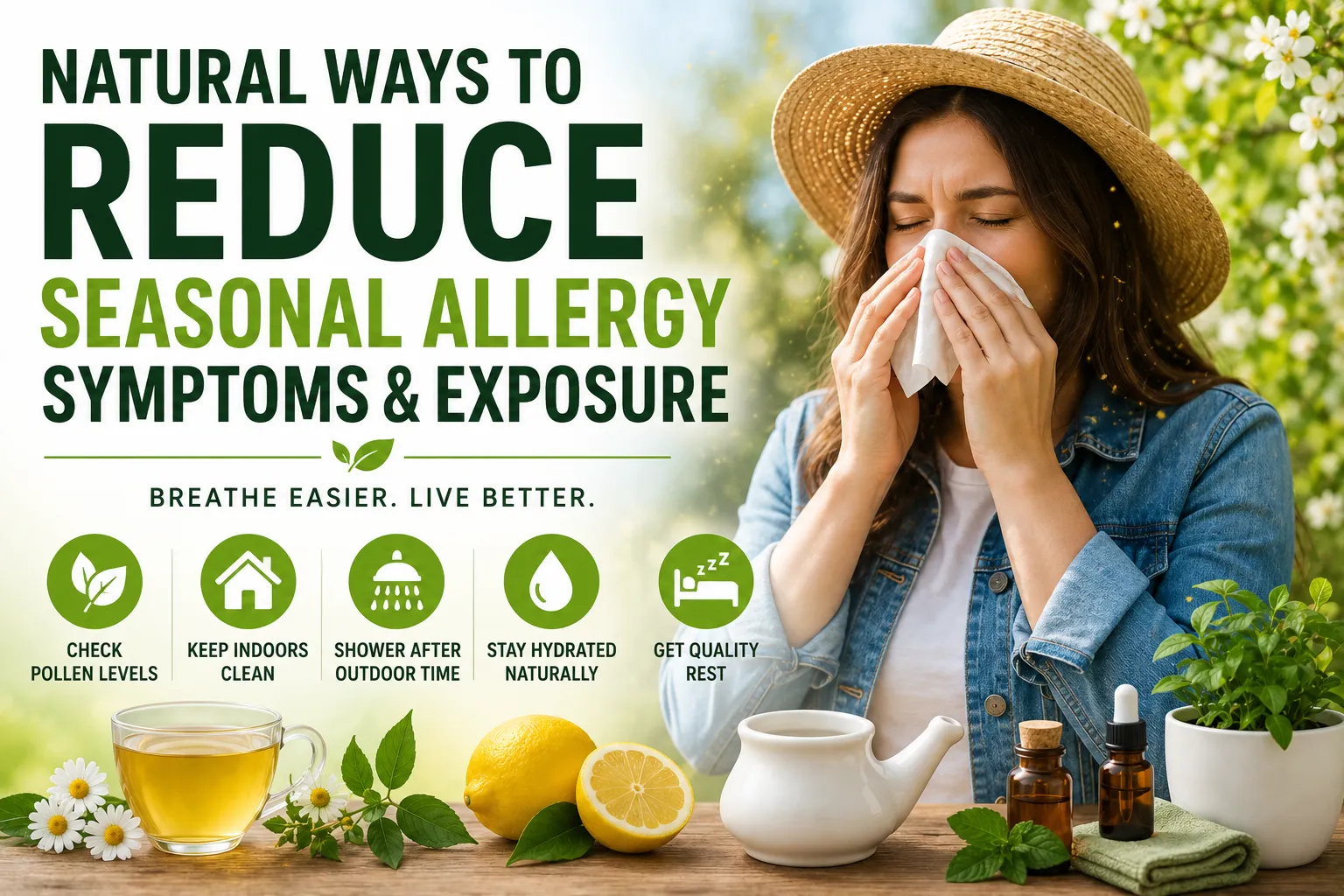

Natural Ways to Reduce Seasonal Allergy Symptoms and Exposure
Seasonal allergies can turn an otherwise enjoyable time of year into a frustrating cycle of sneezing, congestion, itchy eyes and a runny nose. For people who react to pollen, symptoms can become especially noticeable when trees, grasses or weeds release large amounts of pollen into the air.
While medications can be an important part of allergy treatment, everyday habits can also help reduce exposure and make symptoms easier to manage. The goal is not necessarily to avoid the outdoors completely. Instead, it is to identify common sources of exposure and make practical changes that limit the amount of pollen entering the nose, eyes and home.
What Causes Seasonal Allergy Symptoms?
Seasonal allergic rhinitis, often called hay fever, occurs when the immune system reacts to airborne allergens such as pollen.
Common sources include pollen from:
- Trees
- Grasses
- Weeds
- Certain flowering plants
The specific plants responsible vary depending on location, climate and season. This means that allergy seasons are not identical everywhere.
Typical symptoms can include:
- Sneezing
- Runny or stuffy nose
- Itchy nose or throat
- Watery or itchy eyes
- Postnasal drainage
- Coughing
- Fatigue caused by poor sleep or persistent symptoms
For people who are sensitive to pollen, reducing exposure can be an important part of managing these symptoms.
Pay Attention to Pollen Levels
One of the simplest ways to reduce exposure is to know when pollen levels are high.
Local pollen forecasts can help people plan outdoor activities around periods when exposure is likely to be greater. The American Academy of Allergy, Asthma & Immunology provides pollen-count resources through its National Allergy Bureau.
On high-pollen days, people with significant seasonal allergies may benefit from spending less time outdoors and choosing indoor environments with cleaner air.
This does not mean avoiding outdoor activity altogether. Instead, checking pollen conditions can help you make more informed decisions about when and where to exercise, garden or spend extended periods outside.
Keep Windows Closed During High-Pollen Periods
Opening windows can make a home feel more comfortable, but during periods of high pollen it can also allow outdoor allergens indoors.
Allergy specialists recommend keeping windows and doors closed when pollen exposure is high, particularly for people who are highly sensitive. Using air conditioning can provide ventilation and temperature control without relying on open windows.
The same principle applies to vehicles.
Keeping car windows closed and using the vehicle’s ventilation system can help reduce the amount of pollen entering the cabin during high-exposure periods.
Create a Cleaner-Air Space at Home
If pollen is triggering symptoms, it can be useful to make at least one room in the home a lower-exposure area.
The CDC has recommended using portable air cleaners to create cleaner indoor air spaces during periods of outdoor air irritation. It notes that portable air cleaners work best when operated continuously with doors and windows closed.
For homes with forced-air heating or cooling systems, appropriate HVAC filtration can also help reduce airborne particles. The CDC specifically discusses HEPA or MERV-13-or-higher filters as options to discuss with a qualified HVAC professional.
An air purifier is not a substitute for controlling the source of pollen, but it can be one part of a broader strategy.
Shower After Spending Time Outdoors
Pollen can settle on hair, skin and clothing during outdoor activities.
Taking a shower after spending significant time outside can help remove pollen before it spreads throughout the home. Allergy guidance also suggests that washing pets after they have been outdoors may help reduce pollen being carried inside on their fur.
For someone who spends a lot of time gardening, hiking or exercising outdoors, this simple habit can become particularly useful.
Change Clothes After Outdoor Activities
Pollen can cling to clothing.
Changing into clean clothes after spending extended periods outdoors can help prevent pollen from being transferred onto furniture, bedding and other indoor surfaces.
Instead of sitting on a sofa or getting into bed immediately after outdoor activities, consider changing clothes and, when appropriate, showering first.
This is especially useful when pollen counts are high.
Keep Outdoor Shoes Away From Living Areas
Shoes can pick up pollen, dust and other outdoor particles.
Leaving outdoor footwear near the entrance rather than wearing it throughout the home can reduce the amount of outdoor material brought indoors.
A simple entrance routine can include:
- Remove outdoor shoes.
- Store them in a designated area.
- Change into indoor footwear if desired.
- Clean the entryway regularly.
This is a low-cost habit that can complement other efforts to keep indoor spaces cleaner.
Clean Floors and Surfaces Regularly
Pollen that enters a home can settle on floors, furniture and other surfaces.
Regular cleaning can help remove accumulated particles.
Vacuuming and damp dusting can be useful approaches, particularly in bedrooms and other areas where people spend significant amounts of time.
A vacuum cleaner with an effective filtration system may also help capture fine particles rather than simply redistributing them.
The goal is not to create a completely allergen-free home, which is generally unrealistic, but to reduce unnecessary exposure.
Pay Attention to the Bedroom
The bedroom deserves particular attention because people spend a large portion of their day there.
If pollen is entering the home, keeping bedroom windows closed during high-pollen periods can help limit exposure.
Changing clothes before bed and showering after extensive outdoor activity can also reduce the amount of pollen that comes into contact with bedding.
Keeping the bedroom clean and maintaining a comfortable indoor environment may make it easier to sleep when seasonal allergy symptoms are active.
Wash Bedding Regularly
Bedding can collect dust and other particles over time.
Regular washing can help maintain a cleaner sleeping environment.
For people whose symptoms become worse at night, it can be useful to consider whether environmental factors in the bedroom are contributing to the problem.
Seasonal pollen is only one possible trigger, however. Dust mites, mold and pet allergens can also contribute to respiratory symptoms, so persistent problems may require professional evaluation.
Take Care With Outdoor Exercise
Exercise is an important part of a healthy lifestyle, but people with seasonal allergies may need to modify their routines during high-pollen periods.
Instead of abandoning outdoor activity, consider:
- Checking the pollen forecast before exercising
- Choosing lower-exposure times
- Exercising indoors when pollen counts are particularly high
- Wearing sunglasses to reduce pollen contact with the eyes
- Showering after outdoor workouts
- Changing clothes after exercising
The best approach depends on how sensitive a person is and how severe their symptoms become.
Protect Your Eyes
Pollen can trigger itchy, watery or irritated eyes.
Sunglasses or other protective eyewear can provide a physical barrier between the eyes and airborne particles during outdoor activities.
This can be particularly helpful on windy days when airborne pollen is more likely to come into contact with exposed skin and eyes.
Trying to avoid rubbing irritated eyes is also sensible because rubbing can further aggravate them.
Be Strategic About Gardening
Gardening can be challenging for people with pollen allergies because it places them directly among plants, soil and airborne particles.
If gardening triggers symptoms, consider:
- Wearing a mask when appropriate
- Wearing sunglasses
- Working outdoors when pollen levels are lower
- Showering after gardening
- Changing clothes afterward
- Avoiding prolonged exposure during high-pollen periods
Plant selection can also matter. The plants responsible for seasonal allergies vary by region, and allergy specialists note that pollen from wind-pollinated plants such as many grasses, trees and weeds is a common trigger.
Do Not Assume Every Plant Causes the Same Problem
A common misconception is that every colorful flowering plant is equally likely to trigger seasonal allergies.
Many highly visible flowers are pollinated by insects rather than carried extensively through the air by wind. In contrast, wind-pollinated plants can release large amounts of airborne pollen.
That does not mean a particular plant is automatically safe for everyone.
Allergy triggers differ between individuals, and local conditions matter. Someone with significant symptoms may benefit from identifying the specific pollen types associated with their reactions.
Try Saline Nasal Irrigation
A saline nasal rinse can help physically flush mucus and allergens from the nasal passages.
Evidence suggests that nasal saline irrigation can reduce the severity of allergic rhinitis symptoms compared with no treatment, although the quality and consistency of evidence vary.
If you use nasal irrigation, proper technique matters.
Use an appropriate saline solution and only use distilled, sterile or appropriately treated water rather than untreated tap water.
Nasal irrigation should also be performed with clean equipment according to the product’s instructions.
Avoid Smoke and Other Irritants
Not every source of nasal irritation is an allergen.
Smoke, strong fragrances, air pollution and other irritants can aggravate already-sensitive nasal passages.
Reducing exposure to these irritants may make seasonal allergy symptoms easier to tolerate.
This is especially relevant for people who notice that symptoms become worse around cigarette smoke, fireplaces, heavy traffic or strongly scented products.
Keep Pets From Bringing Excess Pollen Indoors
Pets that spend time outside can carry pollen on their fur.
If pollen is a significant trigger, wiping or washing a pet after outdoor activity may help reduce the amount of pollen brought indoors. Allergy guidance specifically identifies pets as possible vectors for pollen entering the home.
However, it is important to distinguish pollen exposure from a true pet allergy.
If someone is allergic to an animal’s dander or other proteins, simply removing pollen from the fur will not eliminate the underlying trigger.
Be Careful With “Natural” Allergy Remedies
The term natural remedy can create the impression that a treatment is automatically safe and effective.
That is not necessarily the case.
Herbal products, essential oils, supplements and other alternative treatments can have side effects, interact with medications or lack strong evidence for treating allergic rhinitis.
A natural product should therefore be evaluated using the same basic questions as any other treatment:
- Does evidence support it?
- Is the dose known?
- Are there potential side effects?
- Could it interact with another medication?
- Is it appropriate for children, pregnancy or other specific circumstances?
Natural does not automatically mean harmless.
For a broader framework for evaluating the safety and evidence behind natural treatments, see this complete guide to natural remedies evidence.
Honey Is Not a Proven Pollen Treatment
Honey is sometimes recommended as a natural way to reduce seasonal allergies because it contains small amounts of pollen.
However, the idea that eating local honey will reliably desensitize someone to airborne pollen allergies is not well supported by clinical evidence.
Different plants produce different types of pollen, and the pollen that commonly triggers respiratory allergies is not necessarily present in the honey in a form or amount that would provide meaningful immunotherapy.
Honey can be part of a normal diet for people who tolerate it, but it should not be considered a proven substitute for established allergy management.
Keep Mold Under Control
Seasonal allergy problems are not always caused exclusively by outdoor pollen.
Mold spores can also trigger allergic symptoms, and indoor mold can become a problem in damp environments.
Look for sources of excess moisture around:
- Bathrooms
- Kitchens
- Basements
- Leaking pipes
- Roof leaks
- Areas with persistent condensation
Fixing leaks and addressing moisture problems can help reduce indoor mold exposure.
Consider When Outdoor Exposure Is Highest
Pollen concentrations can vary throughout the day and from one location to another.
Some pollen types tend to reach higher concentrations at particular times, although the pattern depends on the plant and environmental conditions.
Rather than following a universal rule about the “best” or “worst” time to go outside, local pollen information can provide a more useful guide.
Weather can also affect pollen conditions. Research reviewed by the CDC found relationships between temperature, precipitation and pollen-season characteristics, with warmer temperatures associated in some studies with earlier, longer or more intense pollen seasons.
Know When Home Strategies Are Not Enough
Lifestyle changes can reduce exposure, but they cannot always control symptoms.
If seasonal allergies are interfering with sleep, work, school, exercise or everyday activities, it may be time to speak with a healthcare professional.
A clinician or allergy specialist can help determine whether symptoms are actually caused by allergic rhinitis and identify appropriate treatment options.
The American Academy of Allergy, Asthma & Immunology provides resources for finding allergy specialists and checking pollen information.
Medical Treatment Can Still Be Part of the Plan
Avoiding allergens is useful, but complete avoidance is often impossible.
Allergy specialists therefore recommend combining practical exposure reduction with appropriate treatment when necessary. Current practice parameters identify intranasal corticosteroids as a preferred single treatment for persistent allergic rhinitis, while other options can be considered depending on the individual and symptoms.
For some people with confirmed allergies that remain troublesome despite other approaches, allergen immunotherapy may also be considered. It works by gradually changing the immune response to specific allergens and is administered under medical guidance.
These treatments are different from general “natural remedies” and should be discussed with an appropriate healthcare professional.
Build a Simple Allergy-Reduction Routine
Managing seasonal allergies does not have to involve making dozens of changes at once.
A practical routine could look like this:
Before going outside:
- Check local pollen conditions.
- Consider sunglasses or protective eyewear.
- Avoid spending unnecessary time outdoors during particularly high-exposure periods.
After coming indoors:
- Remove outdoor shoes.
- Change clothes after prolonged outdoor exposure.
- Shower if you have been outside for an extended period.
- Consider cleaning pollen from pets that have been outdoors.
At home:
- Keep windows closed when pollen levels are high.
- Use appropriate air filtration.
- Clean floors and surfaces regularly.
- Keep bedrooms comfortable and relatively free of outdoor contaminants.
For persistent symptoms:
- Consider saline nasal irrigation where appropriate.
- Talk with a healthcare professional about evidence-based treatments if symptoms continue.
The objective is not perfection. Even small reductions in exposure can be useful when repeated consistently.
When Seasonal Allergies Need More Attention
Seasonal allergies are usually manageable, but persistent or severe respiratory symptoms should not automatically be attributed to allergies.
Seek medical advice for symptoms that are severe, unusual, persistent or interfering significantly with daily life.
People with asthma should also pay attention to changes in breathing or asthma control because allergic triggers can be associated with worsening respiratory symptoms.
Difficulty breathing, significant wheezing, swelling of the lips or tongue, or other signs of a serious allergic reaction require urgent medical attention.
Making Allergy Season More Manageable
Seasonal allergies cannot always be avoided, but exposure can often be reduced.
Checking pollen levels, keeping windows closed during high-pollen periods, using appropriate indoor filtration, showering after outdoor activities, changing clothes, cleaning regularly and using saline nasal irrigation are practical measures that can fit into everyday life. Evidence-based allergy treatment can provide another layer of support when environmental changes are not enough.
For people exploring herbal or plant-based approaches alongside standard allergy care, it is also important to understand how herbal medicine is evaluated and used and why natural products can require careful consideration of evidence, dosage and interactions.
The most useful approach is usually not a single miracle remedy. It is a combination of small, repeatable habits that reduce exposure while supporting effective symptom management.
Natural approaches can play a helpful supporting role, but they work best when they are grounded in evidence and used realistically. Knowing your triggers, paying attention to local conditions and seeking professional guidance when symptoms become difficult to control can make seasonal allergy management much more manageable.
Continue Reading
Similar Posts

How Traditional African Herbal Medicine Works
Understanding how these remedies work requires looking at both traditional knowledge and modern scientific research. Some medicinal plants contain compounds with biological effects that researchers can study, while evidence for other traditional uses remains limited or uncertain.
Read article
How Placebo Effects Affect Remedy Research
For natural remedies, this distinction can be particularly important. Many remedies have long histories of traditional use, and people may have strong expectations about their effectiveness. Carefully designed research is therefore needed to determine whether improvements are caused by the remedy, the context surrounding its use, natural changes in symptoms or some combination of factors
Read article
Are Natural Remedies Safe During Pregnancy
The safest approach is not to assume that a remedy is harmless simply because it is natural. Instead, its ingredients, dose, purpose, evidence, and potential risks should all be considered.
Read article

Join 10,000+ Readers Building Healthier Habits
Get actionable wellness tips every week plus our newest articles delivered straight to your inbox.