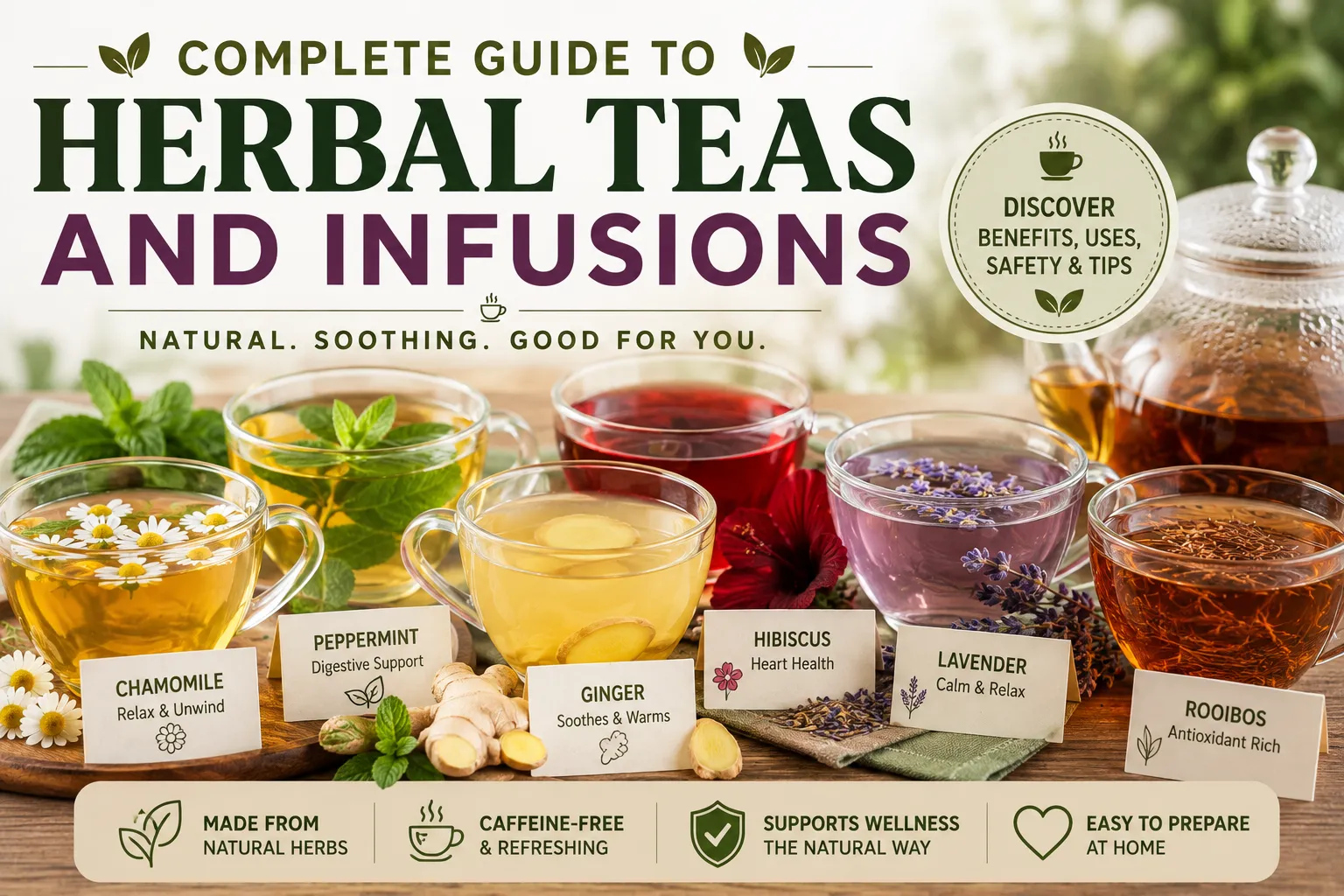

Complete Guide to Herbal Teas and Infusions
Herbal teas and infusions have been used across cultures for generations as comforting beverages, traditional remedies and ways to incorporate plants into everyday routines. Today, they remain popular among people looking for caffeine-free drinks, relaxing evening rituals and natural alternatives to highly processed beverages.
But “natural” does not automatically mean harmless, and herbal tea is not a substitute for medical treatment. Different plants contain different compounds, and their effects, evidence and safety profiles can vary considerably.
This guide explains how herbal teas and infusions work, the differences between common preparations, popular herbs and their traditional uses, what research says about selected plants, and how to use herbal products more safely. For a broader overview of herbal products, evidence, benefits and risks, see this complete guide to natural remedies evidence.
Health note: This article is for general educational purposes and does not replace medical advice. If you are pregnant or breastfeeding, take prescription medicines, have a chronic health condition, are preparing for surgery or plan to use concentrated herbal products for a health problem, speak with a qualified healthcare professional first.
What Is Herbal Tea?
Herbal tea is a beverage made by steeping herbs, flowers, leaves, roots, bark, seeds or other plant materials in hot water.
Unlike traditional tea made from the Camellia sinensis plant, herbal teas generally do not contain tea leaves.
Common herbal tea ingredients include:
-
Chamomile
-
Peppermint
-
Ginger
-
Hibiscus
-
Rooibos
-
Lavender
-
Lemon balm
-
Fennel
-
Cinnamon
-
Turmeric
-
Echinacea
Some products contain a single herb, while others combine several ingredients.
Tea vs. Infusion: What’s the Difference?
The terms tea and infusion are often used interchangeably, but they can describe slightly different preparation methods.
Herbal Infusion
An infusion generally involves pouring hot water over relatively delicate plant materials such as:
-
Leaves
-
Flowers
-
Soft stems
The mixture is then allowed to steep.
Herbal Decoction
A decoction is usually used for tougher plant materials such as:
-
Roots
-
Bark
-
Seeds
-
Hard stems
These materials may be simmered in water to extract compounds that are less easily released through ordinary steeping.
Tisane
The word tisane is sometimes used to distinguish herbal beverages from true tea made from Camellia sinensis.
For everyday purposes, however, most people simply refer to these beverages as herbal teas.
How Herbal Infusions Are Prepared
The appropriate preparation depends on the plant.
For a basic leafy or floral infusion:
-
Place the dried or fresh herb in a cup or teapot.
-
Add hot water.
-
Cover the container if appropriate.
-
Allow the herb to steep.
-
Strain before drinking.
Commercial products should be prepared according to their package instructions.
More is not necessarily better. Concentrating an herb can substantially change the amount of active compounds consumed.
Fresh Herbs vs. Dried Herbs
Both fresh and dried herbs can be used for infusions.
Fresh Herbs
Fresh herbs contain more water and may have a brighter aroma and flavor.
Examples include:
-
Fresh mint
-
Fresh ginger
-
Fresh lemon balm
Dried Herbs
Dried herbs are more concentrated by weight and are easier to store.
They are commonly used in commercial tea bags and loose-leaf herbal blends.
The two forms are not always interchangeable in equal quantities, so recipes should specify which form they use.
Why People Drink Herbal Teas
People drink herbal teas for many reasons.
Some simply enjoy the flavor and warmth.
Others use them as part of routines intended to support:
-
Relaxation
-
Hydration
-
Digestion
-
Comfort during a cold
-
Sleep routines
-
General wellness
-
Caffeine reduction
It is important to distinguish traditional use from clinically established effectiveness.
A plant may have been used traditionally for centuries without strong clinical evidence proving that it treats a particular medical condition.
Chamomile Tea
Chamomile is one of the best-known herbal teas and is commonly consumed in the evening.
It is traditionally associated with:
-
Relaxation
-
Sleep routines
-
Digestive comfort
-
General calming
Research on chamomile is still developing. The National Center for Complementary and Integrative Health (NCCIH) notes that some preliminary studies have investigated chamomile for generalized anxiety disorder, while evidence for insomnia remains limited.
Chamomile is generally considered safe in amounts commonly found in foods and teas, although allergic reactions can occur, particularly among people allergic to related plants such as ragweed, chrysanthemums, marigolds and daisies.
Peppermint Tea
Peppermint tea is popular for its refreshing flavor and is commonly consumed after meals.
Peppermint contains menthol, which contributes to its characteristic cooling sensation.
People traditionally drink peppermint tea for:
-
Digestive comfort
-
Bloating
-
A refreshing beverage
-
Relaxation after meals
However, peppermint may not be suitable for everyone. People who experience acid reflux may find mint products aggravate their symptoms.
Ginger Tea
Ginger has a long history of culinary and traditional medicinal use.
Ginger tea is commonly consumed for:
-
Nausea
-
Digestive discomfort
-
A warming beverage
-
Cold-weather comfort
Ginger is also available as a food ingredient, powder, capsule and extract.
The form matters because a cup of ginger tea and a concentrated ginger supplement do not necessarily provide equivalent amounts of active compounds.
Hibiscus Tea
Hibiscus tea is known for its deep red color and tart, fruity flavor.
It is commonly prepared from Hibiscus sabdariffa calyces.
Research has investigated hibiscus preparations for blood-pressure-related outcomes, but evidence depends on the preparation, amount and population studied.
People taking blood-pressure medication should discuss regular use of concentrated hibiscus products with a healthcare professional because combining products that affect blood pressure may require consideration.
Rooibos Tea
Rooibos comes from a South African plant and is naturally caffeine-free.
It has a mild, slightly sweet flavor and can be enjoyed hot or cold.
Rooibos is often marketed for its antioxidant content, but consumers should be cautious about interpreting laboratory antioxidant findings as proof that drinking rooibos prevents or treats disease.
It can simply be enjoyed as a caffeine-free beverage.
Lavender Tea
Lavender is widely associated with relaxation and aromatherapy.
Some people drink lavender infusions as part of a calming evening routine. Plant-based aromatic approaches to relaxation are discussed further in this guide to plant aromas for relaxation and wellness.
However, evidence concerning specific health conditions varies, and drinking lavender tea should not be treated as a proven treatment for anxiety or insomnia.
If you are using lavender medicinally rather than simply drinking a mild tea, discuss its use with a healthcare professional when appropriate.
Lemon Balm Tea
Lemon balm has a mild citrus aroma and belongs to the mint family.
It has traditionally been used for:
-
Relaxation
-
Digestive comfort
-
Sleep-related routines
Research into lemon balm continues, but evidence for specific medical conditions is not strong enough to treat the herb as a universal remedy.
Fennel Tea
Fennel seeds are commonly used in cooking and traditional herbal preparations.
Fennel tea is sometimes consumed after meals for digestive comfort.
As with other herbs, concentrated extracts can provide substantially different exposures from ordinary culinary or tea use.
Cinnamon Tea
Cinnamon can add warmth and sweetness without requiring sugar.
It is often used in:
-
Herbal blends
-
Spiced teas
-
Winter beverages
-
Traditional preparations
However, consuming large amounts of certain types of cinnamon regularly may expose people to significant amounts of coumarin, a naturally occurring compound that can be problematic at high exposure levels.
Ordinary culinary use is different from consuming concentrated cinnamon supplements. Readers interested in the evidence surrounding this particular herb can explore what research says about cinnamon.
Turmeric Infusions
Turmeric contains curcumin and related compounds that have been studied extensively in laboratory and clinical research.
Turmeric drinks may be prepared using:
-
Fresh turmeric
-
Dried turmeric
-
Powder
-
Blended beverages
However, a homemade turmeric drink should not automatically be considered equivalent to a concentrated curcumin supplement.
Some concentrated products also combine curcumin with ingredients intended to increase absorption, which can change their effects and potential interactions.
Echinacea Tea
Echinacea is commonly associated with products marketed for colds and respiratory infections.
Evidence concerning whether echinacea prevents or shortens colds is mixed and depends on the specific preparation.
Drinking an echinacea tea should not replace medical evaluation when symptoms are severe, persistent or worsening.
Green Tea Is Different
Green tea is sometimes grouped together with herbal teas, but botanically it is different.
Green tea comes from Camellia sinensis, the same plant used to make black, white and oolong tea.
It naturally contains caffeine.
Herbal infusions such as chamomile, peppermint and rooibos are generally caffeine-free unless blended with a caffeinated tea or another caffeine-containing ingredient.
Are Herbal Teas Caffeine-Free?
Many herbal teas are naturally caffeine-free.
Examples include:
-
Chamomile
-
Peppermint
-
Rooibos
-
Hibiscus
-
Ginger
-
Lemon balm
However, a product marketed as an “herbal blend” may contain black tea, green tea, yerba mate, guarana or other caffeine sources.
Always check the ingredient list if you are trying to avoid caffeine.
Herbal Tea and Hydration
Water remains the simplest way to maintain hydration, but unsweetened herbal tea can contribute to daily fluid intake.
A warm cup of herbal tea can also make drinking fluids more appealing to people who do not enjoy plain water.
Adding large amounts of sugar, syrup or sweetened cream can substantially change the nutritional profile of an otherwise simple beverage.
Herbal Tea for Digestion
Many herbs have traditional associations with digestive comfort.
Peppermint, ginger and fennel are common examples.
However, digestive symptoms can have many causes.
Persistent:
-
Abdominal pain
-
Severe bloating
-
Vomiting
-
Blood in stool
-
Unexplained weight loss
-
Difficulty swallowing
-
Persistent diarrhea or constipation
should not simply be treated with herbal tea.
Such symptoms may require medical evaluation.
Herbal Tea for Relaxation
A warm, caffeine-free beverage can become part of a relaxing evening routine.
Chamomile, lemon balm and lavender are commonly associated with relaxation.
The ritual itself may also be useful: sitting quietly, reducing screen exposure and establishing a consistent bedtime routine can support healthier sleep habits.
That does not mean the herb itself has been proven to treat insomnia.
Herbal Tea and Sleep
Herbal teas are often marketed as natural sleep aids.
Chamomile tea is one of the most popular examples.
However, evidence for herbal products and sleep varies considerably. NCCIH notes that there is limited research on chamomile for insomnia, including a review that found only one study and no demonstrated benefit for that condition.
A caffeine-free bedtime drink may still be a pleasant part of a healthy nighttime routine. For a broader discussion of plant-based approaches to nighttime routines, see natural remedies for sleep and relaxation.
Herbal Tea During Pregnancy
Pregnancy requires additional caution with herbal products.
“Natural” does not automatically mean safe during pregnancy.
There may be limited research on many herbs in pregnant or breastfeeding people. NCCIH specifically notes that little is known about the safety of chamomile during pregnancy and breastfeeding.
Before regularly consuming medicinal amounts of an herbal product during pregnancy, consult a qualified healthcare professional.
Herbal Tea and Breastfeeding
Some herbs may pass into breast milk or affect milk production.
Safety information is also limited for many herbal products.
If you are breastfeeding and want to consume an herbal tea regularly or use concentrated herbal preparations, discuss the specific ingredient with a healthcare professional.
Can Children Drink Herbal Tea?
Not every herbal tea is appropriate for children.
The safety of an herb depends on:
-
The plant
-
Concentration
-
Child’s age
-
Amount consumed
-
Existing health conditions
-
Medications
Some herbs have limited pediatric safety data.
Parents should therefore avoid assuming that a tea is safe for a child simply because adults commonly consume it.
Herbal Teas and Medication Interactions
This is one of the most important aspects of herbal-product safety.
Herbs contain biologically active compounds, and some can alter how medicines work.
NCCIH warns that herbs and medicines can interact in ways that either reduce a medicine’s effectiveness or increase its effects and side effects.
Examples include herbs that affect:
-
Blood clotting
-
Blood pressure
-
Blood sugar
-
Liver enzymes
-
Sedation
-
Hormone activity
If you take prescription or over-the-counter medicines regularly, check with a pharmacist or healthcare professional before using medicinal quantities of herbs.
For a more comprehensive discussion of risks, interactions and responsible use, see this natural remedies safety guide.
Chamomile and Medication Interactions
Even a familiar herb such as chamomile can have potential interactions.
NCCIH reports that interactions involving chamomile and medicines such as warfarin have been reported, while there are also theoretical concerns involving sedatives and other medications.
This does not mean an ordinary cup of chamomile tea will cause a dangerous interaction for everyone.
It does mean that concentrated products and regular medicinal use deserve more careful consideration.
St. John’s Wort Is a Special Case
St. John’s wort is often consumed as a tea or sold in supplement form, but it deserves particular caution.
NCCIH reports that it can interact with numerous medicines, including certain antidepressants, cancer medications, HIV medicines, heart medicines, statins and warfarin.
Anyone taking prescription medication should speak with a healthcare professional before using St. John’s wort.
Herbal Tea vs. Herbal Supplement
There can be a significant difference between drinking a mild infusion and taking a concentrated herbal extract.
A cup of tea may contain relatively small quantities of plant compounds.
A capsule, tincture or extract may deliver much higher concentrations.
This distinction is important when evaluating safety and research.
Evidence involving a standardized extract cannot automatically be applied to an ordinary cup of tea.
Are Herbal Teas Regulated Like Medicines?
In the United States, many herbal products are marketed as dietary supplements rather than drugs.
The FDA does not approve dietary supplements for safety and effectiveness before they are sold to consumers. Companies are responsible for ensuring that their products meet applicable safety and labeling requirements.
The FDA can take action against products that are adulterated, misbranded or otherwise violate applicable laws.
This is an important reason to be skeptical of products making dramatic disease-treatment claims.
What Does “FDA Approved” Mean on an Herbal Product?
Consumers should be especially careful with claims that a dietary supplement is “FDA approved.”
The FDA explicitly states that it does not approve dietary supplements for safety and effectiveness before marketing.
A product displaying language that implies FDA approval should therefore be examined carefully.
How to Choose a Quality Herbal Tea
When purchasing an herbal tea, check:
Ingredient List
Look for the exact herbs included.
Serving Instructions
Follow the recommended preparation and serving information.
Manufacturer
Choose products from established manufacturers with transparent labeling.
Packaging
Avoid products with damaged, opened or poorly sealed packaging.
Claims
Be skeptical of claims promising to cure diseases, “detox” the body or deliver dramatic results.
Expiration Information
Check the best-before or expiration information and storage instructions.
Be Careful With “Detox” Teas
Detox teas are heavily marketed online, but the word detox can mean almost anything.
Some products contain herbs with laxative or diuretic effects.
They may temporarily alter bowel movements or fluid balance without actually “removing toxins” from the body in the way marketing claims suggest.
The body already has organs such as the liver and kidneys that perform major detoxification and waste-removal functions.
A tea that causes diarrhea or excessive urination should not automatically be interpreted as cleansing the body.
Herbal Teas and Weight Loss
Some herbal products are marketed as weight-loss teas.
Consumers should be cautious.
A tea that causes temporary water loss or increased bowel movements is not necessarily causing meaningful loss of body fat.
The FDA has also warned about dietary supplements containing hidden drugs and other undeclared ingredients, highlighting the importance of caution with products marketed for rapid weight loss.
Sustainable weight management depends on nutrition, physical activity, sleep, behavior and other factors rather than a “detox” beverage.
Can Herbal Tea Replace Medicine?
No.
Herbal tea can be part of a healthy lifestyle, but it should not automatically replace prescribed treatment.
If you have:
-
High blood pressure
-
Diabetes
-
Asthma
-
Heart disease
-
Depression
-
An infection
-
Kidney disease
-
Liver disease
-
Another diagnosed medical condition
follow the treatment plan recommended by your healthcare professional.
The FDA specifically advises consumers not to substitute dietary supplements for prescription medicines.
How to Make Herbal Tea Taste Better Without Excess Sugar
If an herbal tea tastes too bitter or strong, try:
-
Lemon or lime
-
Fresh mint
-
Ginger
-
Cinnamon
-
A small amount of honey
-
Blending compatible herbs
-
Adjusting steeping time
Honey is still a source of sugar, so use it according to your dietary needs.
Hot vs. Cold Herbal Infusions
Herbal teas do not have to be served hot.
Many can be prepared as iced infusions.
A simple approach is to make a concentrated infusion, allow it to cool safely, and serve it over ice.
Cold brewing can also be used for certain herbs, although preparation methods and extraction vary.
Follow package directions when available.
How Long Should Herbal Tea Steep?
There is no universal steeping time.
It depends on:
-
The plant
-
Cut size
-
Freshness
-
Water temperature
-
Desired strength
Commercial tea bags commonly provide instructions on the package.
For loose herbs, following a reputable recipe or manufacturer guidance is preferable to assuming that a longer steep automatically provides greater health benefits.
Can You Drink Herbal Tea Every Day?
Some mild herbal teas can be enjoyed regularly as beverages.
However, daily use is more complicated when products are concentrated or contain herbs with pharmacological effects.
Before making a particular medicinal herb part of your daily routine, consider:
-
Why you are taking it
-
How much you consume
-
How long you plan to use it
-
Other supplements you take
-
Prescription medicines
-
Existing health conditions
When there is uncertainty, consult a healthcare professional.
Signs You Should Stop Using an Herbal Product
Stop using a product and seek appropriate medical advice if you experience a concerning reaction such as:
-
Severe rash
-
Swelling of the lips or throat
-
Difficulty breathing
-
Severe vomiting
-
Persistent diarrhea
-
Fainting
-
Unusual bleeding
-
Severe abdominal pain
-
Irregular heartbeat
The FDA encourages consumers and healthcare professionals to report serious adverse events associated with dietary supplements.
Common Herbal Tea Mistakes
Assuming Natural Means Safe
Plants can contain powerful biological compounds.
Confusing Traditional Use With Proof
Longstanding use does not automatically establish clinical effectiveness.
Ignoring Medication Interactions
Herbs can affect medicines.
Taking More Because One Cup Helps
Higher concentrations can have different effects and risks.
Using Herbal Tea to Treat Serious Symptoms
Persistent or severe symptoms deserve proper medical evaluation.
Trusting “Detox” Claims
Marketing language is not the same as scientific evidence.
Giving Adult Herbal Products to Children
Children may respond differently and may have less established safety data.
A Practical Herbal Tea Routine
If your goal is simply to enjoy herbal beverages, keep the approach straightforward.
Morning
Try a refreshing caffeine-free infusion such as peppermint or ginger if you enjoy the flavor.
After Meals
A mild herbal tea can be a pleasant part of a meal routine.
Evening
A caffeine-free beverage such as chamomile can become part of a relaxing bedtime ritual.
Throughout the Day
Use unsweetened herbal tea as one way to add variety to your fluid intake.
The focus should be on enjoyment and sensible use rather than expecting every cup to produce a specific medical effect.
Herbal Tea Safety Checklist
Before regularly using an herbal product, ask:
| Question | Why It Matters |
|---|---|
| What plant is in it? | Different herbs have different effects |
| How much am I taking? | Concentration affects exposure |
| Why am I taking it? | Medical goals require stronger evidence |
| Am I taking medication? | Herb-drug interactions are possible |
| Am I pregnant or breastfeeding? | Safety data may be limited |
| Is it for a child? | Pediatric evidence varies |
| Does the product make dramatic claims? | Be cautious of unsupported marketing |
| Is the ingredient list clear? | Transparency matters |
| Is it a tea or concentrated extract? | These are not equivalent |
| Does my healthcare professional know? | Important when risks or interactions exist |
Herbal Teas Can Be Part of a Healthy Routine
Herbal teas and infusions offer an appealing way to enjoy plant flavors, increase beverage variety and create calming daily rituals.
Some herbs have promising research behind particular uses, while others have mainly traditional applications. The strength of evidence varies substantially, and consumers should avoid assuming that every plant marketed as a remedy has been proven to prevent or treat disease.
Safety deserves equal attention. Herbal products can interact with medicines, and concentrated supplements can expose the body to much higher amounts of plant compounds than an ordinary cup of tea. NCCIH identifies medication interactions and contamination as two important safety concerns associated with herbal supplements.
The simplest approach is often the best: choose clearly labeled products, enjoy mild herbal teas as beverages when appropriate, be skeptical of dramatic health claims, and consult a healthcare professional before using concentrated herbal products or medicinal herbs regularly.
Making Herbal Tea Part of Everyday Wellness
A good cup of herbal tea does not need to promise a miracle to be worthwhile.
Chamomile can become part of an evening ritual. Peppermint can provide a refreshing caffeine-free drink. Ginger can add warmth and flavor. Hibiscus can bring a naturally tart taste to the table. Rooibos can offer another caffeine-free alternative to conventional tea.
The important distinction is between enjoying an herbal beverage and treating a medical condition.
Used thoughtfully, herbal teas can complement a healthy lifestyle without being asked to do more than the evidence supports. When a health problem requires treatment, however, a comforting infusion should complement—not replace—appropriate medical care.
Continue Reading
Similar Posts
How Traditional African Herbal Medicine Works
Understanding how these remedies work requires looking at both traditional knowledge and modern scientific research. Some medicinal plants contain compounds with biological effects that researchers can study, while evidence for other traditional uses remains limited or uncertain.
Read article
How Placebo Effects Affect Remedy Research
For natural remedies, this distinction can be particularly important. Many remedies have long histories of traditional use, and people may have strong expectations about their effectiveness. Carefully designed research is therefore needed to determine whether improvements are caused by the remedy, the context surrounding its use, natural changes in symptoms or some combination of factors
Read article
Are Natural Remedies Safe During Pregnancy
The safest approach is not to assume that a remedy is harmless simply because it is natural. Instead, its ingredients, dose, purpose, evidence, and potential risks should all be considered.
Read article

Join 10,000+ Readers Building Healthier Habits
Get actionable wellness tips every week plus our newest articles delivered straight to your inbox.