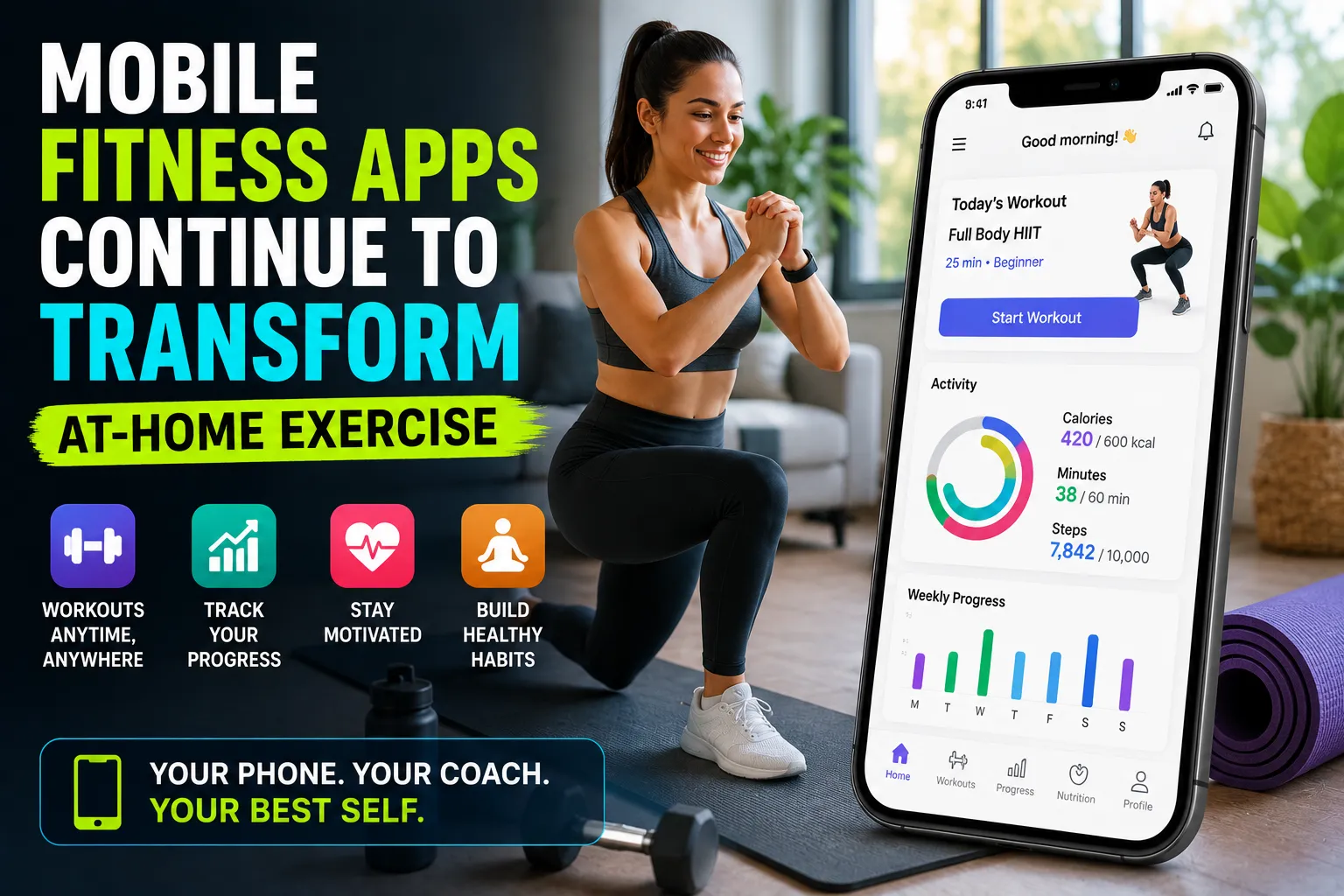

Mobile Fitness Apps Continue to Transform At-Home Exercise
The way people exercise has changed dramatically over the past decade, with smartphones becoming powerful personal fitness coaches. Mobile fitness apps now offer everything from guided strength training and yoga sessions to personalized running plans and AI-powered workout recommendations all accessible from the palm of your hand.
As artificial intelligence, wearable technology, and personalized health analytics continue to evolve, fitness apps are helping millions of users build healthier lifestyles without needing a traditional gym membership. Their growing popularity reflects a broader shift toward flexible, technology-driven wellness solutions that fit into busy daily routines.
Experts say the next generation of mobile fitness platforms will become even more personalized, interactive, and data-driven.
For a broader look at how exercise, movement, training, recovery, and fitness fit together, see the complete guide to physical activity and exercise.
—
# A New Era of Digital Fitness
Mobile fitness applications have evolved far beyond simple workout timers.
Today’s platforms often provide:
-
Personalized workout plans
-
Video-guided exercise sessions
-
AI-powered coaching
-
Nutrition tracking
-
Progress monitoring
-
Wearable device integration
-
Goal setting
-
Community challenges
These features allow users to access professional-quality training wherever they are.
—
# Why At-Home Fitness Continues to Grow
Home workouts remain popular because they offer convenience and flexibility.
Benefits include:
-
No commute to a gym
-
Flexible workout schedules
-
Lower long-term costs
-
Greater privacy
-
Wide variety of exercise programs
-
Accessibility for beginners
For many people, exercising at home makes it easier to maintain consistent fitness habits.
Short, practical sessions can also make exercise easier to fit into busy schedules, particularly for people who struggle to dedicate long periods of time to traditional workouts. The broader role of shorter exercise sessions is explored in how you may not need a long workout.
—
# Artificial Intelligence Is Making Fitness More Personal
Artificial intelligence has become one of the biggest innovations in fitness technology.
AI-powered features can:
-
Recommend workouts based on fitness level
-
Adapt training plans automatically
-
Analyze exercise performance
-
Suggest recovery periods
-
Track long-term progress
-
Provide motivational reminders
Rather than offering one-size-fits-all routines, many apps now create personalized fitness experiences.
—
# Wearable Devices Improve Workout Tracking
Many fitness apps integrate seamlessly with wearable devices.
These connections allow users to monitor:
-
Heart rate
-
Calories burned
-
Daily steps
-
Sleep quality
-
Workout duration
-
Recovery metrics
-
Distance traveled
Real-time health data helps users better understand how exercise affects their overall wellness.
The growing role of wearables is also changing how people monitor activity, exercise performance, and recovery. Fitness technology is increasingly becoming part of the broader wearable fitness technology landscape.
The wearable category is also expanding beyond conventional screen-based devices. For example, Garmin Cirqa is a screen-free fitness tracker reflects growing interest in fitness tracking without a traditional display.
The broader wearable market continues to develop as manufacturers introduce new devices and capabilities, including Garmin’s next major fitness wearable launch.
—
# Guided Workouts for Every Fitness Level
Modern fitness apps offer programs suitable for beginners through advanced athletes.
Popular workout categories include:
-
Strength training
-
Cardio
-
Yoga
-
Pilates
-
HIIT (High-Intensity Interval Training)
-
Stretching
-
Mobility exercises
-
Meditation
Many apps also provide beginner-friendly instruction that emphasizes proper technique and safety.
—
# Motivation Through Gamification
To keep users engaged, developers increasingly use gamification features.
Examples include:
-
Daily goals
-
Achievement badges
-
Streak tracking
-
Fitness challenges
-
Leaderboards
-
Virtual rewards
These interactive elements encourage consistency and make exercise feel more enjoyable.
—
# Personalized Workout Plans
One of the greatest advantages of fitness apps is customization.
Training plans can often be tailored based on:
-
Fitness goals
-
Experience level
-
Available equipment
-
Workout duration
-
Physical limitations
-
Preferred exercise styles
This flexibility helps users build routines that match their individual needs.
—
# Nutrition and Fitness Work Together
Many fitness apps now include nutrition tools alongside exercise programs.
Common features include:
-
Meal planning
-
Calorie tracking
-
Water intake reminders
-
Macronutrient analysis
-
Healthy recipe suggestions
-
Weight management tools
Combining nutrition and exercise in one platform supports a more comprehensive approach to wellness.
However, calorie tracking is not always as precise as it appears. People interested in the limitations of automated food analysis can also read about how AI food tracking apps may underestimate calories.
—
# Community Support Encourages Consistency
Some apps create virtual fitness communities where users can:
-
Share progress
-
Join group challenges
-
Encourage one another
-
Compare achievements
-
Participate in live workouts
Social engagement can increase motivation and improve long-term adherence to fitness routines.
—
# Accessibility Expands Fitness Opportunities
Mobile fitness technology has made exercise more accessible than ever.
People can now work out:
-
At home
-
While traveling
-
Outdoors
-
During work breaks
-
In small living spaces
Many apps also offer adaptive workouts designed for different ages, mobility levels, and fitness abilities.
—
# Challenges Facing Fitness Apps
Despite their popularity, mobile fitness apps still face several challenges.
These include:
-
Maintaining long-term user engagement
-
Accuracy of calorie estimates
-
Subscription costs
-
Privacy concerns
-
Overreliance on automated coaching
-
Variable workout quality between platforms
Users should evaluate apps carefully and choose programs that align with their goals and abilities.
—
# Privacy and Health Data
Fitness apps often collect sensitive health information.
Users should review:
-
Privacy policies
-
Data sharing settings
-
Account permissions
-
Wearable integrations
-
Cloud storage options
Understanding how personal fitness data is handled helps users make informed decisions.
—
# Future Trends in Mobile Fitness
The next generation of fitness apps is expected to include even more advanced technologies.
Emerging innovations include:
-
Real-time AI coaching
-
Motion analysis through smartphone cameras
-
Personalized recovery recommendations
-
Augmented reality workouts
-
Virtual reality fitness experiences
-
Predictive health analytics
-
Smarter wearable integration
These developments may create even more immersive and effective home fitness experiences.
Recovery technology is also becoming increasingly important, with apps and wearables giving users more ways to understand fatigue and readiness. This connects with the broader trend toward recovery tracking in fitness.
—
# Balancing Technology With Healthy Habits
While mobile apps can provide valuable guidance, experts emphasize that sustainable fitness depends on consistency rather than technology alone.
Healthy habits still include:
-
Regular physical activity
-
Balanced nutrition
-
Adequate sleep
-
Recovery time
-
Proper hydration
-
Listening to your body
Technology works best as a tool that supports—not replaces—healthy lifestyle choices.
—
# Looking Ahead
Mobile fitness apps have transformed at-home exercise by making professional-quality training more accessible, affordable, and personalized than ever before. Advances in artificial intelligence, wearable technology, and digital coaching continue to reshape how people approach fitness, helping users stay active regardless of their location or schedule.
As these platforms become smarter and more interactive, they are likely to play an even greater role in supporting long-term health, encouraging healthier habits, and making exercise an integral part of everyday life.
—
# Frequently Asked Questions
## What are mobile fitness apps?
Mobile fitness apps are smartphone applications that provide workout programs, activity tracking, health insights, and personalized fitness guidance.
## Are home workout apps effective?
Yes. When used consistently and paired with appropriate exercise techniques and healthy habits, fitness apps can effectively support many health and fitness goals.
## How does AI improve fitness apps?
AI can personalize workout recommendations, monitor progress, adapt training plans, provide coaching, and suggest recovery strategies based on user activity.
## Can fitness apps replace a personal trainer?
Fitness apps can provide valuable guidance for many users, but individuals with specific medical conditions, rehabilitation needs, or advanced performance goals may still benefit from working with qualified fitness professionals.
## Do fitness apps work with wearable devices?
Many modern fitness apps integrate with smartwatches and fitness trackers to monitor heart rate, activity levels, sleep, calories burned, and other health metrics.
—
## Key Takeaways
-
Mobile fitness apps are making home exercise more convenient and personalized.
-
Artificial intelligence is improving workout recommendations and long-term fitness planning.
-
Wearable technology provides valuable real-time health and performance data.
-
Personalized training plans help users achieve a wide variety of fitness goals.
-
Community features and gamification encourage motivation and consistency.
-
As AI and digital health technologies continue evolving, mobile fitness apps are expected to become even more intelligent, interactive, and accessible.
Continue Reading
Similar Posts
Just 3 Minutes of Intense Exercise Could Trigger Powerful Health-Related Changes, Study Finds
That does not mean three minutes of sprinting has been proven to replace a longer workout. Instead, the findings offer a closer look at why intense exercise may produce such a rapid and wide-ranging biological response.
Read article
Is Walking Enough Exercise? New Research Reopens the Fitness Debate
The study does not prove that walking faster or taking a particular number of steps prevents death. It does, however, add to a growing body of evidence suggesting that there is no single magic step count or perfect form of exercise.
Read article
Regular Exercise Linked to Lower Risk of Death in Older Adults, New Study Finds
The findings add to a growing body of evidence suggesting that staying physically active may be important not only for maintaining strength and independence in later life, but also for improving long-term health outcomes.
Read article

Join 10,000+ Readers Building Healthier Habits
Get actionable wellness tips every week plus our newest articles delivered straight to your inbox.