
How the Body Maintains Fluid Balance
Fluid balance is one of the body’s most carefully regulated processes. Every cell, tissue, and organ depends on having enough water and dissolved substances to function properly. At the same time, the body must prevent too much fluid from accumulating in the wrong places.
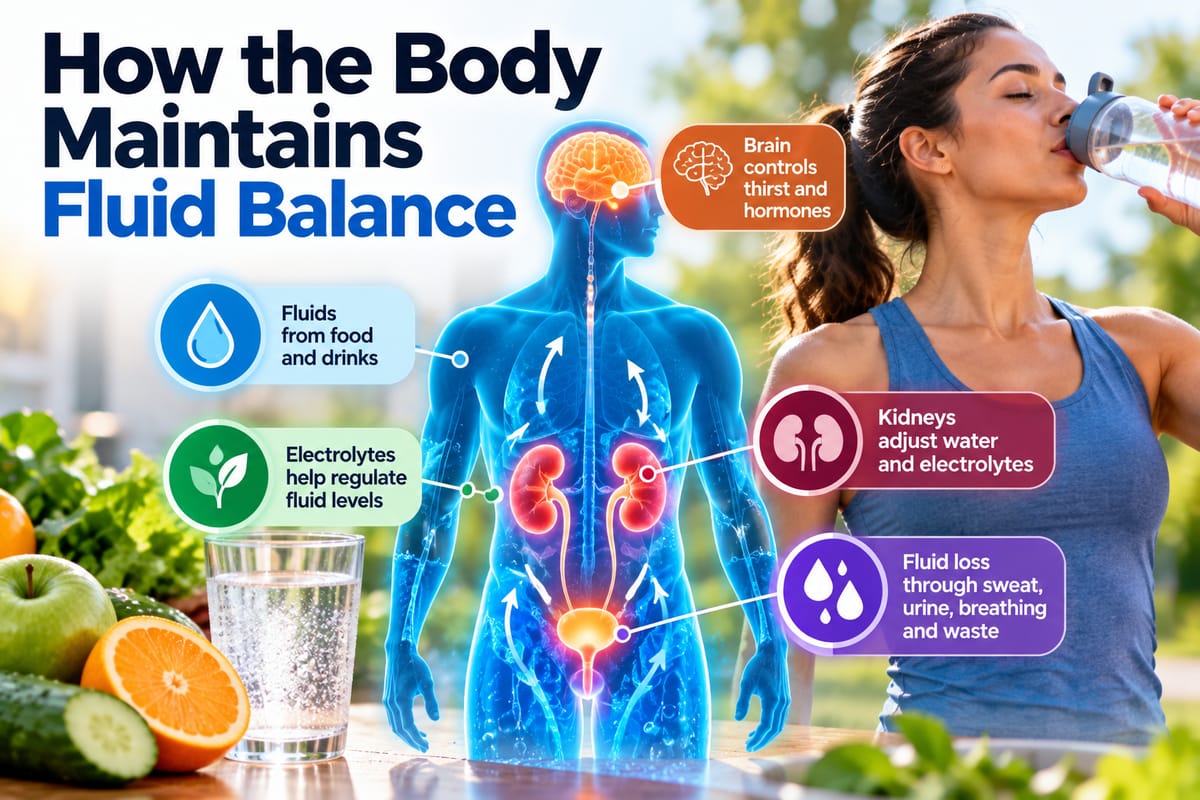
The body manages this balance continuously through the kidneys, brain, hormones, blood vessels, and other systems. Thirst, urine production, sweating, and changes in hormone levels all help adjust the amount of water and electrolytes in the body.
Understanding how fluid balance works can make it easier to recognize why hydration, nutrition, physical activity, and mineral intake all matter to everyday health.
What Is Fluid Balance?
Fluid balance refers to the relationship between the amount of water entering the body and the amount leaving it.
Water enters the body primarily through:
- Drinking water and other beverages
- Foods that naturally contain water
- Small amounts produced during normal metabolic processes
Water leaves the body through:
- Urine
- Sweat
- Breathing
- Feces
The goal is not for fluid intake and fluid loss to be identical every hour. Instead, the body constantly adjusts its water distribution and output so that the internal environment remains within a suitable range.
This regulation is closely connected to the principles discussed in the Complete Guide to Hydration and Healthy Fluid Intake.
Where Is Water Stored in the Body?
Water is distributed throughout several compartments rather than existing as one large pool.
The two major fluid compartments are:
Intracellular Fluid
Intracellular fluid is the water found inside cells. It represents a large portion of the body’s total water and provides the environment in which many cellular reactions occur.
Cells need the right concentration of water and dissolved substances to maintain their structure and perform their normal functions.
Extracellular Fluid
Extracellular fluid is located outside cells. It includes:
- Blood plasma
- Fluid between cells
- Smaller specialized fluid compartments
This fluid helps transport nutrients, hormones, oxygen, and waste products throughout the body.
Maintaining appropriate movement of water between these compartments is essential because excessive shifts can interfere with normal cell function.
Why Electrolytes Matter
Water alone does not determine fluid balance. The body also regulates dissolved minerals called electrolytes.
Important electrolytes include:
- Sodium
- Potassium
- Chloride
- Calcium
- Magnesium
- Phosphate
These substances help regulate fluid distribution, nerve signaling, muscle contraction, and other physiological processes.
Sodium is particularly important for regulating the amount of water in extracellular fluid. Potassium has a major role in maintaining the environment inside cells.
A broader explanation of these nutrients is available in Minerals Explained: Essential Nutrients Your Body Needs Every Day.
The Kidneys Are Central to Fluid Regulation
The kidneys play one of the most important roles in maintaining fluid balance.
They continuously filter blood and adjust how much water and dissolved material are returned to circulation or eliminated in urine.
When the body needs to conserve water, the kidneys can produce a smaller amount of more concentrated urine. When there is excess water to remove, urine can become more dilute and its volume can increase.
The kidneys also help regulate levels of electrolytes and contribute to maintaining the body’s acid-base balance.
This ability to adjust urine production means the body can respond to changes in fluid intake and fluid loss throughout the day.
How the Brain Detects Changes in Fluid Balance
The brain helps coordinate fluid regulation by detecting changes in the concentration of substances in the blood and responding to changes in the body’s fluid status.
Specialized cells called osmoreceptors are particularly important. They detect changes in the concentration of dissolved substances in body fluids.
When the body becomes more concentrated because it has lost water, this information contributes to two important responses:
- Thirst increases, encouraging fluid intake.
- Hormonal signals increase water conservation by the kidneys.
These responses work together to restore balance.
The Role of Antidiuretic Hormone
Antidiuretic hormone, commonly called ADH or vasopressin, is a major regulator of water conservation.
When the body needs to conserve water, ADH signals the kidneys to reabsorb more water rather than allowing as much to leave in urine.
This reduces water loss and helps maintain the concentration of body fluids within an appropriate range.
When the body has more water than it needs, ADH levels can decrease. The kidneys can then allow more water to be eliminated through urine.
This process happens continuously rather than only when someone feels obviously thirsty.
How Thirst Helps Maintain Balance
Thirst is another important defense against dehydration.
As the body’s fluid concentration changes, signals involving the brain and circulation can increase the sensation of thirst. Drinking then provides the water needed to restore fluid levels.
Thirst is useful, but it is not the body’s only mechanism for maintaining hydration. Fluid regulation also involves hormones, kidney function, circulation, and electrolyte concentrations.
Fluid needs can also change depending on environmental conditions, diet, illness, and physical activity.
What Happens When the Body Loses Water?
Water loss occurs naturally throughout the day, but it can increase substantially under certain conditions.
Examples include:
- Hot weather
- Heavy sweating
- Intense exercise
- Fever
- Vomiting
- Diarrhea
- Prolonged exposure to dry environments
When water loss exceeds replacement, the concentration of dissolved substances in body fluids can rise.
The body responds by increasing thirst and conserving more water through the kidneys.
If fluid losses continue without adequate replacement, dehydration can become increasingly significant.
Fluid Balance During Exercise
Physical activity can substantially change fluid requirements.
During exercise, the body produces heat. Sweating helps remove some of that heat from the skin, but it also causes water and electrolytes to leave the body.
The amount of fluid lost depends on factors such as:
- Exercise intensity
- Exercise duration
- Ambient temperature
- Humidity
- Clothing
- Individual sweat rate
- Access to fluids
The relationship between movement, sweating, and hydration is one reason hydration should be considered as part of an overall approach to physical activity. The Complete Guide to Physical Activity and Exercise provides broader context on how physical activity affects the body.
Why Sweating Is More Than Water Loss
Sweat contains water as well as electrolytes, although the exact composition varies from person to person.
Sodium is one of the major electrolytes lost through sweat. People who exercise for long periods or sweat heavily may therefore lose meaningful amounts of both water and electrolytes.
This does not mean everyone needs an electrolyte beverage during ordinary daily activity. Fluid and electrolyte requirements depend on the duration and intensity of activity, environmental conditions, diet, and individual losses.
For many routine activities, normal food and beverage intake can provide the fluids and minerals needed to support everyday balance.
How Food Contributes to Fluid Balance
Hydration does not come exclusively from beverages.
Many foods contain substantial amounts of water, including:
- Fruits
- Vegetables
- Soups
- Yogurt
- Milk
- Other water-rich foods
Food also supplies electrolytes and other nutrients involved in normal physiological function.
A balanced dietary pattern therefore contributes to fluid regulation as well as providing energy, protein, vitamins, minerals, fiber, and other nutrients. The Complete Guide to Healthy Eating and Balanced Nutrition explores how different components of a balanced diet support overall health.
The Relationship Between Sodium and Water
Sodium and water are closely connected in the body’s extracellular fluid.
When sodium concentration changes, water distribution can change as well. The body therefore regulates sodium alongside water rather than treating the two as completely separate concerns.
The kidneys help control how much sodium is retained or eliminated. Hormonal systems also influence sodium handling and blood volume.
This is one reason why fluid balance is more complicated than simply calculating how many glasses of water someone drinks.
Blood Volume and Fluid Balance
Fluid balance also affects blood volume.
Blood contains a significant amount of water, and appropriate blood volume helps the cardiovascular system transport oxygen and nutrients throughout the body.
When substantial fluid is lost, circulating blood volume can fall. The body can respond by activating mechanisms that encourage the kidneys to retain sodium and water and help maintain circulation.
These responses demonstrate how closely hydration is connected with cardiovascular regulation.
What Happens When There Is Too Much Water?
Fluid balance also requires protection against excessive water accumulation.
Drinking very large amounts of water over a short period can overwhelm the body’s ability to eliminate water. In extreme circumstances, this can cause the concentration of sodium in the blood to fall too low, a condition known as hyponatremia.
The important principle is that hydration is about maintaining an appropriate balance, not simply maximizing water intake.
Individual fluid needs vary, so more water is not automatically better.
Signs That Fluid Balance May Be Changing
Everyday changes in hydration can produce relatively noticeable signals.
Possible signs of inadequate fluid intake or increased fluid loss include:
- Increased thirst
- Darker urine
- Dry mouth
- Reduced urination
- Fatigue
- Headache
- Dizziness in some circumstances
However, these signs are not specific to hydration alone. Their meaning can depend on the circumstances, medications, diet, illness, activity level, and other factors.
Significant or persistent symptoms should not automatically be attributed to dehydration.
How the Body Adjusts Throughout the Day
Fluid regulation is dynamic.
For example, after drinking a large amount of water, the body does not simply store all of it. The kidneys can increase urine production as the body works to return fluid levels toward their usual range.
After sweating heavily, the opposite pattern may occur. Thirst can increase, ADH can promote greater water retention, and the kidneys can reduce water loss.
These adjustments allow the body to respond to constantly changing conditions.
Everyday Habits That Support Fluid Balance
Maintaining fluid balance generally involves ordinary habits rather than complicated routines.
Helpful practices include:
- Drink according to thirst and individual circumstances.
- Increase attention to fluids during heat and prolonged physical activity.
- Replace fluids lost through heavy sweating.
- Eat a varied diet that provides essential minerals.
- Pay attention to changes in urination and thirst.
- Avoid treating extreme water intake as a health goal.
- Consider both food and beverages when thinking about daily fluid intake.
People with certain medical conditions or taking medications that affect fluid or electrolyte regulation may have different requirements and should follow individualized medical advice.
Why Fluid Balance Matters for Everyday Health
The body’s ability to regulate water and electrolytes supports many fundamental processes at once. Cells need an appropriate fluid environment, the cardiovascular system depends on adequate circulating volume, the kidneys continuously adjust water and electrolyte excretion, and the brain coordinates thirst and hormonal responses.
Fluid balance is therefore not controlled by a single organ or a single glass of water. It is the result of several interconnected systems working together.
Understanding that system also explains why hydration, mineral intake, nutrition, and physical activity are closely connected. Everyday choices can influence fluid losses and replenishment, while the body’s regulatory mechanisms continuously make adjustments to keep its internal environment within a workable range.
Continue Reading
Similar Posts

How Meal Planning Supports Healthy Eating
Meal planning does not require complicated recipes, strict diets, or preparing every meal days in advance. It can be as simple as deciding on several meals, creating a shopping list, and making sure the kitchen has the ingredients needed to prepare balanced options.
Read article
How Dehydration Affects the Body
Understanding how dehydration affects the body can make it easier to recognize early signs, understand when fluid needs increase, and take practical steps to maintain adequate hydration.
Read article
How Heat and Climate Affect Hydration
Understanding these relationships can make it easier to adapt fluid intake to changing conditions rather than relying on the same hydration habits throughout the year.
Read article

Join 10,000+ Readers Building Healthier Habits
Get actionable wellness tips every week plus our newest articles delivered straight to your inbox.