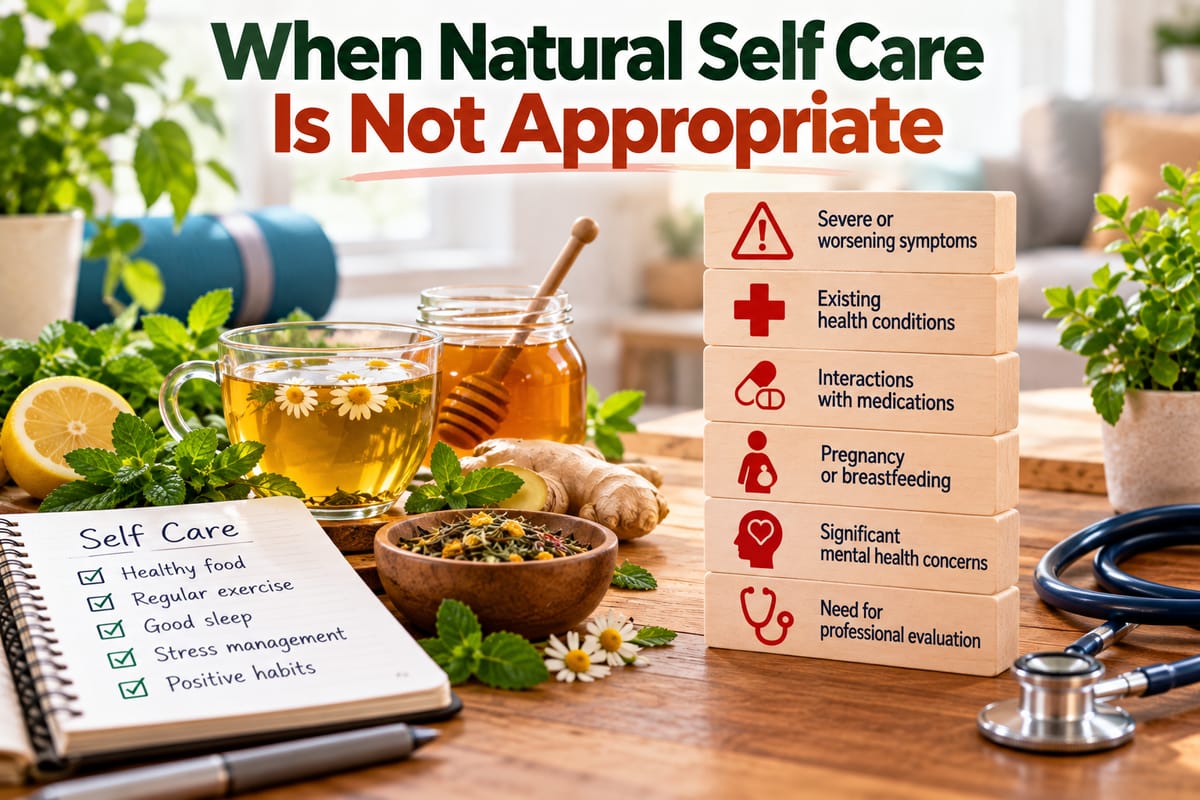
When Natural Self Care Is Not Appropriate
Natural self-care can be a useful part of everyday wellness. Rest, nutritious food, physical activity, relaxation, traditional practices, and other low-risk habits can support general well-being and help people manage minor, short-lived discomforts.
However, self-care has limits.
A natural approach is not automatically appropriate simply because it comes from a plant, food, traditional practice, or home routine. Some symptoms require professional assessment, while certain health problems need timely treatment. In other situations, a person may safely use self-care alongside professional care, but not as a substitute for it.
Knowing when to stop managing a problem independently is an important part of responsible self-care.
What Does Natural Self-Care Mean?
Natural self-care generally refers to everyday practices people use to support their physical or emotional well-being without relying exclusively on professional medical treatment.
Examples can include:
- Getting adequate sleep
- Eating a balanced diet
- Staying physically active
- Drinking enough fluids
- Spending time outdoors
- Practicing relaxation techniques
- Using traditional herbal preparations
- Taking warm baths
- Maintaining social connections
- Using breathing or mindfulness exercises
- Establishing healthy daily routines
Some practices are broadly supportive and relatively low risk. Others, particularly herbal products and concentrated preparations, can have physiological effects and may interact with medicines or affect existing health conditions.
That is why the word natural should not be treated as a synonym for safe or appropriate for everyone.
For a broader framework, the Complete Guide to Evidence-Based Self-Care explains how everyday self-care can be considered alongside available evidence, individual circumstances, and appropriate professional guidance.
Why Natural Self-Care Has Limits
Self-care works best when it is used for situations that are suitable for self-management.
A mild, temporary problem may improve with rest, hydration, appropriate nutrition, or another reasonable supportive measure. But persistent, severe, unusual, or rapidly worsening symptoms can indicate a problem that requires assessment.
One of the risks of relying exclusively on natural remedies is that attention may remain focused on relieving symptoms rather than identifying their underlying cause.
For example, repeatedly treating discomfort at home without understanding why it keeps occurring can delay appropriate evaluation.
The question is therefore not whether natural self-care is good or bad. The more useful question is:
Is this particular situation appropriate for self-care, or does it require another level of support?
When Symptoms Are Severe or Sudden
Sudden or severe symptoms deserve particular caution.
Depending on the circumstances, urgent medical attention may be appropriate when someone experiences symptoms such as:
- Severe difficulty breathing
- Chest pressure or severe chest pain
- Sudden loss of consciousness
- Severe bleeding
- A serious injury
- Sudden weakness or difficulty speaking
- A severe allergic reaction
- A seizure
- Severe confusion
- A rapidly worsening condition
These situations should not be managed solely with home remedies.
When a potentially serious problem is occurring, the priority is obtaining appropriate professional assessment rather than experimenting with different natural treatments.
When Symptoms Keep Returning
A recurring symptom deserves more attention than an isolated minor complaint.
For example, someone may repeatedly experience:
- Headaches
- Abdominal discomfort
- Persistent fatigue
- Dizziness
- Skin problems
- Sleep difficulties
- Digestive symptoms
- Unexplained changes in appetite
- Recurring pain
A home remedy may temporarily make a symptom feel better without addressing its cause.
Repeated symptoms do not necessarily mean that something serious is happening, but they can justify discussing the pattern with a qualified healthcare professional.
Keeping a simple record of when symptoms occur, how long they last, and what seems to affect them can also make a professional consultation more useful.
When a Condition Has Already Been Diagnosed
People living with diagnosed health conditions may still use self-care practices, but they should consider how those practices fit into their existing treatment plan.
For example, someone managing a chronic condition may have specific recommendations concerning:
- Diet
- Physical activity
- Medication
- Fluid intake
- Sleep
- Supplements
- Monitoring
- Follow-up appointments
Introducing a new herbal product or significantly changing a routine without considering the existing treatment plan can create problems.
Natural self-care should therefore complement appropriate care rather than automatically replace it.
When Someone Takes Prescription or Other Medicines
Herbal products and concentrated natural preparations can interact with medicines.
Potential interactions may affect how a medicine is absorbed, metabolized, or eliminated. In some cases, a natural product may increase or decrease the effects of a medicine.
This is especially important when someone takes multiple medications.
Before adding a supplement, concentrated herbal product, or other biologically active natural preparation, it can be appropriate to ask a doctor, pharmacist, or another qualified healthcare professional whether there are relevant interactions.
The Natural Remedies Safety Guide: Risks, Interactions and More provides a broader discussion of why natural remedies require the same kind of thoughtful safety consideration as other health products.
Pregnancy and Breastfeeding Require Extra Caution
Pregnancy and breastfeeding can change how the body responds to substances.
A product that is commonly used by adults may not have sufficient safety information for pregnancy or breastfeeding. Some herbs and concentrated supplements may also have effects that are undesirable during these periods.
For this reason, people who are pregnant, trying to become pregnant, or breastfeeding should be cautious about using herbal products or concentrated natural remedies without appropriate professional advice.
The fact that a substance has traditionally been used does not automatically establish that it is safe during pregnancy or breastfeeding.
Children May Need Different Care
Children are not simply smaller versions of adults.
Their bodies are developing, and appropriate doses, formulations, and treatments can differ substantially from those used for adults.
Parents and caregivers should therefore be particularly cautious about giving children concentrated herbal products, supplements, essential oils, or other natural preparations without suitable guidance.
When a child has significant, persistent, or concerning symptoms, professional assessment can be more appropriate than experimenting with home remedies.
Older Adults May Have Additional Considerations
Older adults may take several medications or have multiple health conditions at the same time.
This can increase the importance of checking whether a natural product is compatible with existing treatment.
Age-related changes can also affect how the body processes certain substances.
A new supplement or herbal remedy may therefore have consequences that are not immediately obvious.
For older adults with complex medical needs, discussing new natural products with a healthcare professional can help identify potential interactions and other concerns.
When Mental Health Symptoms Are Significant
Self-care can play a valuable role in mental well-being.
Activities such as regular sleep, physical activity, social connection, relaxation, mindfulness, time outdoors, and healthy routines can all form part of a broader approach to emotional wellness.
But self-care should not be treated as a substitute for professional mental health support when symptoms are severe, persistent, or significantly affecting daily life.
Warning signs that professional support may be appropriate can include:
- Persistent feelings of hopelessness
- Severe or prolonged anxiety
- Major changes in daily functioning
- Persistent inability to sleep
- Significant changes in eating patterns
- Difficulty maintaining work, school, or relationships
- Severe emotional distress
- Thoughts of self-harm or suicide
- Feeling unable to stay safe
The guide When Should Someone Seek Professional Mental Health Support? explores situations in which professional mental health care may be appropriate.
If someone is in immediate danger or believes they may act on thoughts of self-harm, seeking emergency assistance or contacting an appropriate crisis service should take priority over self-care practices.
When a Symptom Is Getting Worse
The direction of a health problem matters.
A minor symptom that is steadily improving may be reasonable to monitor in appropriate circumstances. A symptom that is becoming more intense, spreading, or accompanied by new symptoms deserves greater attention.
For example, someone might initially experience mild discomfort but later develop:
- Increasing pain
- Fever
- Weakness
- Difficulty breathing
- Persistent vomiting
- Confusion
- Significant swelling
- New neurological symptoms
A worsening pattern can be a reason to stop relying solely on self-care and seek professional evaluation.
When a Remedy Masks an Important Symptom
Some remedies may reduce discomfort without addressing the underlying cause.
This can make it tempting to continue using the remedy whenever the symptom returns.
However, repeatedly suppressing a symptom without investigating its cause can delay recognition of an underlying problem.
For example, regularly experiencing pain and repeatedly treating it without professional evaluation may leave the actual source of the pain unidentified.
Symptom relief can be useful, but relief does not necessarily explain why the symptom occurred.
When a Natural Remedy Has Strong Physiological Effects
Not all natural products are mild.
Some plants contain compounds that can significantly affect the body. Concentrated extracts can contain much higher amounts of particular compounds than would normally be consumed as food.
Potential effects may involve:
- Blood pressure
- Blood sugar
- Heart rate
- Blood clotting
- Hormonal activity
- Liver function
- Kidney function
- The central nervous system
A substance with a strong biological effect should be treated with appropriate caution regardless of whether it comes from a natural source.
Food Is Not the Same as a Concentrated Supplement
There can be an important difference between consuming a plant as part of a normal diet and taking a concentrated extract made from that plant.
For example, eating a common culinary herb in ordinary food quantities is not necessarily equivalent to taking a concentrated capsule or extract.
Concentration, preparation, dose, and frequency can all change how a substance affects the body.
This distinction is especially important when evaluating claims that a traditional food or plant is “natural” and therefore harmless in every form.
When the Evidence Is Limited
Traditional use can provide valuable information about how people have used a remedy over time, but traditional use and modern clinical evidence are not identical.
Some natural remedies have been studied extensively. Others have limited evidence, inconsistent findings, or insufficient research for particular uses.
The Complete Guide to Natural Remedies Evidence provides a broader framework for understanding the difference between traditional use, scientific evidence, and health claims.
When evidence is limited, it is especially important to avoid treating a remedy as a proven replacement for established care.
When a Product Makes Extraordinary Claims
Consumers should be cautious when a product is marketed as capable of treating an unusually broad range of conditions.
Warning signs can include claims that a product:
- Cures many unrelated diseases
- Replaces all conventional treatment
- Works for everyone
- Has no side effects
- Does not interact with medicines
- Has been deliberately suppressed by medical authorities
- Produces immediate results for complex conditions
Health conditions can have complicated causes, and no single remedy is appropriate for every person.
A more credible approach recognizes uncertainty, limitations, individual differences, and the quality of available evidence.
When the Diagnosis Is Unclear
Self-treatment becomes more difficult when someone does not know what they are actually treating.
Many different conditions can produce similar symptoms.
Fatigue, for example, can occur for numerous reasons. Headaches can also have many possible causes. Digestive discomfort may result from dietary factors, infections, medications, stress, or other conditions.
Choosing a remedy based solely on a symptom can therefore be unreliable.
When a symptom is unusual, persistent, severe, or difficult to explain, identifying the cause may be more important than immediately choosing a remedy.
When Professional Treatment Has Already Been Recommended
If a qualified healthcare professional has recommended treatment or follow-up, replacing that plan with a natural remedy without discussing the change can create unnecessary risk.
Someone may prefer natural approaches for personal reasons, and those preferences can be discussed with healthcare professionals.
In some situations, complementary practices can be incorporated into an overall care plan.
The important distinction is between adding a supportive practice and abandoning necessary treatment.
When Surgery or Other Specialized Treatment Is Needed
Some health problems cannot reasonably be managed through home remedies.
Examples can include conditions requiring:
- Surgery
- Prescription medication
- Specialized monitoring
- Diagnostic testing
- Physical rehabilitation
- Infusion therapy
- Medical procedures
- Specialist evaluation
Self-care may still have a role in recovery or general well-being, but it should not be presented as a replacement for treatment that addresses the underlying condition.
When an Injury Is Serious
Minor injuries may sometimes be managed with appropriate first-aid measures.
More serious injuries can require professional assessment.
Warning signs can include:
- Severe pain
- Significant bleeding
- Loss of consciousness
- Difficulty moving a body part
- Obvious deformity
- Severe swelling
- Numbness
- Suspected fracture
- Deep wounds
- Head injuries accompanied by concerning symptoms
A natural remedy should not delay appropriate treatment for a serious injury.
When a Person Cannot Reliably Monitor Their Condition
Some forms of self-care require a person to recognize whether their condition is improving or worsening.
This can become difficult when someone is:
- Very young
- Confused
- Extremely ill
- Unconscious
- Experiencing severe cognitive difficulties
- Unable to communicate effectively
- Unable to safely follow instructions
In these circumstances, professional assessment or assistance from an appropriate caregiver may be necessary.
Natural Self-Care Can Still Have a Place
Recognizing the limits of self-care does not mean abandoning natural approaches altogether.
Many everyday practices can remain useful as part of a broader wellness routine.
These may include:
- Eating a varied and nutritious diet
- Maintaining regular physical activity
- Getting adequate sleep
- Practicing stress-management techniques
- Maintaining social relationships
- Spending time outdoors
- Taking reasonable breaks from work
- Practicing relaxation
- Maintaining good personal hygiene
These habits generally support overall well-being rather than attempting to replace medical treatment for a specific condition.
A Practical Way to Decide Whether Self-Care Is Appropriate
When considering a natural self-care approach, it can help to ask several questions.
How Severe Is the Problem?
Mild and temporary symptoms may be different from severe or rapidly worsening symptoms.
How Long Has It Lasted?
A problem that does not improve within a reasonable period may deserve professional attention.
Is It Getting Better or Worse?
Improvement and deterioration provide different signals about whether continued self-management is appropriate.
Is There an Existing Health Condition?
Existing conditions can change the safety of particular remedies.
Are Medicines Involved?
Check for potential interactions before introducing supplements or concentrated herbal products.
Is the Person in a Higher-Risk Group?
Pregnancy, childhood, older age, and certain medical conditions can require additional caution.
Is the Remedy Supported by Reliable Evidence?
Traditional use may be informative, but evidence for effectiveness and safety should be considered separately.
Could Delaying Care Be Harmful?
If the answer might be yes, professional evaluation should take priority.
Knowing When to Move Beyond Self-Care
Responsible natural self-care is not about avoiding professional healthcare at all costs.
It is about understanding what self-care can reasonably accomplish and recognizing when another form of support is needed.
Natural practices can contribute to healthy routines, comfort, relaxation, and general well-being. But severe symptoms, persistent problems, significant mental health difficulties, serious injuries, medication interactions, and situations involving higher-risk individuals can require professional attention.
The most useful approach is therefore flexible rather than absolute: use appropriate self-care where it makes sense, evaluate natural remedies critically, and seek qualified help when the situation exceeds what can safely be managed at home.
Knowing when to ask for help is itself an important part of taking care of yourself.
Continue Reading
Similar Posts

What Foods Are Considered Anti-Inflammatory?
Certain foods are commonly described as **anti-inflammatory foods** because they contain nutrients and plant compounds associated with healthier inflammatory responses.
Read article
When Natural Self Care Is Not Appropriate
Knowing when to stop relying on self-care and seek appropriate medical attention is an important part of using natural approaches responsibly.
Read article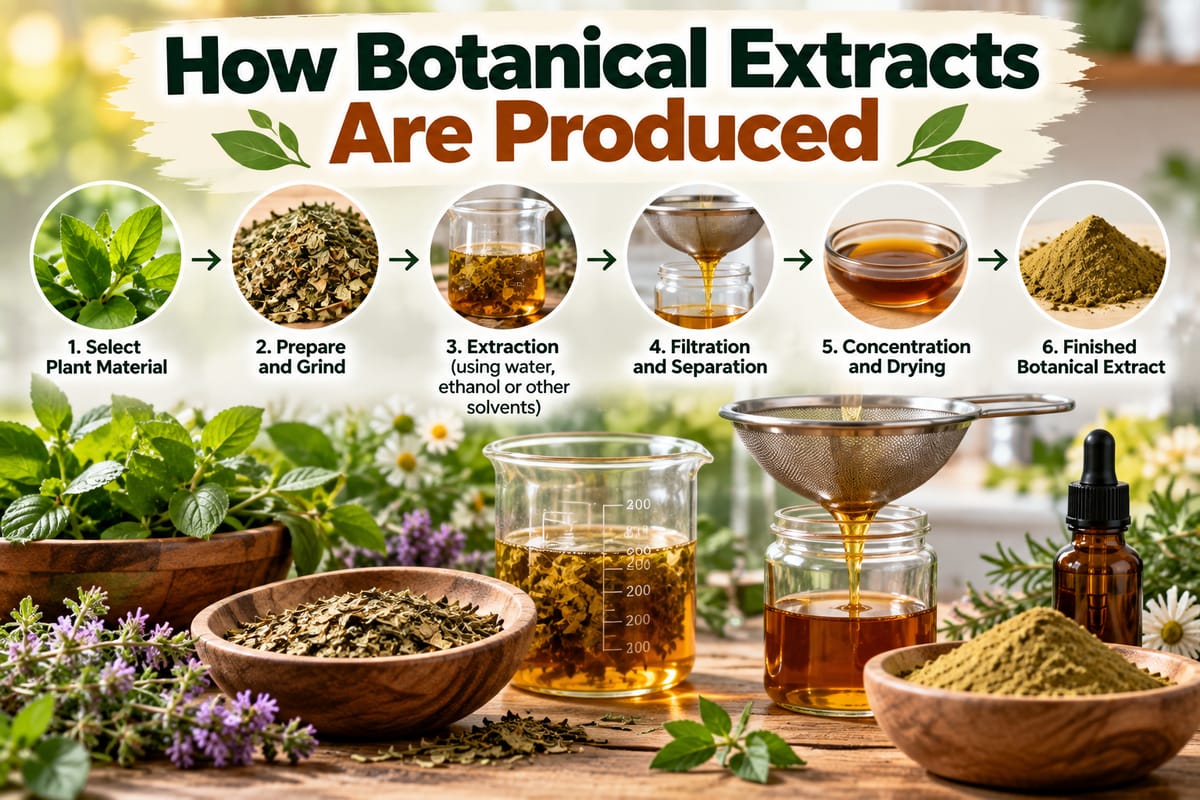
How Botanical Extracts Are Produced
Understanding how botanical extracts are produced also helps explain why an extract is not necessarily equivalent to simply consuming the original plant.
Read article
Join 10,000+ Readers Building Healthier Habits
Get actionable wellness tips every week plus our newest articles delivered straight to your inbox.