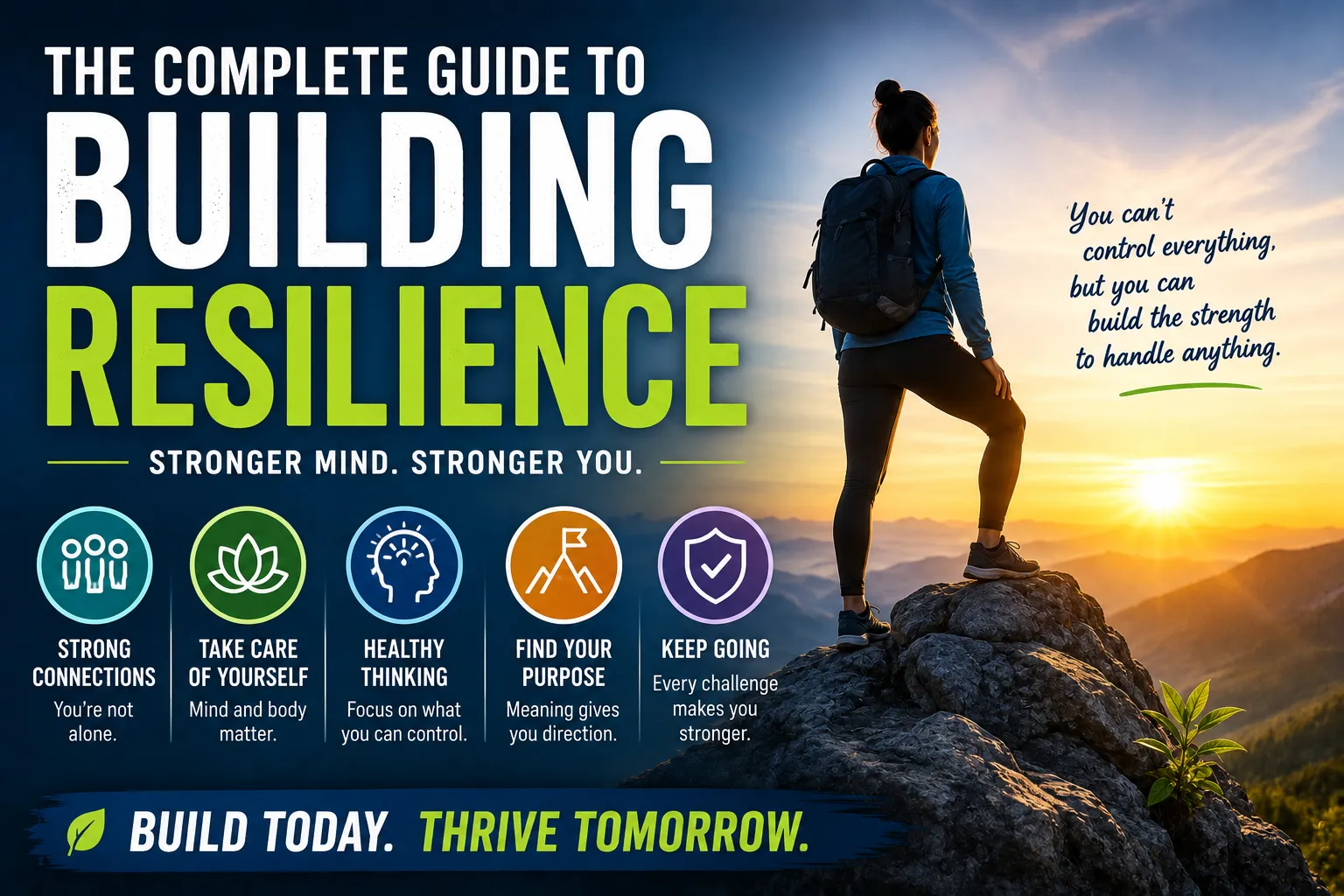

The Complete Guide to Building Resilience
Life rarely follows a predictable path. Work pressures, financial difficulties, relationship problems, health challenges, loss and unexpected changes can test even the most confident person.
Resilience is the capacity to adapt to difficult circumstances while continuing to function, recover and move forward. The American Psychological Association describes it as a process of adapting well in the face of adversity, trauma, tragedy or significant stress. Importantly, resilience is not something that only a fortunate few possess. Research and psychological guidance indicate that the behaviors, thoughts and actions associated with resilience can be learned and developed.
Building resilience does not mean becoming immune to stress or difficult emotions. Instead, it means developing healthier ways to respond when life becomes challenging.
For a broader understanding of the emotional and psychological factors that support resilience, see the Complete Guide to Emotional Well-Being.
What Is Resilience?
Resilience is often described as the ability to “bounce back,” but that description can make the process sound simpler than it really is.
A resilient person can still experience sadness, fear, frustration, grief or uncertainty. Difficult experiences can cause genuine emotional distress, and resilience does not require pretending otherwise.
The APA emphasizes that resilience involves adapting to adversity and can sometimes include personal growth. It is influenced by factors such as how people approach the world, the quality of their relationships and social resources, and the coping strategies they use.
In other words, resilience is less about avoiding hardship and more about developing the resources needed to navigate it.
Why Resilience Matters
Stress is a normal part of life, but prolonged or overwhelming stress can affect both emotional and physical well-being.
People experiencing significant stress may notice changes in mood, sleep, concentration, appetite, energy or behavior. Unhealthy responses to stress can also include increased use of alcohol, tobacco or other substances.
Resilience can provide a healthier framework for dealing with difficult circumstances.
It can help people:
- Adapt to major changes
- Manage challenging emotions
- Maintain meaningful relationships
- Develop healthier coping strategies
- Recover from setbacks
- Continue functioning during stressful periods
- Find meaning during difficult experiences
- Recognize when additional support is needed
Resilience does not eliminate the source of stress. It can improve how a person responds to circumstances that cannot immediately be changed.
Resilience Is a Skill, Not a Personality Test
One of the most useful ideas about resilience is that it is not simply something people either have or lack.
According to the APA, resilience involves behaviors, thoughts and actions that can be learned and developed. The organization describes resilience as ordinary rather than extraordinary and compares developing it to strengthening a muscle: progress takes time and intentional effort.
This distinction matters.
Someone who currently struggles to cope with stress should not assume that they are permanently “not resilient.” Likewise, someone who normally handles challenges well may still struggle when faced with an unusually difficult experience.
Resilience can change with circumstances, experiences, relationships and available resources.
The Four Foundations of Resilience
The APA highlights four broad areas that can help people develop resilience:
- Connection
- Wellness
- Healthy thinking
- Meaning
These areas overlap and reinforce one another.
1. Build Strong Connections
Social support is one of the most important resources people can draw upon during difficult periods.
Friends, family members, colleagues, mentors, community groups and professional support networks can all provide different forms of assistance.
Connection does not necessarily mean having a huge social circle. A small number of trustworthy relationships can be highly valuable.
Practical ways to strengthen connection include:
- Checking in regularly with people you trust
- Asking for help when you need it
- Spending meaningful time with supportive people
- Joining community or interest groups
- Maintaining relationships during stressful periods
- Offering support to others
Isolation can make difficult experiences feel even heavier. Staying connected gives people opportunities to share concerns, gain perspective and receive practical or emotional assistance.
For more on the role of supportive relationships, communication and trust, see the Healthy Relationships Guide.
2. Take Care of Your Physical Health
Mental and physical well-being are closely connected.
The APA recommends paying attention to basic wellness factors such as adequate sleep, nutrition, hydration and regular exercise as part of building resilience.
These habits are not instant solutions to serious emotional problems, but they can provide a stronger foundation for dealing with stress.
Prioritize Sleep
Poor sleep can make everyday challenges harder to manage. Creating a consistent sleep routine and giving yourself enough opportunity to rest can support overall well-being.
Stay Physically Active
Movement can be a practical way to support physical and emotional health. It does not have to involve an intense workout.
Walking, cycling, stretching, recreational sports and other enjoyable activities can all become part of an active lifestyle.
Eat Regularly and Nourishingly
During stressful periods, people sometimes neglect meals or rely heavily on convenience foods.
Maintaining regular, balanced meals can help support general physical well-being while dealing with demanding circumstances.
3. Practice Healthier Thinking
Resilience also involves how people interpret and respond to difficult situations.
This does not mean forcing yourself to think positively all the time.
Instead, healthy thinking involves recognizing difficult realities without automatically assuming that every setback represents permanent failure.
For example, instead of thinking:
“Everything has gone wrong and nothing will improve.”
A more balanced perspective might be:
“This situation is difficult right now, but I can focus on the parts I can influence.”
The second statement does not deny the problem. It creates room for action.
Focus on What You Can Control
During stressful situations, people can become overwhelmed by factors outside their control.
Try separating circumstances into two categories:
Things I can influence:
- My next action
- How I communicate
- Whether I ask for help
- How I spend my time
- Which coping strategies I use
Things I cannot immediately control:
- Other people’s decisions
- Past events
- Unexpected circumstances
- Every possible future outcome
Putting attention toward controllable actions can make an overwhelming situation feel more manageable.
4. Develop a Sense of Meaning
Meaning can help people maintain perspective during difficult periods.
For some people, meaning comes from family. For others, it may come from work, creativity, faith, service, personal values, friendships or long-term goals.
The important question is not necessarily, “Why is this happening to me?”
A more useful question can sometimes be:
“What matters to me, and what can I do that reflects those values?”
Having meaningful goals can provide direction when circumstances feel uncertain.
Learn to Recognize Unhelpful Coping
Not every response to stress is beneficial.
When people are overwhelmed, they may turn to behaviors that provide temporary relief but create additional problems over time.
Examples can include:
- Excessive alcohol use
- Drug use
- Avoiding important responsibilities
- Withdrawing completely from supportive people
- Excessive social media consumption
- Ignoring persistent emotional difficulties
- Using food or other behaviors primarily to escape distress
The APA specifically cautions against using alcohol, drugs or other substances as a way of masking emotional pain.
Healthy coping does not mean eliminating every uncomfortable emotion. It means finding safer and more constructive ways to manage those emotions.
For a more detailed look at practical ways to respond to difficult emotions and stressful situations, see the Complete Guide to Healthy Coping Skills.
Make Stress More Manageable
When a problem feels enormous, breaking it into smaller steps can make it easier to approach.
Instead of trying to solve an entire situation immediately, ask:
- What is the most urgent issue?
- What can I do today?
- Who can help?
- What information am I missing?
- What can wait until later?
This approach can turn an abstract problem into a series of manageable decisions.
Even a small action can restore a sense of movement when stress has created a feeling of helplessness.
Build Routines During Uncertain Times
Routines can provide structure when circumstances feel unpredictable.
Regular sleep and meal times, work or study schedules, exercise, household responsibilities and enjoyable activities can create a sense of normality.
The APA has previously recommended maintaining daily routines as one practical way of supporting resilience during periods of uncertainty.
A routine does not have to be rigid.
The objective is simply to create enough structure to prevent every day from becoming completely dictated by stress.
Practice Mindfulness and Reflection
Mindfulness can involve intentionally paying attention to the present moment rather than becoming completely consumed by worries about the future or regrets about the past.
Some people practice mindfulness through:
- Meditation
- Journaling
- Yoga
- Breathing exercises
- Prayer
- Quiet reflection
Mindfulness, journaling, yoga and spiritual practices can all be approaches that help people restore hope and strengthen connections during difficult experiences.
For a deeper exploration of mindfulness and present-moment awareness, see the Complete Guide to Mindfulness and Present-Moment Awareness.
These practices are not mandatory for building resilience. Different approaches work for different people.
Give Yourself Time to Recover
Resilience should not be confused with instant recovery.
Major adversity can take time to process. Grief, trauma and major life changes may produce strong emotional reactions that do not disappear simply because someone decides to “stay positive.”
The APA specifically notes that resilience does not mean avoiding distress. Emotional pain and sadness can be part of adapting to major adversity.
Being patient with yourself can therefore be part of resilience.
Recovery is not always linear. Someone may feel better for several days and then experience a difficult period again.
That does not necessarily mean they have failed.
How to Build Resilience Every Day
Resilience is easier to develop when it becomes part of ordinary life rather than something practiced only during a crisis.
A simple daily approach might include:
Morning
- Establish a predictable start to the day
- Identify one important priority
- Avoid immediately overwhelming yourself with stressful information
During the Day
- Take short breaks
- Move your body
- Stay connected with supportive people
- Focus on one task at a time
- Notice negative thought patterns without automatically accepting them
Evening
- Reflect on what went well
- Write down unresolved concerns for tomorrow
- Reduce unnecessary stimulation before sleep
- Give yourself time to relax
These actions are small, but consistency matters.
Building Resilience at Work
Work-related stress can come from deadlines, workload, financial concerns, interpersonal conflict, job uncertainty or lack of control.
Some resilience-building strategies include:
- Setting realistic priorities
- Taking appropriate breaks
- Maintaining boundaries where possible
- Building positive workplace relationships
- Asking for clarification when expectations are unclear
- Separating work problems from personal identity
- Using vacation or rest periods appropriately
Resilience should not be used to place all responsibility for workplace stress on employees. Some sources of stress are organizational and require changes to workload, management practices or working conditions.
Building Resilience After a Major Setback
A major setback may temporarily disrupt nearly every part of life.
When this happens, focus on basic stability first.
Ask yourself:
- Am I getting enough rest?
- Am I eating regularly?
- Who can I talk to?
- What responsibilities are genuinely urgent?
- What decisions can wait?
- What professional support is available?
Trying to solve everything at once can create additional pressure.
Stabilizing the basics can create a foundation from which more complicated problems can eventually be addressed.
When Resilience Requires Professional Support
Resilience is valuable, but it should never be treated as a substitute for professional mental health care.
If distress becomes persistent, overwhelming or significantly interferes with daily life, speaking with a qualified mental health professional can be an important step.
Professional support can be especially important after severe trauma, major loss or other experiences that substantially affect functioning.
Seeking help is not evidence of weakness.
In many situations, recognizing that additional support is needed is itself a sign of healthy coping.
Common Myths About Resilience
Myth: Resilient People Never Struggle
Reality: Resilient people can experience significant fear, sadness, grief and stress. Resilience concerns adaptation, not emotional invulnerability.
Myth: You Are Either Resilient or You Are Not
Reality: Resilience involves behaviors, thoughts and actions that can be developed.
Myth: Resilience Means Doing Everything Alone
Reality: Connection and social support are important components of resilience.
Myth: Positive Thinking Solves Everything
Reality: Healthy thinking does not require ignoring genuine problems or difficult emotions.
Myth: Asking for Help Shows Weakness
Reality: Seeking appropriate support can be an effective response to overwhelming circumstances.
A Simple Resilience Checklist
When life becomes difficult, consider whether you are:
- Maintaining contact with supportive people
- Getting enough rest
- Eating regularly
- Staying physically active
- Focusing on controllable actions
- Giving yourself permission to experience difficult emotions
- Avoiding harmful coping behaviors
- Maintaining some daily structure
- Making time for meaningful activities
- Asking for professional help when necessary
You do not have to do everything perfectly.
Resilience develops through repeated choices and adjustments over time.
Resilience Is Built Before the Next Crisis
The most useful time to strengthen resilience is not necessarily when life is already falling apart.
Building supportive relationships, healthy routines, physical well-being, constructive thinking habits and meaningful activities during relatively stable periods creates resources that can be drawn upon when challenges arrive.
The goal is not to become someone who never struggles.
It is to become better equipped to recognize difficulty, respond thoughtfully, use available support and continue moving forward.
Stronger Coping Starts With Small, Consistent Steps
Resilience is not about pretending that life is easy. It is about developing the capacity to meet difficult experiences without allowing them to completely define what comes next.
That capacity can grow through connection, wellness, healthy thinking, meaningful goals and appropriate support.
Start small. Strengthen one habit. Reach out to one supportive person. Take one manageable action toward something you can control.
Over time, those seemingly ordinary choices can become part of a much stronger foundation for navigating life’s inevitable challenges.
Continue Reading
Similar Posts
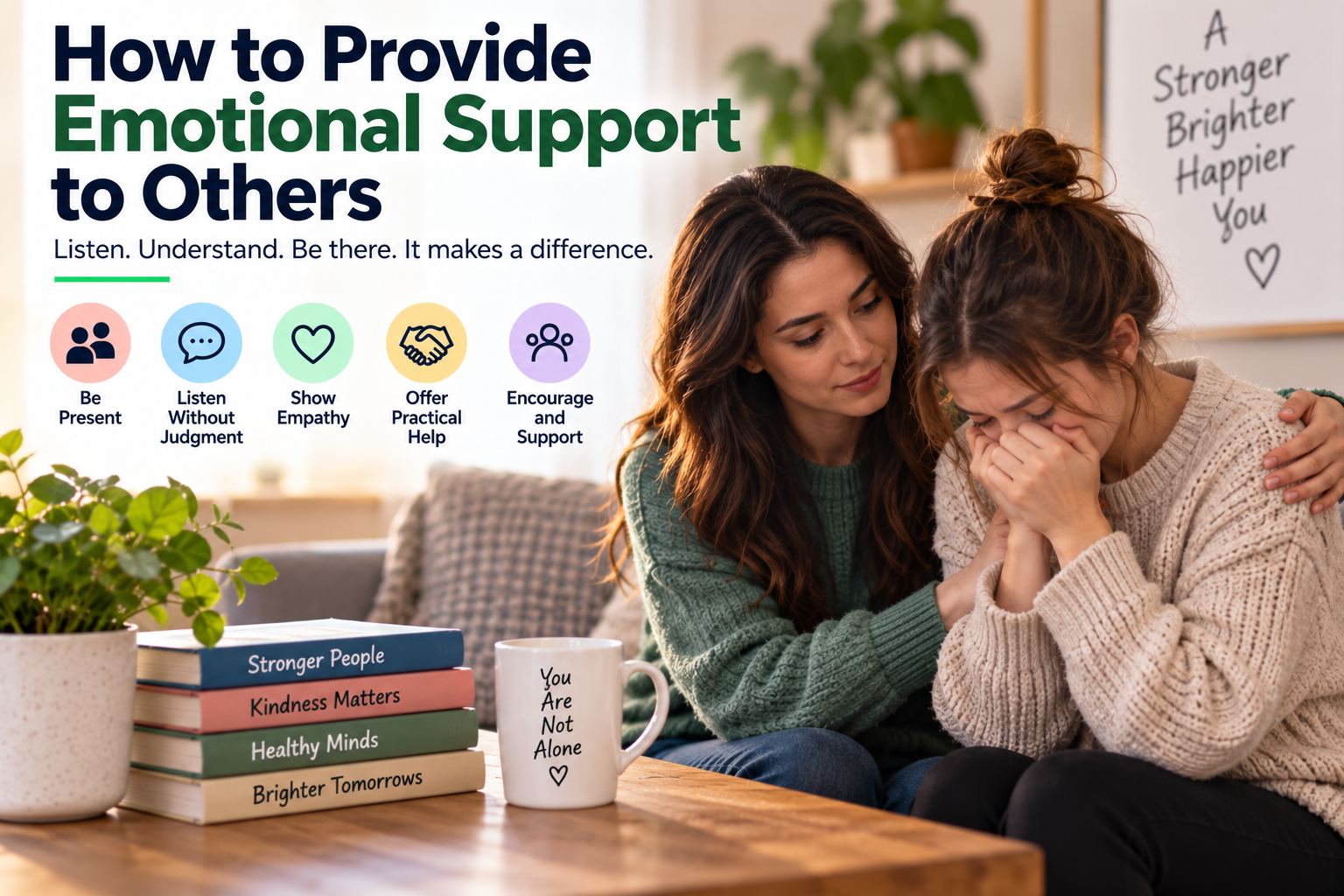
How to Provide Emotional Support to Others
Good emotional support is also about respecting boundaries. People need different kinds of help at different times. Some may want to talk, while others may need practical assistance, quiet companionship, or simply reassurance that someone cares.
Read article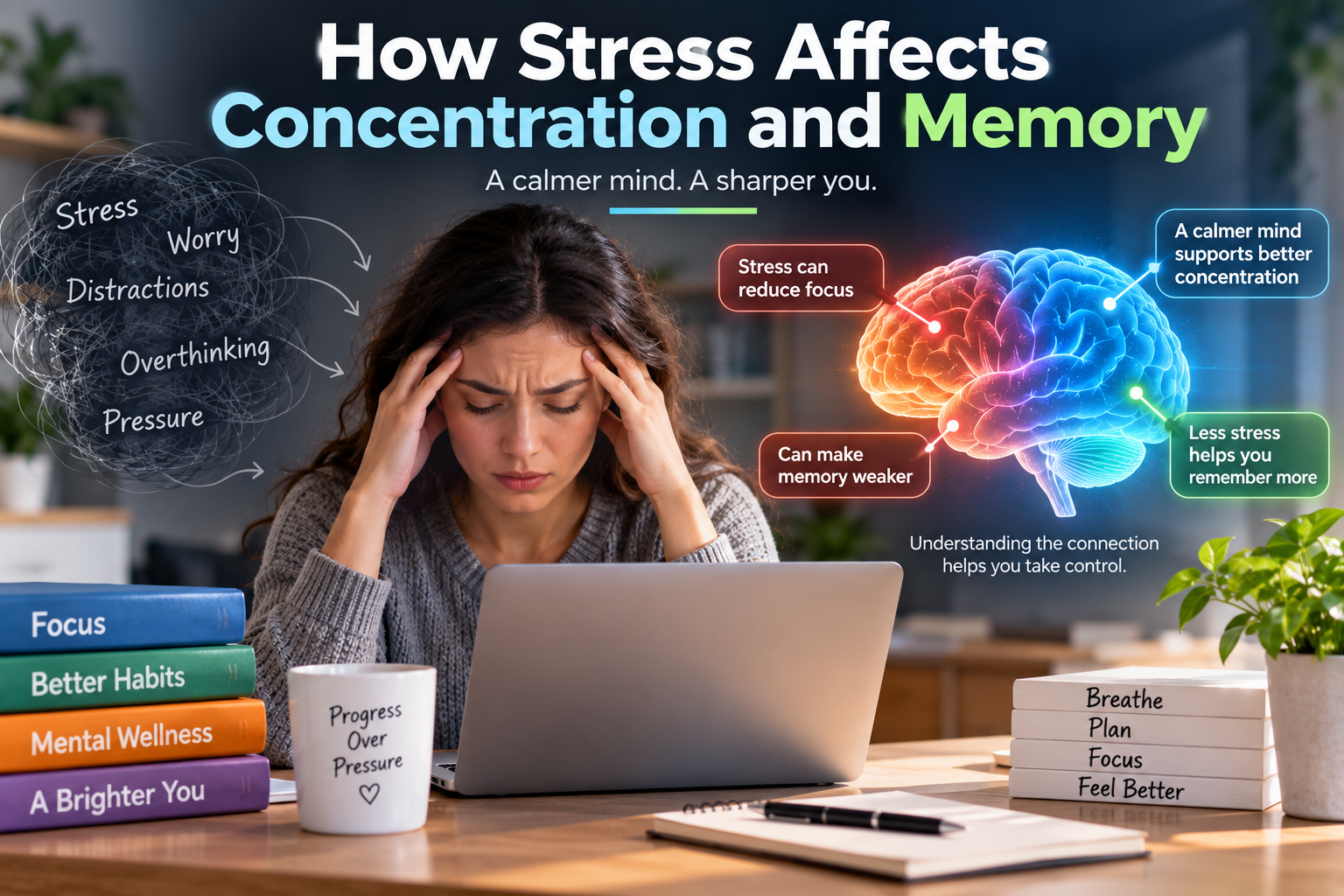
How Stress Affects Concentration and Memory
Understanding the connection between stress, concentration and memory can help explain why the mind sometimes feels less efficient during stressful periods—and why managing stress can be an important part of maintaining overall mental well-being.
Read article
When Should Someone Seek Professional Mental Health Support
Understanding **what mental wellness means** is a useful starting point. Mental wellness involves more than simply being happy or avoiding mental illness. It includes the ability to manage emotions, handle challenges, maintain relationships, make decisions, and function in everyday life.
Read article

Join 10,000+ Readers Building Healthier Habits
Get actionable wellness tips every week plus our newest articles delivered straight to your inbox.