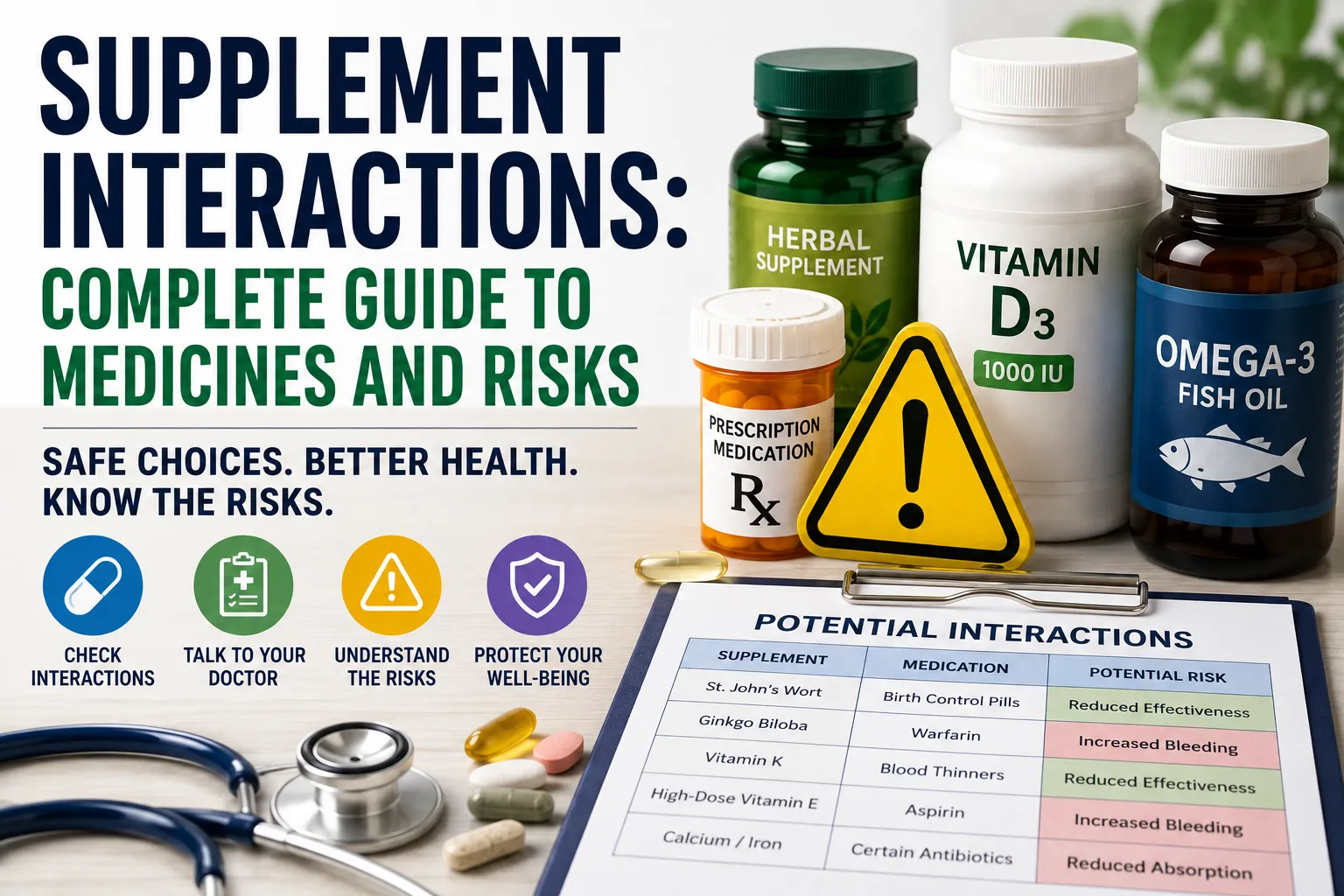

Supplement Interactions: Complete Guide to Medicines and Risks
Dietary supplements are often viewed as a simple way to fill nutritional gaps or support specific health goals. But “natural” does not automatically mean harmless. Vitamins, minerals, herbs, amino acids and other supplement ingredients can have biological effects that change how medicines work—or increase the risk of side effects.
Some interactions are minor, while others can be serious. The U.S. Food and Drug Administration (FDA) warns that supplements can alter a medicine’s absorption, metabolism or excretion, potentially causing a drug to become either too strong or too weak.
This guide explains how supplement–medicine interactions happen, which combinations deserve particular attention, who is at greater risk, and how to discuss supplements safely with a doctor or pharmacist. It is part of the broader complete guide to dietary supplements.
Important: This article provides general health information, not individualized medical advice. Do not stop, replace or change a prescribed medicine because of information in an article. If you take prescription medicines, ask a doctor or pharmacist about potential interactions before starting a new supplement.
What Are Supplement Interactions?
A supplement interaction occurs when a dietary supplement changes the effect, absorption, metabolism or elimination of a medicine—or when a medicine changes the way a supplement affects the body.
Interactions can potentially cause a medicine to:
- Work less effectively
- Become more potent than intended
- Produce unexpected side effects
- Remain in the body longer than expected
- Leave the body more quickly than expected
The FDA specifically notes that dietary supplements can interact with both prescription and over-the-counter medicines.
Interactions can also occur between multiple supplements. Taking several products at once can make it difficult to determine how much of a particular ingredient you are actually consuming.
How Do Supplements Interact With Medicines?
There are several major mechanisms.
1. Changing Drug Absorption
Some supplements can interfere with how a medicine is absorbed from the digestive tract.
For example, minerals such as calcium, magnesium and iron can affect the absorption of certain medicines. The importance of the interaction depends on the specific medicine, dose and timing.
This is one reason healthcare professionals may recommend separating certain medicines and supplements by several hours.
2. Changing Drug Metabolism
Some herbal ingredients can affect enzymes responsible for breaking medicines down.
One of the best-known examples is St. John’s wort. The National Institutes of Health’s Office of Dietary Supplements notes that it can speed the breakdown of numerous medicines, potentially reducing their effectiveness.
3. Changing Drug Excretion
The kidneys and liver help remove many medicines from the body. Substances that influence these processes can potentially change how long a medicine remains active.
4. Producing Similar Effects
Two substances can sometimes have overlapping effects.
For example, several products may influence blood clotting. Taking them together can potentially increase bleeding risk.
The FDA highlights combinations involving warfarin, ginkgo biloba, aspirin and vitamin E as an example where multiple blood-thinning effects may increase the risk of internal bleeding or stroke.
Common Supplement and Medicine Interactions
Not every interaction applies to every person or every product. The following examples illustrate why supplement use should be discussed with a healthcare professional.
Vitamin K and Blood Thinners
Vitamin K plays an important role in blood clotting.
For people taking warfarin, changes in vitamin K intake can affect the medicine’s effectiveness. The NIH Office of Dietary Supplements explains that vitamin K can reduce warfarin’s effectiveness, which is why people taking the medicine should discuss vitamin K supplements and major dietary changes with their healthcare provider.
The issue is not necessarily that everyone taking warfarin must avoid vitamin K. Rather, consistency and professional monitoring are important.
Potential concern: Reduced anticoagulant effect and changes in clotting control.
St. John’s Wort and Prescription Medicines
St. John’s wort is one of the most important herbal supplements to discuss with a healthcare professional before use.
It can affect the metabolism of numerous medicines. According to the FDA and NIH, it can reduce the effectiveness of certain medicines used for:
- Depression
- Birth control
- Heart conditions
- HIV/AIDS
- Organ transplantation
- Seizure disorders
This interaction can be particularly important because a person may not realize that an herbal product can significantly alter prescription drug levels.
Ginkgo Biloba and Blood-Thinning Medicines
Ginkgo biloba is commonly marketed for cognitive and circulatory purposes, but it can affect bleeding risk.
The FDA warns that combining ginkgo with medicines or other substances that affect blood clotting can increase the potential for bleeding.
People taking anticoagulants or antiplatelet medicines should therefore discuss ginkgo use with their healthcare professional.
Vitamin E and Blood Thinners
High-dose vitamin E supplementation can also be relevant to bleeding risk.
The FDA lists vitamin E among products that can contribute to blood-thinning effects when combined with other substances such as warfarin, ginkgo or aspirin.
That does not mean ordinary dietary vitamin E is inherently dangerous. The concern depends on the amount consumed, the individual’s medicines and other risk factors.
Antioxidant Supplements and Cancer Treatment
Some antioxidant supplements, including vitamins C and E, may interfere with the effectiveness of certain chemotherapy treatments.
The NIH Office of Dietary Supplements advises that antioxidant supplements might reduce the effectiveness of some types of cancer chemotherapy.
Anyone undergoing cancer treatment should therefore discuss supplements with their oncology team rather than assuming that an antioxidant supplement is automatically beneficial.
Why “Natural” Does Not Always Mean Safe
One of the most persistent misconceptions about supplements is that natural products are inherently safer than medicines.
They are not.
Plants and other naturally occurring substances contain biologically active compounds. Those compounds can affect enzymes, hormones, blood clotting, the nervous system and other physiological processes.
The FDA explicitly advises consumers not to assume that a product described as “natural” is necessarily safe.
There is another concern: some products marketed as dietary supplements have been found to contain undeclared pharmaceutical ingredients or other potentially dangerous substances. FDA investigations have identified products containing hidden drugs and chemicals, particularly in categories such as weight loss, sexual enhancement and bodybuilding.
Supplements Can Also Interact With Each Other
Drug interactions aren’t the only concern.
People sometimes combine:
- Multivitamins
- Herbal supplements
- Protein or performance products
- Mineral supplements
- Fish oil
- Energy products
- Sleep supplements
- Weight-management products
Without realizing that several products contain the same ingredient.
For example, someone taking a multivitamin, a separate mineral supplement and a fortified nutritional product could unknowingly consume substantially more of a particular nutrient than intended.
The NIH warns that side effects become more likely when people take high doses or many different supplements.
Check the Supplement Facts Label
Before combining products, compare their ingredient lists.
Look for duplicate ingredients such as:
- Vitamin A
- Vitamin D
- Vitamin E
- Vitamin K
- Iron
- Zinc
- Magnesium
- Calcium
- Selenium
- Herbal extracts
- Stimulant ingredients
The total amount matters—not just the amount contained in each individual product.
For a more detailed approach to checking ingredients, amounts, serving sizes, and other label information, see how to read supplement labels correctly.
Who Should Be Especially Careful?
Certain people may need additional caution when considering supplements.
People Taking Prescription Medicines
This is one of the most important groups.
If you take prescription medicine regularly, tell your healthcare provider about every supplement you use, including herbal products and products purchased without a prescription. FDA guidance recommends discussing dietary supplements alongside prescription and OTC medicines.
Older Adults
Older adults are more likely to take several medicines simultaneously. Adding supplements to a complex medication regimen can increase the number of possible interactions.
Pregnant or Breastfeeding People
Supplement safety can change during pregnancy and breastfeeding. FDA guidance recommends discussing supplements with a healthcare professional during these periods.
Children
Children can respond differently to medicines and supplements because their bodies process substances differently at different ages. The FDA specifically cautions against assuming that supplements are harmless for children.
People Preparing for Surgery
Some supplements can affect bleeding, blood pressure, heart rate or the response to anesthesia.
The FDA notes that healthcare professionals may ask patients to stop certain supplements before surgery, sometimes weeks beforehand, depending on the products involved.
Never stop a supplement before surgery without following instructions from the surgical or medical team.
Warning Signs of a Possible Interaction
A supplement–medicine interaction can produce many different symptoms depending on the substances involved.
Possible warning signs include:
- Unusual or excessive bleeding
- Severe dizziness
- Fainting
- Unusual changes in heart rate
- Significant changes in blood pressure
- Severe nausea or vomiting
- Confusion
- Unusual agitation
- New or worsening symptoms after starting a supplement
- Symptoms suggesting an allergic reaction
A symptom does not automatically prove that an interaction has occurred. However, a new or unexpected reaction after adding a supplement deserves attention.
For serious or rapidly worsening symptoms, seek urgent medical care.
How to Check Supplement Interactions Safely
There is no single universal list that can tell everyone whether a particular combination is safe.
Interaction risk depends on factors including:
- The exact medicine
- The exact supplement
- Dose
- Frequency
- Timing
- Other medicines
- Other supplements
- Age
- Kidney and liver function
- Medical conditions
- Pregnancy or breastfeeding status
- Planned surgery
Make a Complete List
Before speaking with a healthcare professional, write down:
- Every prescription medicine
- Every OTC medicine
- Every vitamin
- Every mineral
- Every herbal supplement
- The dose of each product
- How often you take it
- When you take it
- Why you take it
Bring the supplement containers or clear photographs of the labels if possible.
This makes it easier for a pharmacist or doctor to identify potential problems.
Why Pharmacists Are Particularly Useful
Pharmacists are trained to evaluate medication interactions and can help identify potential conflicts between prescription medicines, OTC products and supplements.
The FDA recommends discussing medicines and supplements with healthcare professionals and specifically encourages patients to ask about potential interactions when starting new medicines or supplements.
A pharmacist can help answer questions such as:
- Can these products be taken together?
- Should they be separated by several hours?
- Could this supplement change my medicine’s effectiveness?
- Are there duplicate ingredients?
- Should I avoid this supplement before surgery?
- What symptoms should I watch for?
Questions to Ask Before Starting a Supplement
A useful conversation with a healthcare professional can begin with five simple questions:
1. Do I actually need this supplement?
A supplement may not provide meaningful benefit if your diet already supplies adequate amounts of a nutrient.
2. Can it interact with my medicines?
Provide the complete list rather than mentioning only prescription drugs.
3. Is the dose appropriate?
More is not necessarily better. Some nutrients and other supplement ingredients can cause harm at excessive doses.
4. Should I take it at a different time?
Certain interactions can sometimes be managed through timing, but this depends entirely on the products involved.
5. How long should I take it?
Long-term use is not automatically appropriate simply because a product is sold over the counter.
What About Multivitamins?
Basic multivitamins generally do not interact with medicines in the same way as some concentrated herbal products, but exceptions exist.
For example, the NIH notes an important interaction between vitamin K-containing multivitamins and warfarin.
This illustrates an important principle: the supplement category alone is not enough to determine safety.
The exact ingredients and amounts matter.
Supplements and Laboratory Tests
Some supplements can interfere with laboratory testing.
This means a person may not necessarily feel different even though a supplement is affecting a test result.
If you are having blood work or another medical test, tell the healthcare professional about all supplements you take.
The FDA specifically identifies interference with laboratory tests as one of the potential risks associated with dietary supplements.
How to Build a Safer Supplement Routine
A safer approach starts with simplicity.
Keep an Updated Medication List
Maintain one list containing all medicines and supplements.
Avoid Unnecessary Stacking
Taking multiple products for the same goal can increase complexity without necessarily increasing benefits.
Read the Full Label
Don’t rely solely on front-of-package claims. Review the ingredients, amounts and directions.
Don’t Substitute Supplements for Prescribed Treatment
FDA and NIH guidance emphasizes that dietary supplements should not replace prescribed medications or a healthy, varied diet.
Introduce Changes Carefully
Starting several supplements simultaneously makes it difficult to determine which product caused a reaction.
Tell Every Healthcare Provider
Your doctor, pharmacist, dentist, surgeon and other relevant professionals should know about supplements when they could affect treatment.
A Simple Supplement Safety Checklist
Before taking a new supplement, ask:
| Question | Why It Matters |
|---|---|
| What exactly is in it? | Identifies active ingredients and duplicate nutrients |
| What dose am I taking? | Higher doses can increase risk |
| What medicines do I take? | Some supplements alter medicine effects |
| What other supplements do I use? | Multiple products can interact |
| Do I have a medical condition? | Certain ingredients may worsen particular conditions |
| Am I pregnant or breastfeeding? | Safety requirements can differ |
| Am I having surgery? | Some supplements can affect bleeding or anesthesia |
| Do I actually need it? | Avoids unnecessary exposure |
| Has a healthcare professional reviewed it? | Helps identify individual risks |
Common Mistakes to Avoid
Assuming OTC Means Risk-Free
Over-the-counter availability does not guarantee that a product is appropriate for everyone.
Assuming Herbal Products Cannot Interact
Herbal ingredients can have powerful biological effects.
Hiding Supplements From Your Doctor
A healthcare professional cannot assess an interaction they don’t know about.
Taking Multiple Products With Similar Ingredients
This can unintentionally increase total intake.
Stopping Prescription Medicine Instead
Never replace a prescribed medicine with a supplement without discussing the decision with your healthcare professional.
Ignoring Changes After Starting a Product
New symptoms should not automatically be dismissed as unrelated.
Frequently Asked Questions
Can supplements interact with prescription medicines?
Yes. Some supplements can alter the absorption, metabolism or excretion of medicines and may make them more or less effective.
Can vitamins interact with medications?
Yes. Vitamin K, for example, can reduce the effectiveness of warfarin. Other vitamins may also have clinically relevant interactions depending on dose and the medicine involved.
Are herbal supplements safer than prescription medicines?
Not necessarily. Herbal ingredients can have strong biological effects and can interact with medicines. “Natural” should not be treated as a guarantee of safety.
Should I stop taking supplements before surgery?
Some supplements may need to be stopped before surgery, but the appropriate timing depends on the specific product and procedure. Follow instructions from your surgical and medical team.
Can supplements interact with each other?
Yes. Combining multiple supplements can increase exposure to certain ingredients and may increase the likelihood of adverse effects.
Can supplements affect blood tests?
Yes. Some dietary supplements can interfere with laboratory tests, which is why healthcare professionals should know what you are taking.
Is it safe to take supplements with over-the-counter medicine?
It depends on the specific products. OTC medicines can interact with supplements just as prescription medicines can. The FDA recommends discussing both prescription and OTC medicines when evaluating supplement interactions.
The Safest Supplement Strategy Is an Informed One
Supplements can have a useful role in nutrition and healthcare, but they should not be treated as automatically harmless additions to a medication routine.
The biggest safety step is surprisingly simple: make sure your doctor or pharmacist knows everything you take. That includes vitamins, minerals, herbal products, powders, gummies and other supplements—not just prescription medicines.
When a new product is being considered, evaluate its ingredients, dose, purpose and potential interactions rather than relying on claims such as “natural,” “herbal” or “drug-free.” The FDA and NIH both emphasize professional guidance when supplements are combined with medicines.
For anyone taking regular medication, undergoing treatment, preparing for surgery, pregnant or breastfeeding, or giving supplements to a child, individualized professional advice is particularly important.
Continue Reading
Similar Posts
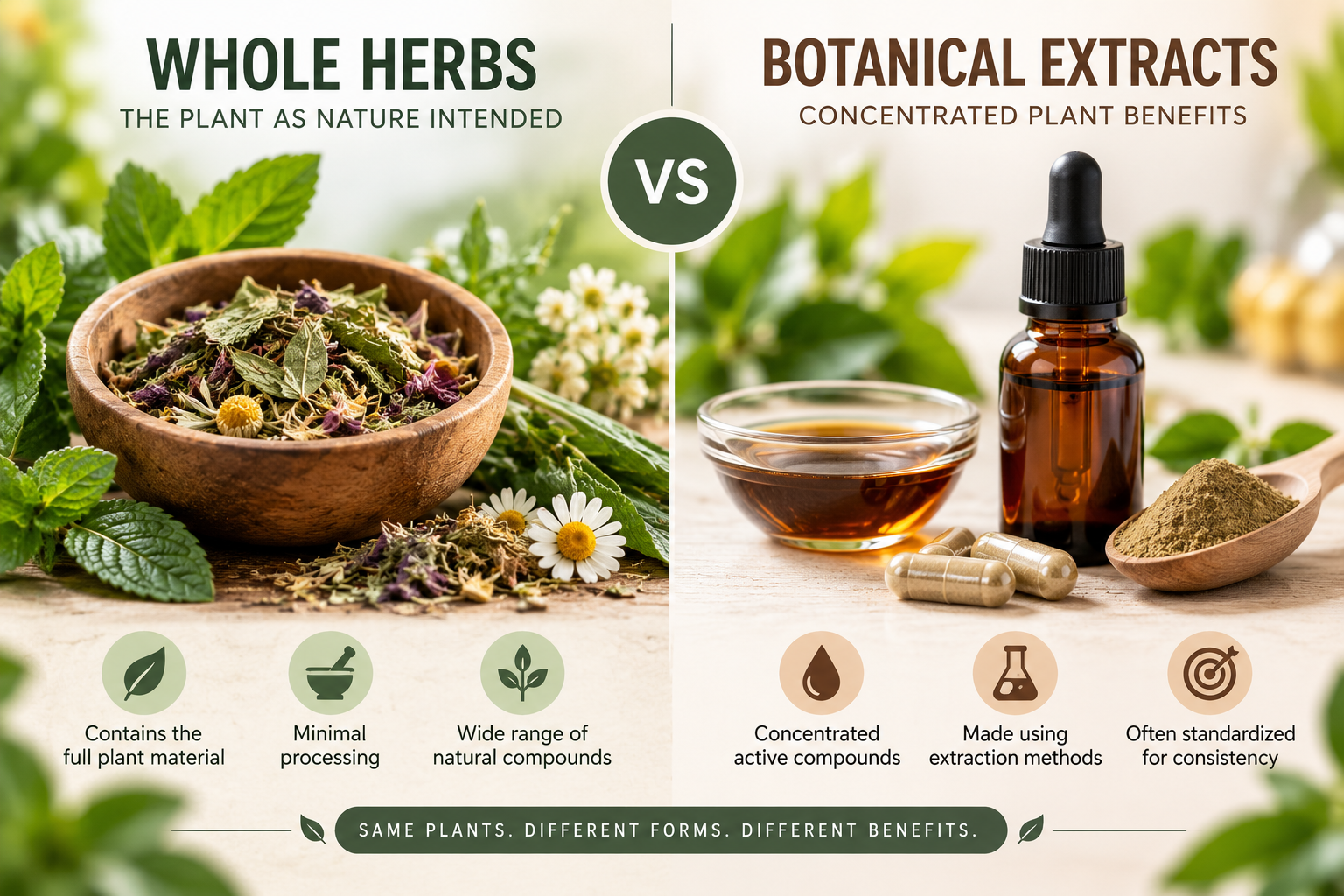
How Botanical Extracts Differ From Whole Herbs
Understanding how extracts differ from whole herbs can make it easier to interpret supplement labels, compare products, and evaluate claims about herbal ingredients.
Read article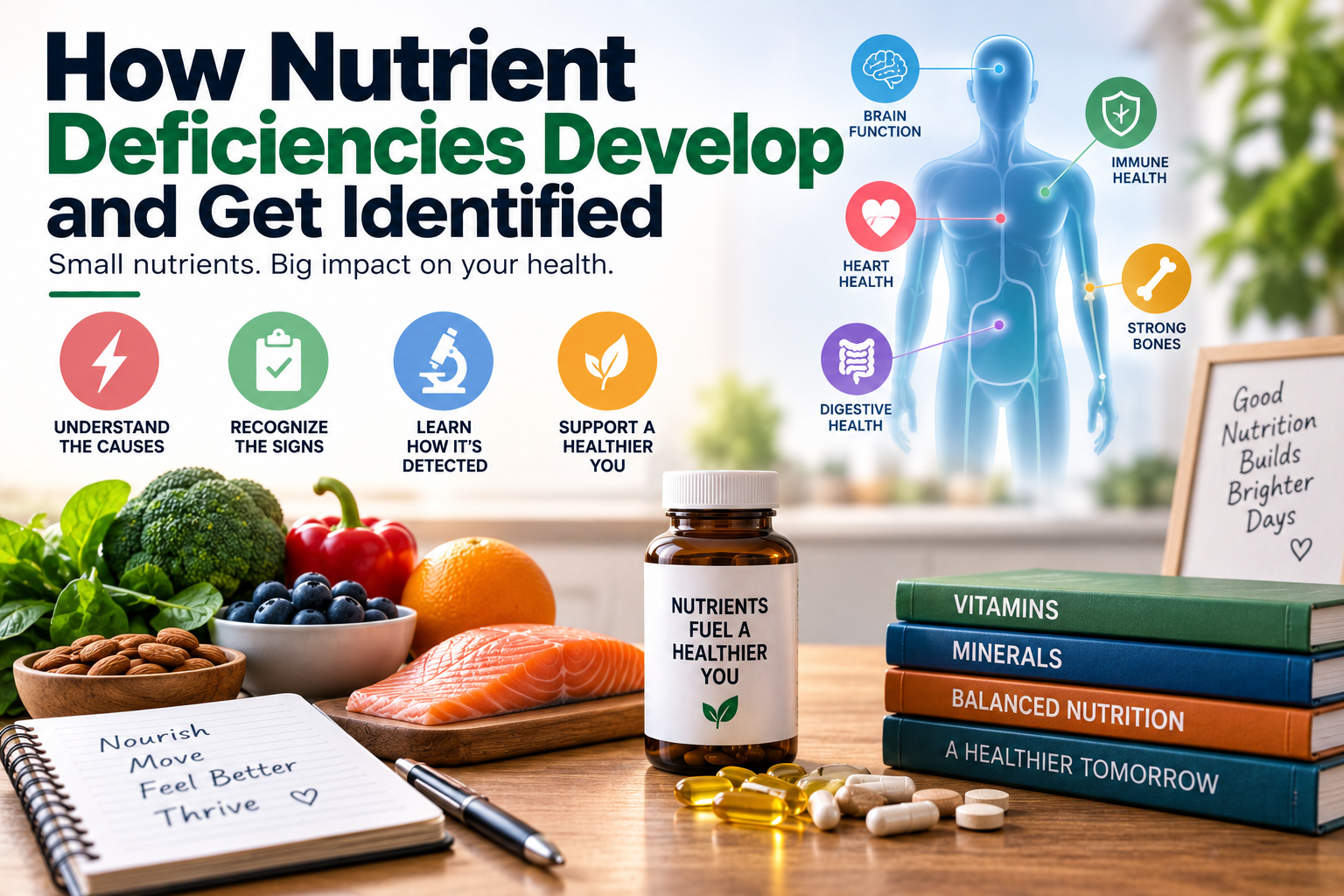
How Nutrient Deficiencies Develop and Get Identified
Understanding how nutrient deficiencies develop—and how healthcare professionals identify them—can make it easier to recognize potential problems before they become more serious.
Read article
What Is the Difference Between Water-Soluble and Fat-Soluble Vitamins
Understanding this basic distinction can make it easier to interpret nutrition information, evaluate supplements, and make informed decisions about dietary intake.
Read article

Join 10,000+ Readers Building Healthier Habits
Get actionable wellness tips every week plus our newest articles delivered straight to your inbox.