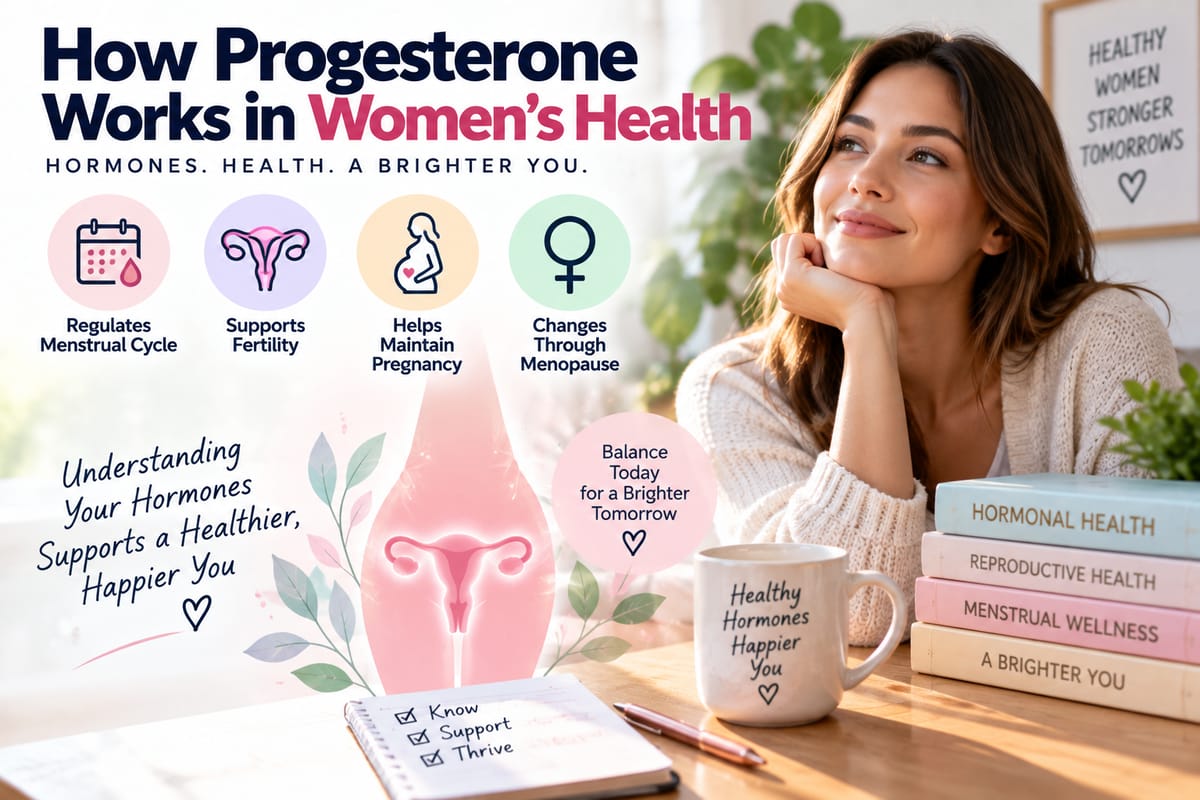

How Progesterone Works in Women’s Health
Progesterone is one of the major hormones involved in women’s reproductive health. It plays an important role in the menstrual cycle, prepares the uterus for a possible pregnancy, supports early pregnancy, and changes throughout different stages of life.
Although progesterone is often discussed mainly in relation to fertility and pregnancy, its effects extend beyond conception. Changes in progesterone levels can influence menstrual patterns and interact with other reproductive hormones, particularly estrogen.
Understanding how progesterone works provides useful context for menstrual health, fertility, pregnancy, menopause, and broader hormonal health.
What Is Progesterone?
Progesterone is a steroid hormone produced primarily by the ovaries after ovulation. During pregnancy, the placenta becomes an important source of progesterone.
Small amounts can also be produced by the adrenal glands and, in men, by the testes, although progesterone has particularly important reproductive functions in women.
Progesterone levels are not constant. They naturally rise and fall during the menstrual cycle and change significantly during pregnancy and menopause.
For a broader explanation of hormones and their functions throughout the body, The Complete Guide to Hormonal Health provides useful background.
Where Progesterone Fits Into the Menstrual Cycle
The menstrual cycle involves coordinated changes in several hormones.
During the first part of the cycle, known as the follicular phase, estrogen gradually rises as ovarian follicles develop. Ovulation then occurs, releasing an egg from an ovary.
After ovulation, the body enters the luteal phase.
During this phase, the structure that remains after the ovarian follicle releases the egg becomes the corpus luteum. The corpus luteum produces progesterone.
Progesterone then rises during the luteal phase and helps prepare the reproductive system for the possibility of pregnancy.
A detailed look at the stages of the menstrual cycle can be found in the Complete Guide to Menstrual Health and Cycles.
How Progesterone Prepares the Uterus
One of progesterone’s major functions is preparing the lining of the uterus for a possible pregnancy.
The uterine lining, or endometrium, changes throughout the menstrual cycle.
Estrogen helps stimulate the growth of the lining during the earlier part of the cycle. After ovulation, progesterone causes changes that make the lining more suitable for implantation if fertilization occurs.
This coordinated activity between estrogen and progesterone is an important part of the reproductive process.
Progesterone and Ovulation
Progesterone rises after ovulation rather than before it.
This makes progesterone measurements useful in certain clinical situations when healthcare professionals want to determine whether ovulation has occurred.
The timing of testing matters because progesterone levels naturally fluctuate during the cycle.
A single progesterone measurement therefore needs to be interpreted in relation to the menstrual cycle, the timing of ovulation, medications, and the reason for testing.
What Happens If Pregnancy Does Not Occur?
If an egg is not fertilized and pregnancy does not develop, the corpus luteum eventually breaks down.
As a result, progesterone levels fall.
The decrease in progesterone, along with changes in other reproductive hormones, contributes to the breakdown and shedding of the uterine lining.
This shedding is menstrual bleeding.
The cycle then begins again, with hormone levels changing as a new group of ovarian follicles develops.
Progesterone During Pregnancy
Progesterone becomes particularly important when pregnancy occurs.
After implantation and early pregnancy, hormonal signals help maintain progesterone production. Later, the placenta becomes the major source of progesterone.
During pregnancy, progesterone helps maintain the uterine environment needed for pregnancy and contributes to changes in the mother’s reproductive system.
It also helps prevent regular menstrual shedding from occurring during pregnancy.
Progesterone levels generally remain much higher during pregnancy than they are during a typical menstrual cycle.
Progesterone and the Cervix
Progesterone also influences cervical mucus.
After ovulation, rising progesterone generally causes cervical mucus to become thicker and less favorable to sperm movement.
This is one reason hormonal contraceptives containing progestins can help prevent pregnancy.
The precise effects depend on the contraceptive method and the hormone formulation being used.
Progesterone and Breast Tissue
Progesterone also affects breast tissue during the menstrual cycle.
Hormonal changes after ovulation can cause temporary breast tenderness, fullness, or other sensations in some people.
These changes are not necessarily signs of a medical problem. However, persistent, severe, or unusual breast symptoms should be evaluated by an appropriate healthcare professional.
Progesterone and Menstrual Symptoms
Hormonal fluctuations throughout the menstrual cycle can be associated with changes in mood, energy, appetite, breast tenderness, bloating, and other physical or emotional experiences.
Progesterone is one part of this complex hormonal pattern.
It is important not to attribute every menstrual symptom to progesterone alone. Estrogen, other reproductive hormones, neurotransmitters, sleep, stress, nutrition, medical conditions, and other factors can also influence how someone feels during different parts of the cycle.
Progesterone and Premenstrual Changes
Some people experience symptoms during the days before menstruation, commonly referred to as premenstrual symptoms.
These can include:
- Mood changes
- Irritability
- Breast tenderness
- Bloating
- Headaches
- Fatigue
- Appetite changes
- Changes in sleep
The relationship between these symptoms and reproductive hormones is complex.
Progesterone rises after ovulation and then falls before menstruation if pregnancy does not occur. These hormonal changes may contribute to symptoms in some individuals, but the exact mechanisms behind premenstrual symptoms vary.
Progesterone During Perimenopause
As women approach menopause, ovarian hormone production becomes less predictable.
This transitional period is called perimenopause.
Ovulation may occur less regularly, which can result in changes in progesterone production. Menstrual cycles may become shorter, longer, heavier, lighter, or otherwise less predictable.
Estrogen also changes during this period.
Understanding the relationship between these hormones is important because changes in estrogen and progesterone can contribute to some of the symptoms associated with the menopausal transition. The article How Estrogen Changes During Menopause explores the other major reproductive hormone involved in this transition.
What Happens to Progesterone During Menopause?
Menopause occurs when ovarian reproductive activity declines and menstrual periods permanently stop.
After menopause, progesterone production from the ovaries falls substantially because ovulation no longer occurs regularly.
This represents an important hormonal change from the reproductive years.
The reduction in progesterone occurs alongside changes in estrogen and other hormones, contributing to the overall hormonal transition associated with menopause.
Progesterone and Fertility
Progesterone has an important role in fertility because it helps prepare and maintain the uterine environment after ovulation.
For pregnancy to develop normally, the timing of ovulation, fertilization, implantation, and hormonal changes must be coordinated.
Low or poorly timed progesterone production can sometimes be associated with reproductive difficulties, although fertility problems have many possible causes.
Assessment of progesterone should therefore be considered within the broader context of a person’s reproductive health rather than as an isolated measure.
The broader biological processes involved in conception, pregnancy, and reproductive function are covered in The Complete Guide to Reproductive Health.
How Progesterone Is Measured
Healthcare professionals can measure progesterone through a blood test.
The timing of the test is important because progesterone levels change considerably throughout the menstrual cycle.
A healthcare professional may recommend testing at a particular point based on the person’s menstrual cycle and the clinical question being investigated.
Progesterone testing can be used in certain fertility assessments and other medical situations, but results should be interpreted alongside symptoms, menstrual history, other hormone measurements, medications, and relevant medical information.
Progesterone and Hormonal Contraception
Some contraceptives use synthetic hormones known as progestins, which are designed to produce effects similar to some of progesterone’s actions.
Progestin-containing contraceptives include certain:
- Birth control pills
- Hormonal intrauterine devices
- Implants
- Injections
- Vaginal rings
Depending on the method, progestins can prevent or suppress ovulation, thicken cervical mucus, and alter the uterine environment.
Synthetic progestins are not identical to naturally produced progesterone, and different progestins can have different properties.
Progesterone Therapy and Hormone Treatment
Progesterone or progesterone-like medications may be prescribed for specific medical purposes.
For example, progesterone or a progestin may be used alongside estrogen in certain hormone therapy regimens for people who have a uterus. The progestogen component can help protect the uterine lining from excessive stimulation by estrogen.
The appropriate treatment depends on factors such as age, symptoms, reproductive status, medical history, existing conditions, and the specific treatment goal.
Hormone therapy should therefore be discussed with a qualified healthcare professional rather than started based solely on hormone levels or symptoms.
Natural Progesterone and Synthetic Progestins
The terms progesterone and progestin are sometimes used interchangeably in everyday discussions, but they are not exactly the same.
Progesterone is the naturally occurring hormone produced by the body.
Progestins are synthetic compounds designed to produce some progesterone-like effects. Different progestins can vary in their biological properties and how they interact with hormone receptors.
This distinction is important when discussing contraception, hormone therapy, or other treatments.
Progesterone and the Endometrium
The endometrium is the inner lining of the uterus.
During each menstrual cycle, it responds to changing hormone levels.
Estrogen stimulates growth during the first part of the cycle, while progesterone after ovulation changes the characteristics of the lining and prepares it for potential implantation.
If pregnancy does not occur, progesterone levels fall and the hormonal support for the endometrium decreases.
Menstrual bleeding then occurs as the uterine lining is shed.
Progesterone Does Not Work Alone
Hormones operate as part of interconnected systems rather than functioning independently.
Progesterone interacts with estrogen and is influenced by hormones involved in the brain-ovary communication system.
The hypothalamus and pituitary gland help regulate ovarian function through hormones that coordinate follicle development and ovulation.
This means changes in one part of the reproductive hormone system can affect other parts of the cycle.
For this reason, interpreting hormonal health requires looking at patterns rather than focusing on a single hormone in isolation.
When Progesterone Levels Change
Progesterone levels naturally change throughout life and throughout each menstrual cycle.
Normal changes occur:
- Before and after ovulation
- During pregnancy
- After childbirth
- During perimenopause
- After menopause
Medications, hormonal contraception, reproductive conditions, ovarian function, and pregnancy can also influence progesterone levels.
A progesterone level that is normal at one point in the menstrual cycle may be very different from what is expected at another point.
Symptoms Should Be Considered in Context
People sometimes associate symptoms such as fatigue, mood changes, irregular periods, breast tenderness, or changes in bleeding with progesterone levels.
While hormones can contribute to these experiences, symptoms alone cannot reliably determine whether progesterone is too high, too low, or within a typical range.
Many conditions can cause similar symptoms.
Persistent menstrual changes, unusually heavy bleeding, unexplained infertility, severe pelvic pain, or other concerning symptoms should be discussed with a healthcare professional.
Supporting Overall Hormonal Health
Progesterone production is closely connected to reproductive function, but overall hormonal health involves much more than one hormone.
Adequate nutrition, regular physical activity, sufficient sleep, stress management, and appropriate medical care can all contribute to general well-being.
Lifestyle factors do not replace medical treatment for hormone-related conditions, but they can form part of a broader approach to health.
Understanding normal hormonal changes can also make it easier to recognize when a symptom or change deserves professional evaluation.
Progesterone Across Different Stages of Women’s Health
Progesterone has different roles depending on the stage of life.
During the reproductive years, it helps regulate the menstrual cycle and prepares the uterus for pregnancy. During pregnancy, it supports the hormonal environment needed to maintain the pregnancy. During perimenopause, progesterone production can become less predictable as ovulation becomes less regular. After menopause, ovarian progesterone production falls substantially.
These changes are part of the body’s natural reproductive development.
Rather than viewing progesterone as a hormone that is simply “good” or “bad,” it is more useful to understand how its levels and effects change according to the biological context.
Why Understanding Progesterone Matters
Progesterone is a central part of the hormonal system that coordinates menstruation, ovulation, fertility, and pregnancy. Its relationship with estrogen and other reproductive hormones allows the body to prepare for pregnancy each cycle and adjust when pregnancy does not occur.
Its importance continues beyond fertility. Changes in progesterone are part of the transition through perimenopause and menopause, while progesterone-like hormones are also used in several forms of contraception and medical treatment.
Understanding how progesterone works can therefore provide a clearer picture of women’s hormonal and reproductive health throughout different stages of life.
Continue Reading
Similar Posts

How Gender Can Influence Health Outcomes
Understanding these influences can help explain why some health conditions affect women and men differently and why healthcare cannot always take a one-size-fits-all approach.
Read article
How Period Pain Differs From Severe Pain
Understanding the difference between typical menstrual cramps and pain that may be unusually severe can help people recognize when symptoms deserve additional attention.
Read article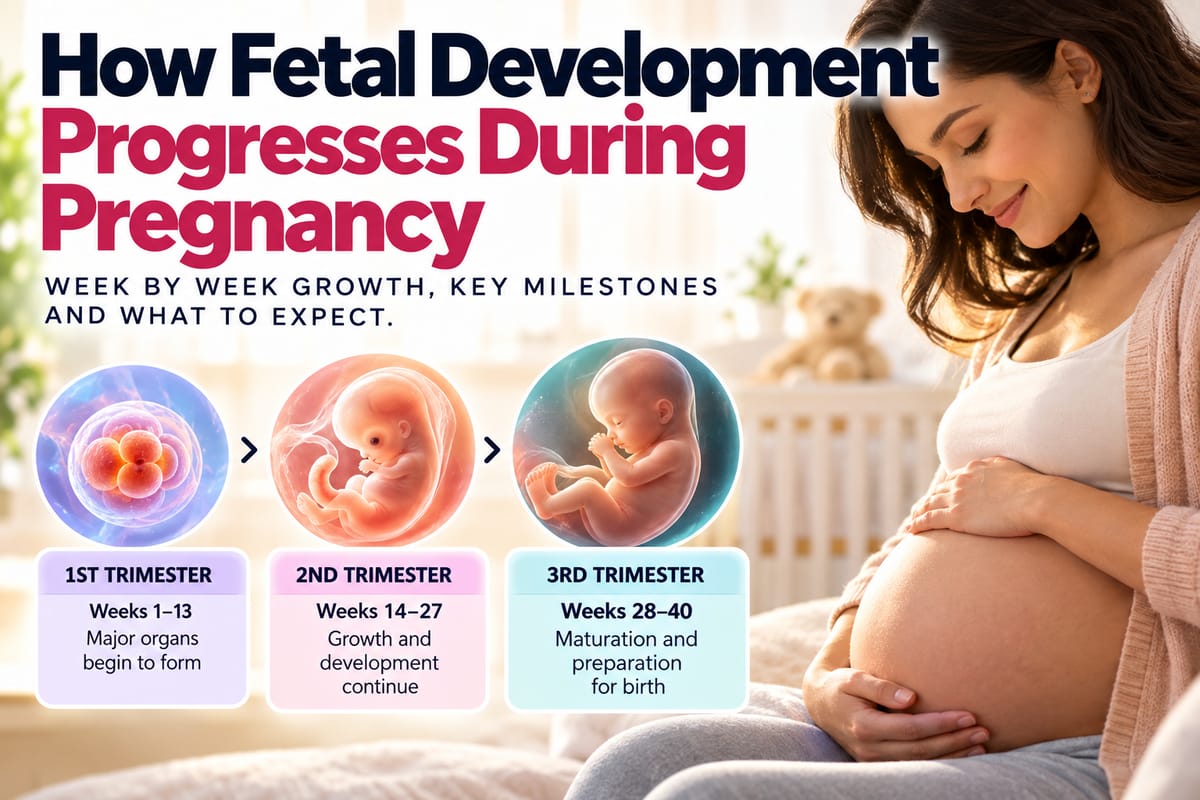
How Fetal Development Progresses During Pregnancy
Understanding the general stages of fetal development can make pregnancy easier to understand and can provide useful context for prenatal care, pregnancy planning, and discussions with healthcare professionals.
Read article

Join 10,000+ Readers Building Healthier Habits
Get actionable wellness tips every week plus our newest articles delivered straight to your inbox.