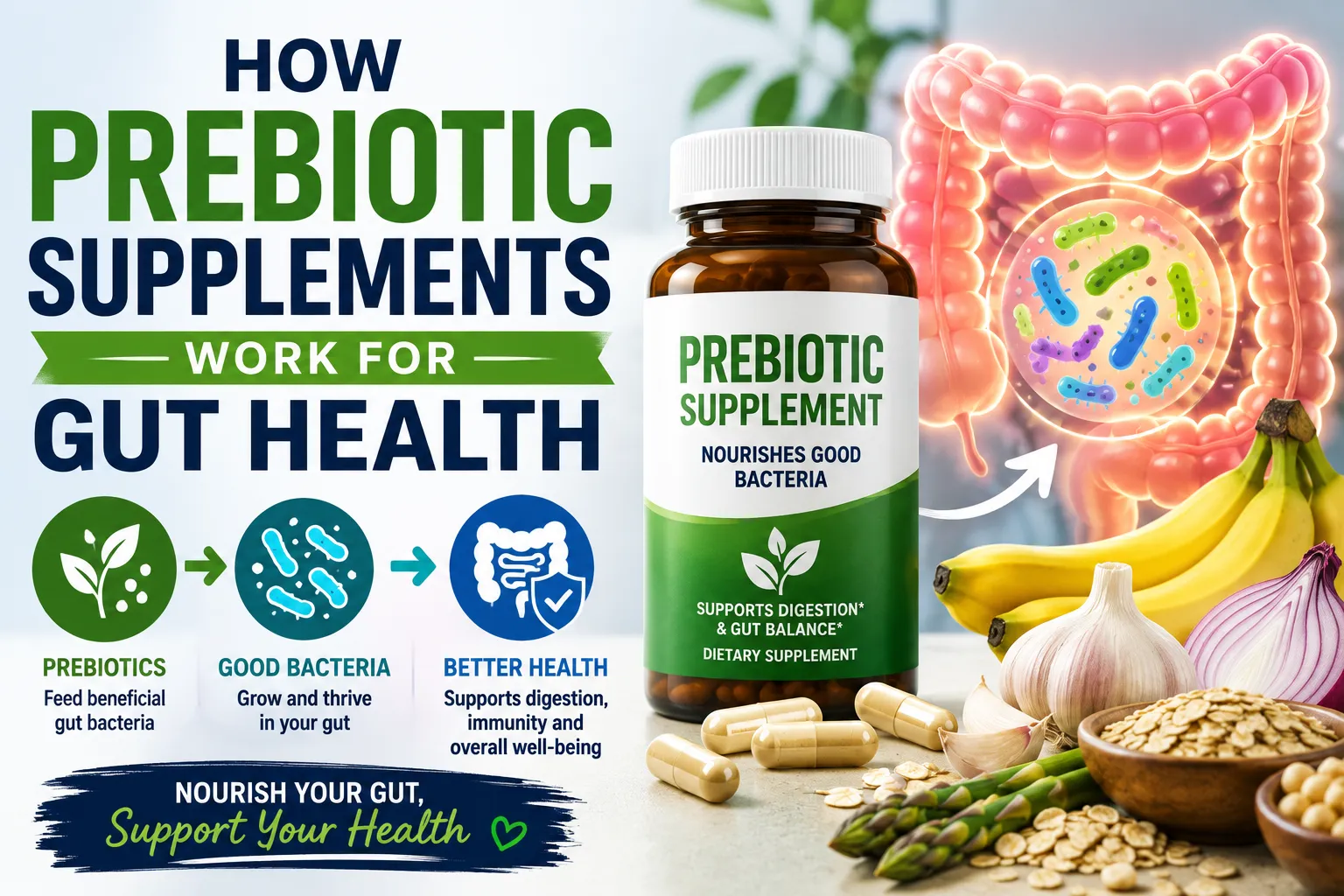

How Prebiotic Supplements Work for Gut Health
The human gut is home to a vast community of microorganisms that interact with the foods we eat, the digestive system and the rest of the body. Supporting that microbial community has become a major focus of nutrition research, and prebiotics are an important part of the conversation.
Prebiotic supplements are designed to provide specific types of substances that beneficial microorganisms can use as fuel. Unlike probiotics, which contain live microorganisms, prebiotics are essentially food for certain microbes already living in the gut.
That distinction is important. Taking a prebiotic does not directly add bacteria to the digestive system. Instead, it can provide fermentable material that some gut microorganisms use to grow and produce metabolic compounds.
Understanding how this process works can help explain why prebiotic supplements have become popular—and why they may not affect everyone in exactly the same way.
What Are Prebiotics?
Prebiotics are substances that are selectively used by microorganisms in the body and provide a health benefit.
Many naturally occurring prebiotics are types of dietary fiber or related carbohydrates that resist digestion in the upper digestive tract.
Instead of being completely broken down and absorbed in the small intestine, they travel farther through the digestive system and reach the colon.
There, microorganisms can ferment them.
Common prebiotic ingredients found in supplements include:
- Inulin
- Fructooligosaccharides (FOS)
- Galactooligosaccharides (GOS)
- Certain resistant starches
- Some specialized soluble fibers
Different prebiotics can support different groups of microorganisms, which is one reason products can have different effects.
Prebiotics Are Different From Probiotics
The terms prebiotic and probiotic are often confused.
A probiotic contains live microorganisms intended to provide a health benefit when consumed in adequate amounts.
A prebiotic, on the other hand, provides a substance that certain microorganisms can use.
A simple way to think about the difference is:
Probiotics = microorganisms
Prebiotics = fuel for certain microorganisms
Some products combine both and are marketed as synbiotics, although the specific ingredients and intended benefits vary.
For a broader explanation of the microorganisms themselves, see The Complete Guide to Probiotics.
How Prebiotics Reach the Colon
Digestion begins in the mouth and continues through the stomach and small intestine.
Many carbohydrates are broken down and absorbed before reaching the large intestine.
Prebiotic compounds are different because they resist digestion to varying degrees.
When they reach the colon, microorganisms encounter these compounds and can ferment them.
This fermentation is a key part of how prebiotics are thought to influence the gut environment.
Gut Microbes Ferment Prebiotic Fibers
The microorganisms living in the colon can use certain fibers as substrates.
During fermentation, microbes break down these compounds and produce various metabolic byproducts.
Among the most important are short-chain fatty acids, including:
- Acetate
- Propionate
- Butyrate
These compounds are an important area of scientific interest because they interact with cells in the colon and may influence processes throughout the body.
Why Short-Chain Fatty Acids Matter
Short-chain fatty acids are among the major products of microbial fermentation.
Butyrate, for example, is an important energy source for cells lining the colon.
Acetate and propionate also have biological roles and can interact with metabolic and immune processes.
This does not mean that taking a prebiotic supplement automatically produces a specific health outcome.
The amount and type of short-chain fatty acids produced can depend on the prebiotic, the microorganisms present and the individual’s overall diet and gut environment.
Prebiotics Can Support Certain Gut Microorganisms
The gut microbiome is not a single organism.
It consists of many different microorganisms, including bacteria and other microbial species.
Different microorganisms prefer different food sources.
A prebiotic can therefore provide an advantage to particular groups capable of using that compound.
For example, inulin-type fructans have been studied for their ability to support certain beneficial bacterial groups.
However, microbiomes differ considerably between individuals.
A supplement that produces a noticeable change in one person’s gut microbiota may have a smaller effect in someone else.
A Diverse Gut Microbiome Is Important
Researchers are increasingly interested in the diversity and composition of the gut microbiome.
A diverse microbial community may be better able to perform a wide range of functions and adapt to changes in its environment.
Diet is one of the factors that can influence this community.
A diet containing a variety of plant foods provides different fibers and compounds that can be used by different microorganisms.
This is one reason nutrition experts often emphasize dietary variety rather than relying on a single supplement.
Prebiotics Are Naturally Found in Foods
People do not need supplements to consume prebiotics.
Many foods contain fibers and carbohydrates that can be fermented by gut microorganisms.
Sources include:
- Onions
- Garlic
- Leeks
- Asparagus
- Bananas
- Oats
- Barley
- Legumes
- Chicory root
- Jerusalem artichokes
- Some whole grains
The exact amount and type of prebiotic compounds vary from one food to another.
Eating a variety of plant foods can therefore expose the gut microbiome to a broad range of fermentable substances.
Why Take a Prebiotic Supplement?
A supplement can provide a more concentrated and consistent amount of a particular prebiotic ingredient.
Someone might choose one because:
- Their diet contains relatively little fiber
- They want to increase a specific type of fermentable fiber
- A healthcare professional has recommended it
- They find it easier to take a measured supplement than substantially change their diet
Supplements can be convenient, but convenience does not necessarily make them superior to food.
Whole foods provide fiber alongside vitamins, minerals and other beneficial compounds.
Prebiotics May Support Regular Bowel Movements
Increasing certain types of dietary fiber can help improve stool bulk and support regularity.
Some prebiotic fibers also affect the amount of water and fermentation activity in the colon.
However, the effect varies depending on the type and amount of fiber consumed.
A person who suddenly adds a large dose of a fermentable prebiotic may experience digestive discomfort rather than immediate improvement.
Gradual increases are often easier for the digestive system to tolerate.
Gas and Bloating Are Common Early Effects
One of the most important things to understand about prebiotic supplements is that gas can be a normal consequence of fermentation.
When gut microorganisms ferment prebiotic carbohydrates, gases are produced.
This can result in:
- Bloating
- Flatulence
- Abdominal discomfort
- Changes in bowel habits
For some people, these effects are temporary and become less noticeable as the digestive system adapts.
For others, certain prebiotic ingredients may remain difficult to tolerate.
More Is Not Necessarily Better
It can be tempting to assume that a larger dose will produce greater benefits.
That is not always the case.
The gut has limits to how much fermentable material it can comfortably handle at one time.
A high dose may produce considerable gas and discomfort without providing proportionally greater benefits.
Starting with a small amount and following the product’s instructions can be a more sensible approach.
Different Prebiotics Behave Differently
There is no single substance called “prebiotic.”
Different fibers have different chemical structures and are fermented by different microbial communities.
For example, inulin and resistant starch are both associated with fermentation, but they do not behave identically in the digestive system.
This means that results from a study involving one prebiotic ingredient cannot automatically be applied to every prebiotic supplement.
Consumers should therefore pay attention to the specific ingredient, not just the word “prebiotic” on a label.
Prebiotics and Digestive Comfort
A healthy gut is not simply one that contains a particular bacterial species.
Digestive comfort, bowel regularity and tolerance of different foods are also important.
Some people notice improvements in bowel habits after increasing prebiotic fiber.
Others may experience more bloating.
Individual responses can depend on:
- The type of prebiotic
- Dose
- Existing diet
- Gut microbiome composition
- Other foods consumed
- Overall digestive health
- How quickly the supplement was introduced
This variability is one reason there is no universal prebiotic supplement that works identically for everyone.
For another perspective on supporting digestive comfort without relying solely on supplements, see Natural Remedies for Digestion.
Prebiotics and the Gut Barrier
The intestinal lining acts as an important barrier between the contents of the digestive tract and the body’s internal environment.
Microbial metabolites, including short-chain fatty acids, are being studied for their potential role in supporting normal intestinal function.
But it is important not to turn these mechanisms into exaggerated claims.
Research into the microbiome is developing rapidly, and scientists are still working to determine how specific dietary interventions translate into meaningful long-term health outcomes.
The Gut and the Immune System
A large portion of the body’s immune activity is associated with tissues surrounding the gastrointestinal tract.
The gut microbiome interacts with these systems in complex ways.
Prebiotic fibers may influence this environment indirectly by changing microbial activity and the metabolites produced during fermentation.
This has led to considerable research into potential relationships between diet, the microbiome and immune function.
However, consumers should be cautious about supplements marketed as products that can “boost” or “strengthen” the immune system in a broad or guaranteed way.
The biology is considerably more complicated.
Prebiotics and Metabolic Health
Researchers are also investigating whether prebiotic fibers can influence metabolic processes.
Some studies have examined potential effects on:
- Blood glucose regulation
- Insulin sensitivity
- Appetite
- Body weight
- Blood lipid levels
The results vary depending on the type of fiber, study design and population.
A prebiotic supplement should therefore not be viewed as a standalone treatment for metabolic conditions.
Dietary patterns, physical activity, sleep, medications and other factors remain important.
Can Prebiotics Help With Weight Management?
The relationship between prebiotics, appetite and body weight is an active area of research.
Certain fermentable fibers can increase the production of microbial metabolites that interact with pathways involved in appetite and metabolism.
Some fibers may also increase fullness because they affect digestion and the physical properties of food.
But these mechanisms do not mean a prebiotic supplement is a weight-loss solution.
Sustainable weight management depends on overall dietary intake, physical activity and many other factors.
For readers interested in how diet can intersect with medications and appetite-related approaches, GLP-1 Drugs and Diet provides a related perspective.
Prebiotics Are Not a Replacement for a High-Fiber Diet
One of the most important limitations of supplements is that they typically provide only a narrow selection of fiber types.
Whole plant foods offer a much broader nutritional package.
For example, beans can provide fiber, protein, minerals and other plant compounds.
Oats provide several types of nutrients and bioactive compounds in addition to fermentable fibers.
Vegetables and fruits provide different fibers and micronutrients.
A supplement can add to a healthy diet, but it does not reproduce the complexity of a varied diet.
Resistant Starch Is Another Interesting Prebiotic
Resistant starch is a type of carbohydrate that escapes digestion in the small intestine and reaches the colon.
It can be fermented by gut microorganisms.
Sources of resistant starch can include:
- Certain legumes
- Green bananas
- Some whole grains
- Cooked and cooled potatoes
- Cooked and cooled rice
The amount of resistant starch can vary depending on the food and how it is prepared.
This illustrates an important point: some prebiotic substances are already present in ordinary foods.
Prebiotics and Fermented Foods Are Not the Same Thing
Fermented foods such as yogurt, kefir, sauerkraut and kimchi are often discussed alongside gut health.
However, fermentation of a food and the prebiotic content of a food are different concepts.
Some fermented foods contain live microorganisms, while prebiotic foods provide substrates that microorganisms can use.
A varied diet can include both.
Choosing a Prebiotic Supplement
Consumers considering a prebiotic supplement should start by identifying the actual ingredient.
Look for information about:
- The type of prebiotic
- Amount per serving
- Serving instructions
- Additional ingredients
- Suggested frequency
- Storage requirements
- Allergen information
It can also be useful to avoid products that make sweeping promises about treating numerous unrelated conditions.
A straightforward product with clearly identified ingredients may be easier to evaluate than one built around a long list of vague health claims.
Start Slowly
If someone is new to concentrated prebiotic fiber, starting with a smaller amount may help determine how their digestive system responds.
Increasing the dose gradually gives the gut microbiome and digestive system time to adapt.
Adequate fluid intake can also be important when increasing dietary fiber, although individual needs vary.
If significant or persistent digestive symptoms occur, it is sensible to stop and discuss the issue with a healthcare professional.
Who Should Be More Careful?
Prebiotic supplements are not automatically appropriate for everyone.
People with ongoing digestive symptoms or diagnosed gastrointestinal conditions may respond differently to specific fibers.
Some individuals with conditions involving sensitivity to fermentable carbohydrates may find certain prebiotics particularly difficult to tolerate.
Anyone taking medications or managing a chronic condition should consider discussing supplement use with a qualified healthcare professional, especially when introducing a concentrated product.
Supplements Can Have Side Effects
Because prebiotics actively interact with the digestive system, side effects are possible.
The most common are gastrointestinal, including:
- Gas
- Bloating
- Abdominal discomfort
- Changes in bowel movements
The likelihood can depend heavily on dose and the particular ingredient.
If symptoms are severe, persistent or unusual, they should not simply be assumed to be a normal part of “detoxing.”
The term detox is frequently used in supplement marketing, but the human body already has sophisticated systems for processing and eliminating waste.
Be Skeptical of Dramatic Gut-Health Claims
The growing popularity of the microbiome has created a large market for supplements.
Some products may be promoted with claims suggesting they can solve a wide range of health problems.
Consumers should be cautious.
Research showing that a particular prebiotic changes the microbiome does not automatically prove that it prevents or treats a specific disease.
There is often a significant gap between laboratory findings, early human research and established clinical evidence.
The strongest claims require strong evidence.
Food First Can Be a Practical Strategy
For many people, increasing prebiotic-rich foods may be a useful first step.
Instead of immediately buying a supplement, someone could gradually increase the variety of plant foods in their diet.
For example, they might add:
- Oats at breakfast
- Beans or lentils to meals
- More vegetables
- Fruit as a snack
- Whole grains
- Nuts and seeds
This approach increases overall dietary fiber while also providing a wider range of nutrients and plant compounds.
The Gut Microbiome Is Highly Individual
There is no single “perfect” microbiome shared by everyone.
Two healthy people can have substantially different microbial communities.
Those differences may help explain why one person experiences noticeable digestive changes from a prebiotic while another notices very little.
Diet, age, environment, medications and many other factors can influence the microbiome.
This makes personalized nutrition an interesting area of ongoing research.
What Scientists Still Need to Understand
Despite growing interest in prebiotics, important questions remain.
Researchers are still investigating:
- Which microorganisms benefit most from particular prebiotics
- Which doses produce meaningful effects
- How long benefits persist
- How individual microbiomes affect responses
- Which health outcomes are most strongly supported by evidence
- Whether combinations of prebiotics work better than individual ingredients
- How prebiotics interact with medications and other dietary factors
The field is developing, but not every proposed benefit has been established.
A Better Way to Think About Prebiotic Supplements
Prebiotic supplements make the most sense when viewed as one possible tool for supporting a fiber-rich diet, rather than as a shortcut to perfect gut health.
Their basic mechanism is relatively straightforward: certain compounds resist digestion, reach the colon and become available to microorganisms that can ferment them. That fermentation can produce metabolites such as short-chain fatty acids and alter the microbial environment.
But gut health is much more complicated than feeding one type of bacteria.
A varied diet, adequate fiber, regular physical activity, sufficient sleep and other lifestyle factors all contribute to overall health.
For people who tolerate them well, prebiotic supplements may provide a convenient way to increase specific fermentable fibers. For others, simply eating a wider variety of plant foods may be the more practical approach.
The most useful goal is not to create a “perfect” gut microbiome, but to build eating habits that consistently provide the digestive system with a diverse and sustainable source of nutrients and fiber.
Continue Reading
Similar Posts
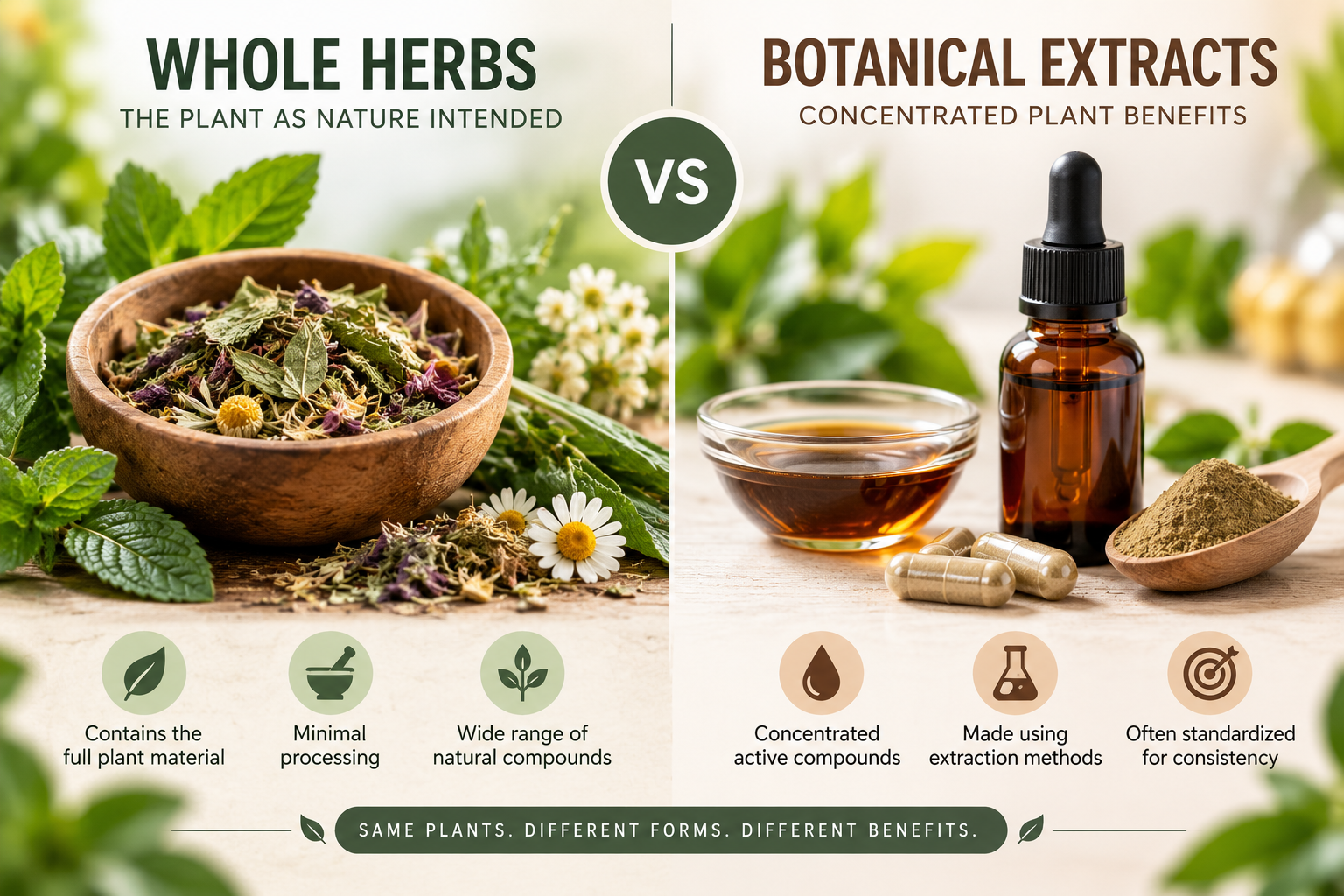
How Botanical Extracts Differ From Whole Herbs
Understanding how extracts differ from whole herbs can make it easier to interpret supplement labels, compare products, and evaluate claims about herbal ingredients.
Read article
How Nutrient Deficiencies Develop and Get Identified
Understanding how nutrient deficiencies develop—and how healthcare professionals identify them—can make it easier to recognize potential problems before they become more serious.
Read article
What Is the Difference Between Water-Soluble and Fat-Soluble Vitamins
Understanding this basic distinction can make it easier to interpret nutrition information, evaluate supplements, and make informed decisions about dietary intake.
Read article

Join 10,000+ Readers Building Healthier Habits
Get actionable wellness tips every week plus our newest articles delivered straight to your inbox.