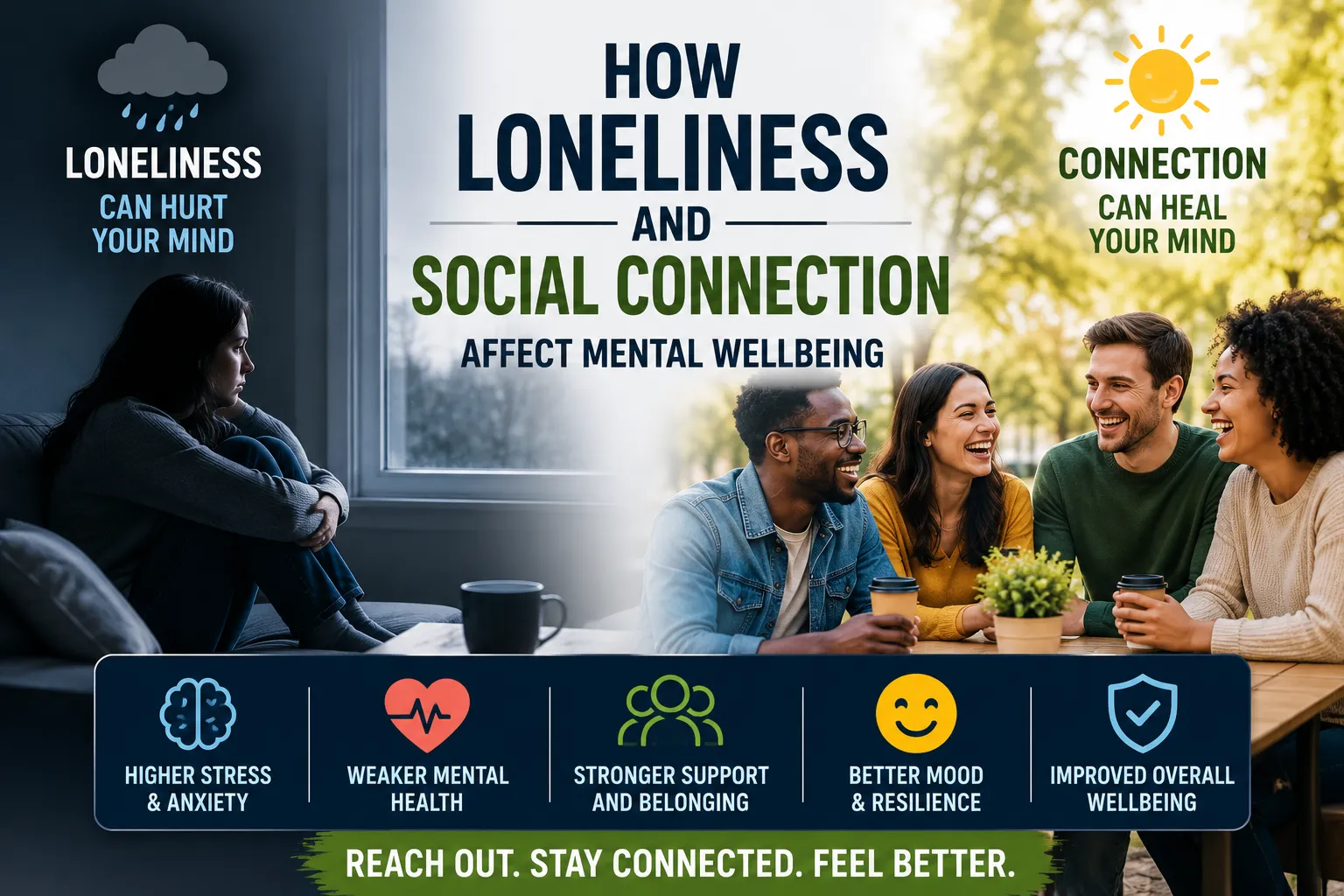

How Loneliness and Social Connection Affect Mental Wellbeing
Human beings are social by nature. Relationships with family, friends, colleagues and communities can provide companionship, emotional support and a sense of belonging. When those connections are missing or feel inadequate, loneliness can become part of everyday life.
Loneliness is not simply about being physically alone. A person can live alone and feel perfectly connected to others, while someone surrounded by people can still feel isolated.
That distinction matters because social connection is about the quality and meaning of relationships, not simply the number of people around us.
Research has increasingly linked loneliness and social isolation with mental and physical health outcomes. Understanding how connection affects wellbeing can help explain why maintaining meaningful relationships is an important part of a healthy lifestyle. For a broader look at the factors that contribute to emotional health, see The Complete Guide to Emotional Well-Being.
What Loneliness Really Means
Loneliness is generally understood as the distress that can arise when a person’s social relationships do not meet their desired level of connection.
It is therefore subjective.
Someone might have dozens of acquaintances but still feel lonely if they lack close relationships in which they feel understood. Another person may have a small social circle and feel deeply connected to it.
Loneliness can also change over time.
Moving to a new city, starting a new job, ending a relationship, losing a loved one or entering a different stage of life can temporarily disrupt social connections. Experiences of loss can be particularly difficult, as explained in How Grief Affects Emotional Well-Being and Everyday Life.
Occasional loneliness is a normal human experience. The concern becomes greater when feelings of isolation are persistent and begin affecting everyday life.
Social Isolation and Loneliness Are Different
The terms are often used together, but they describe different experiences.
Social isolation generally refers to having limited social contact or relationships.
Loneliness describes how a person feels about their social relationships.
A person can experience one without necessarily experiencing the other.
For example, someone who works remotely and spends much of the day alone may have relatively little face-to-face contact but still feel socially fulfilled through family, friends and community activities.
Conversely, someone who attends social events regularly may still feel lonely if those interactions do not provide meaningful connection.
Understanding this difference is important when thinking about solutions.
Simply increasing the number of social interactions does not necessarily eliminate loneliness.
Why Social Connection Matters for Mental Wellbeing
Meaningful relationships can provide several forms of psychological support.
People often turn to trusted friends or family members when dealing with difficult experiences. Talking through a problem can provide emotional relief, while another person’s perspective may help someone see a situation differently.
Social relationships can also provide encouragement and motivation.
Knowing that other people care about what happens to us can strengthen feelings of belonging and purpose.
These benefits do not mean relationships eliminate stress or difficult emotions. Instead, supportive relationships can provide resources for dealing with challenges. Developing practical responses to difficult experiences is also part of the complete guide to healthy coping skills.
Connection Can Help People Manage Stress
Everyday life involves uncertainty, pressure and setbacks.
A supportive social network can provide a place to share those experiences.
A conversation with a trusted person may not solve a problem, but being heard can make the situation feel more manageable.
Social connection can also create opportunities for positive experiences that temporarily shift attention away from stress.
Simple activities such as eating together, walking with a friend or talking after work can provide moments of relaxation and familiarity.
Over time, these interactions can become part of a person’s broader emotional support system. Learning how to manage pressure more effectively can also complement social support, as discussed in The Complete Guide to Stress Management.
Loneliness Can Become a Difficult Cycle
One of the challenges of loneliness is that it can sometimes reinforce itself.
A person who feels disconnected may become less motivated to reach out. They may worry about rejection, assume other people are not interested or feel uncomfortable in social situations.
That withdrawal can reduce opportunities for positive interactions, potentially making the loneliness stronger.
The result can become a cycle:
Loneliness → withdrawal → fewer connections → greater loneliness.
Breaking that cycle does not necessarily require dramatic changes.
Small, consistent interactions can provide a starting point.
Social Media Can Connect People—and Sometimes Isolate Them
Digital technology has dramatically changed how people maintain relationships.
Messaging applications, social networks, online communities and video calls can help people stay connected across long distances.
For someone who has moved away from family or friends, digital communication can make maintaining those relationships much easier.
But online interaction does not always provide the same experience as meaningful personal connection.
Social media can also expose users to carefully selected images of other people’s lives, potentially encouraging unhealthy comparisons.
The effect of digital communication therefore depends on how it is used.
Using technology to strengthen genuine relationships can be very different from repeatedly scrolling through content without interacting meaningfully with anyone.
Quality Often Matters More Than Quantity
A large social network does not automatically produce strong mental wellbeing.
A handful of trusted relationships can provide more meaningful support than hundreds of superficial connections.
Quality relationships often involve:
- Trust
- Mutual respect
- Emotional support
- Shared experiences
- Honest communication
- A sense of belonging
- The ability to be yourself
These characteristics can make relationships feel psychologically safe.
They also allow people to share concerns without feeling that they have to constantly present a perfect version of themselves. Establishing appropriate limits can also help protect healthy relationships, as explored in Healthy Boundaries: Complete Guide to Setting Better Limits.
Loneliness Can Affect Everyday Habits
Persistent loneliness can influence how people approach daily life.
Someone who feels disconnected may lose motivation to participate in activities they previously enjoyed.
They may spend more time at home, communicate less frequently with others or avoid situations where social interaction is expected.
Changes in routine can then affect other aspects of wellbeing.
Exercise, sleep, hobbies and time outdoors may all become less consistent when someone is struggling emotionally.
This is one reason social connection should be viewed as part of a broader approach to wellbeing rather than as an isolated issue.
Community Can Provide a Sense of Belonging
Social connection does not have to come exclusively from close friendships.
Communities can provide meaningful relationships and shared identity.
Examples include:
- Sports clubs
- Religious or cultural communities
- Volunteer organizations
- Professional associations
- Hobby groups
- Neighborhood activities
- Educational groups
- Community projects
Participating in a shared activity can make social interaction feel more natural because people already have something in common.
For someone who finds unstructured socializing difficult, organized activities can provide a useful starting point.
Workplaces Can Influence Social Wellbeing
Adults spend a significant amount of time working, making workplace relationships an important part of many people’s social lives.
Supportive colleagues can provide companionship, collaboration and encouragement.
A workplace does not need to become a substitute for personal relationships, but a positive social environment can make daily work more enjoyable.
Remote and hybrid work arrangements can create additional challenges for some employees.
Digital meetings may accomplish the practical purpose of communication while providing fewer opportunities for informal conversations.
Organizations can respond by creating opportunities for employees to interact socially without making participation compulsory or intrusive.
Major Life Changes Can Increase Loneliness
Loneliness can become more common during periods of transition.
People may experience changes in their social networks after:
- Moving to another location
- Starting university
- Beginning a new job
- Retiring
- Becoming a parent
- Ending a relationship
- Losing someone close
- Experiencing financial changes
- Developing mobility limitations
These transitions can disrupt familiar routines and relationships. Understanding how major life transitions affect mental wellbeing can provide additional context for why periods of change may affect emotional health.
Recognizing that loneliness can be a normal response to major change may make it easier for people to address it rather than assuming something is fundamentally wrong with them.
Small Social Habits Can Make a Difference
Building stronger connections does not necessarily require a busy social calendar.
Small habits can create regular opportunities for interaction.
Someone might call a family member once a week, meet a friend for a walk, join a local class or regularly participate in a community activity.
Consistency can matter.
A single social event may provide temporary enjoyment, while regular interaction can create familiarity and stronger relationships over time.
The goal is not to maximize social activity. It is to create meaningful opportunities for connection that fit naturally into everyday life.
Listening Is an Important Part of Connection
Social connection is not only about having people to talk to.
It also involves listening.
People often feel closer when they believe someone is genuinely interested in their experiences.
Active listening can involve giving another person attention, asking thoughtful questions and avoiding the temptation to immediately turn every conversation into advice or a discussion about one’s own experiences.
These small behaviors can strengthen relationships.
Strong connections are generally built through repeated interactions rather than a single conversation.
Helping Other People Can Strengthen Connection
Acts of service can create social bonds while providing a sense of purpose.
Volunteering, helping a neighbor, supporting a community project or simply checking in on someone can create opportunities for meaningful interaction.
Helping others does not have to be dramatic.
A small gesture can communicate that another person matters.
For someone experiencing loneliness, activities that combine social interaction with a shared purpose can be particularly useful because the focus is not exclusively on “trying to make friends.”
Physical Activity Can Combine Social and Mental Benefits
Exercise is often discussed separately from social wellbeing, but the two can overlap.
Walking with a friend, joining a sports club, attending a group fitness class or participating in recreational activities can combine movement with social interaction.
This can make healthy habits more enjoyable and sustainable.
The activity itself does not need to be intense.
A regular walk with another person can provide exercise, conversation and time outside at the same time.
Older Adults Can Face Particular Social Challenges
Social networks can change significantly with age.
Retirement can remove workplace relationships from daily life. Friends or relatives may move away, and bereavement can reduce established social connections.
Mobility or transportation challenges can also make social participation more difficult.
Creating accessible opportunities for older adults to remain involved in communities can therefore be important.
Technology can help as well, particularly when physical distance makes regular visits difficult.
However, digital communication works best when it complements rather than completely replaces meaningful human interaction.
Young People Can Experience Loneliness Too
Loneliness is not limited to older adults.
Young people can also experience social disconnection, particularly during periods of transition.
Starting school or university, changing peer groups, moving to a new environment or experiencing conflict with friends can all affect a person’s sense of belonging.
Online social activity can make the situation more complicated because young people may be constantly exposed to other people’s social experiences while still feeling personally disconnected.
Creating supportive environments where young people can develop genuine relationships is therefore important for emotional wellbeing.
When Loneliness Starts Affecting Daily Life
Occasional loneliness is part of being human.
Persistent loneliness that begins interfering with sleep, work, relationships, motivation or everyday functioning deserves more attention.
Someone who feels consistently disconnected may benefit from talking with a trusted person or seeking professional support.
Mental health professionals can help people explore factors contributing to loneliness and identify strategies that fit their circumstances.
There is no shame in seeking help.
Social disconnection can affect anyone, including people who appear highly successful or socially active from the outside.
Building Connection Takes Time
One of the most important things to remember is that meaningful relationships rarely develop instantly.
It can take repeated conversations, shared experiences and mutual trust to form a strong connection.
Someone who feels lonely may therefore become discouraged if their first attempt at joining a group or contacting an old friend does not immediately result in a close relationship.
Persistence matters.
A single awkward conversation does not determine whether a person can build meaningful connections.
A Healthier Relationship With Social Life
Social connection does not mean being constantly surrounded by people.
People have different personalities, lifestyles and social needs. Some enjoy frequent interaction, while others need significant amounts of solitude.
The objective is not to eliminate alone time.
Healthy solitude can be restorative and enjoyable. The concern is the gap between the amount and quality of connection a person wants and what they actually experience.
Finding the right balance can mean maintaining a few close relationships, participating in a community, enjoying independent activities and making time for meaningful interactions.
Making Connection Part of Everyday Wellbeing
Mental wellbeing is influenced by many factors, including sleep, physical activity, stress, environment and personal circumstances. Social connection is another important piece of that picture.
A supportive relationship can provide encouragement during difficult periods, companionship during ordinary days and a sense that our experiences matter to someone else.
Loneliness, meanwhile, can become more difficult when people withdraw and lose opportunities to reconnect.
The answer is not to pursue a larger social circle at any cost. It is to create meaningful, sustainable connections—through friendships, family relationships, communities, shared activities and simple acts of reaching out.
In a world where digital communication makes it easier than ever to contact other people, genuine connection still depends on something technology cannot guarantee: feeling seen, understood and valued.
Continue Reading
Similar Posts
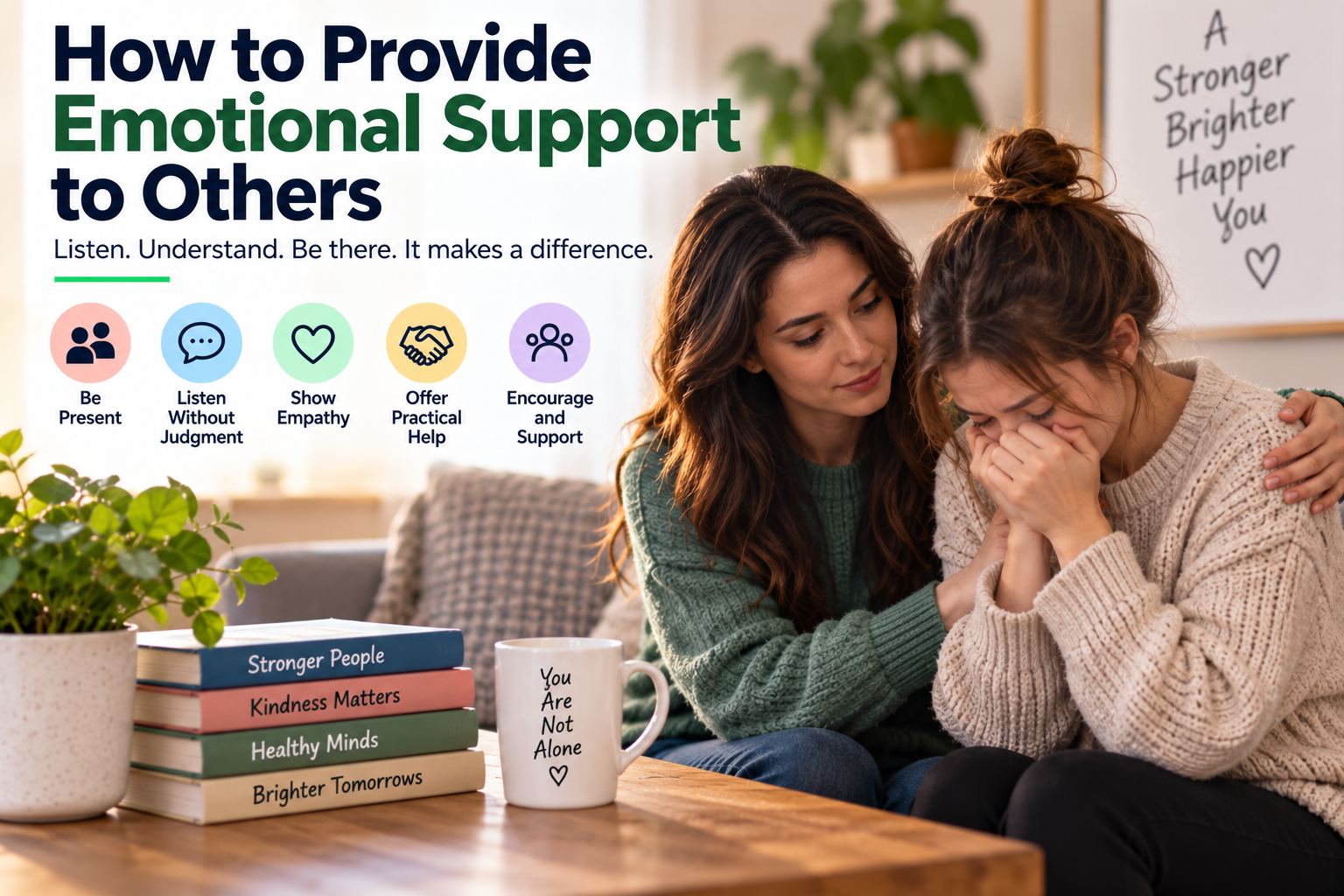
How to Provide Emotional Support to Others
Good emotional support is also about respecting boundaries. People need different kinds of help at different times. Some may want to talk, while others may need practical assistance, quiet companionship, or simply reassurance that someone cares.
Read article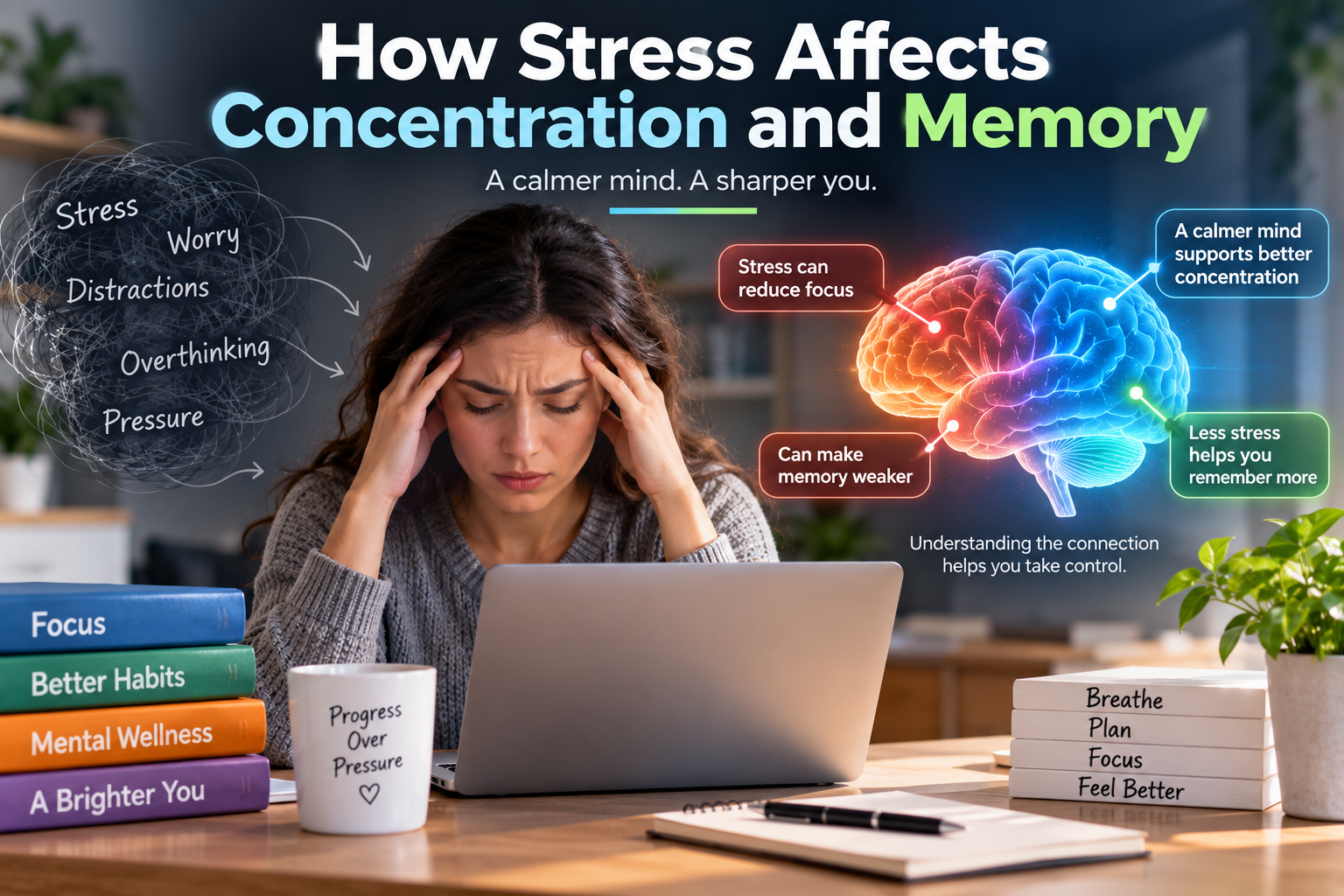
How Stress Affects Concentration and Memory
Understanding the connection between stress, concentration and memory can help explain why the mind sometimes feels less efficient during stressful periods—and why managing stress can be an important part of maintaining overall mental well-being.
Read article
When Should Someone Seek Professional Mental Health Support
Understanding **what mental wellness means** is a useful starting point. Mental wellness involves more than simply being happy or avoiding mental illness. It includes the ability to manage emotions, handle challenges, maintain relationships, make decisions, and function in everyday life.
Read article

Join 10,000+ Readers Building Healthier Habits
Get actionable wellness tips every week plus our newest articles delivered straight to your inbox.