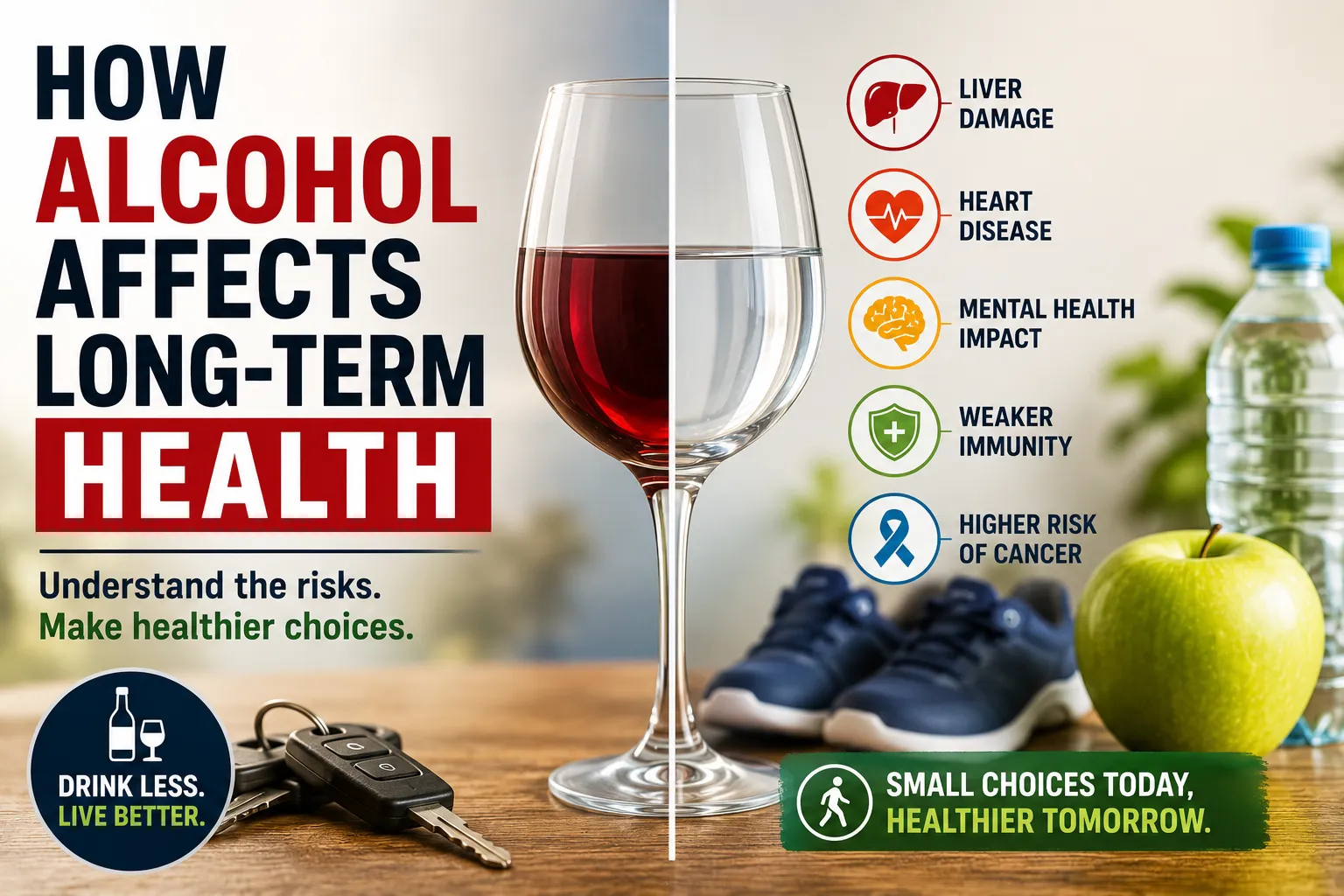

How Alcohol Affects Long-Term Health
Alcohol is often discussed as a social habit rather than a health issue. A drink may be part of dinner, a celebration, a night out, or a way to unwind after a stressful day. But the effects of alcohol extend beyond the hours when someone feels its immediate effects.
Over time, alcohol can influence the liver, heart, brain, digestive system, immune system and mental health, while also increasing the risk of several cancers. The amount and pattern of drinking matter: heavier and more frequent consumption generally produces greater risk, but current evidence also shows that even relatively low levels of alcohol can carry some health risks.
Understanding those long-term effects can help people make more informed decisions about how much they drink and whether reducing or stopping alcohol could benefit their health. Alcohol is also one of many modifiable factors that can influence overall health and disease risk, alongside genetics, environment, lifestyle and other factors.
What Happens to Alcohol in the Body?
Alcoholic drinks contain ethanol, a psychoactive substance that affects the central nervous system. After drinking, alcohol is absorbed into the bloodstream and processed primarily by the liver.
During metabolism, ethanol is converted into acetaldehyde, a toxic compound that can damage cells and DNA. The body then breaks acetaldehyde down into less harmful substances.
This process helps explain why alcohol can affect multiple organs rather than simply making someone feel intoxicated.
Alcohol is a toxic, psychoactive and dependence-producing substance and is associated with a wide range of health conditions.
Alcohol and Liver Health
The liver plays a central role in processing alcohol, which makes it particularly vulnerable to long-term heavy drinking.
Continued excessive alcohol consumption can contribute to a progression of liver problems, including:
- Fat accumulation in the liver
- Alcohol-associated hepatitis
- Liver inflammation
- Fibrosis, or scarring
- Cirrhosis
- Liver failure
Early liver damage may produce few noticeable symptoms. That can make alcohol-related liver disease particularly difficult to recognize without medical evaluation.
The risk generally increases with greater alcohol exposure over time, although individual susceptibility varies.
People with existing liver disease may face additional risks from alcohol and should discuss drinking with a healthcare professional.
Alcohol consumption can also interact with other major risk factors for disease, making an individual’s overall health profile important when considering long-term risk.
Alcohol Increases Cancer Risk
One of the most important long-term health effects of alcohol is its relationship with cancer.
Alcohol is classified as a Group 1 carcinogen, meaning there is established evidence that it causes cancer in humans. Alcohol consumption is causally associated with cancers of the oral cavity, pharynx, larynx, esophagus, liver, colorectum and female breast.
The relationship isn’t limited to people who drink heavily.
Drinking even relatively small amounts of alcohol can increase the risk of certain cancers, with risk generally increasing as alcohol consumption increases.
How Can Alcohol Cause Cancer?
Researchers have identified several mechanisms.
Alcohol metabolism produces acetaldehyde, which can damage DNA. Alcohol can also contribute to oxidative stress, affect hormone levels and influence folate metabolism. These processes can interfere with normal cellular regulation and increase the likelihood of cancer development.
Importantly, the type of alcoholic beverage doesn’t eliminate this risk.
Beer, wine and spirits all contain ethanol, so switching between them doesn’t remove the alcohol-related cancer risk.
Alcohol and Heart Health
Alcohol can affect the cardiovascular system in several ways.
Long-term or heavy drinking is associated with increased risks of cardiovascular problems, including:
- High blood pressure
- Irregular heart rhythms
- Cardiomyopathy
- Stroke
- Other cardiovascular diseases
For years, some observational research was interpreted as suggesting that moderate alcohol consumption might protect the heart. That interpretation has become increasingly controversial because observational studies can be affected by confounding factors, including differences in diet, exercise, income, smoking and healthcare access.
The evidence does not provide a reason for someone who doesn’t drink to begin drinking for cardiovascular protection.
Alcohol Can Affect Brain Health
Alcohol directly affects the brain and nervous system.
In the short term, it can impair:
- Judgment
- Coordination
- Reaction time
- Memory
- Decision-making
Repeated heavy drinking can have more persistent effects.
Long-term excessive alcohol use can contribute to changes in brain structure and function and may interfere with cognitive abilities. Alcohol-related nutritional deficiencies can also contribute to neurological problems.
The developing brain is particularly vulnerable. Brain development continues into early adulthood, meaning alcohol exposure during this period can have important consequences.
Alcohol and Mental Health
Alcohol and mental health can influence each other in complicated ways.
Some people drink because they feel stressed, anxious, lonely or depressed. Alcohol may temporarily change how a person feels, but its effects on the nervous system can ultimately make some mental health problems worse.
Long-term harmful alcohol use is associated with conditions including:
- Depression
- Anxiety
- Sleep disruption
- Alcohol use disorder
- Mood changes
- Impulsive behavior
Alcohol use is also associated with self-harm and suicide.
This creates a potential cycle: someone experiences emotional distress, drinks to cope, experiences poorer sleep or worsening mood, and then drinks again to manage those feelings.
Breaking that cycle can sometimes require professional support rather than simply relying on willpower.
Alcohol Can Disrupt Sleep
A drink may make some people feel sleepy, but falling asleep more quickly doesn’t necessarily mean getting better sleep.
Alcohol can alter normal sleep patterns and interfere with restorative sleep as the night progresses.
Regular drinking may therefore contribute to:
- Poorer sleep quality
- Nighttime awakenings
- Daytime fatigue
- Reduced concentration
- A cycle of using alcohol as a sleep aid
People who consistently struggle with sleep should be cautious about using alcohol as a solution. Addressing the underlying cause of insomnia is generally a better long-term approach.
Alcohol and Weight Management
Alcohol also matters when it comes to body weight and metabolic health.
Alcohol provides energy, while alcoholic drinks can contain additional calories from ingredients such as sugar, syrups and other carbohydrates.
Regular drinking can therefore make it easier to consume more calories than intended.
Alcohol may also influence eating behavior by lowering inhibitions or increasing the likelihood of choosing energy-dense foods.
For someone trying to maintain or reduce body weight, reducing alcohol can be a practical part of an overall healthy-living strategy. It can be considered alongside the broader habits involved in healthy living and long-term wellness.
Alcohol Can Affect the Digestive System
Long-term alcohol exposure can affect the digestive tract and digestive organs.
Heavy alcohol consumption is associated with conditions involving the stomach, pancreas and liver. It can contribute to inflammation and interfere with normal digestive processes.
Alcohol is also associated with pancreatitis, an inflammation of the pancreas that can be painful and potentially serious.
The digestive effects of alcohol are another reason that drinking patterns matter beyond simply counting how many drinks someone consumes on a particular evening.
What Is Alcohol Use Disorder?
Alcohol use disorder, often abbreviated AUD, is more than simply drinking frequently.
It involves problematic alcohol use that causes significant impairment or distress.
Potential warning signs include:
- Drinking more or longer than intended
- Repeated unsuccessful attempts to cut down
- Strong cravings for alcohol
- Spending substantial time obtaining, drinking or recovering from alcohol
- Continued drinking despite health or relationship problems
- Neglecting responsibilities because of alcohol
- Developing tolerance
- Experiencing withdrawal symptoms after stopping
Alcohol dependence represents a more severe form of alcohol-related disorder.
Alcohol use disorder affects millions of people worldwide, including many people living with alcohol dependence.
Alcohol use disorder is a medical condition, not a character flaw, and treatment is available.
Does Drinking Less Actually Help?
Yes.
Reducing alcohol exposure can lower health risks, and stopping alcohol consumption can provide additional benefits.
The relationship isn’t necessarily an all-or-nothing situation. Someone doesn’t have to go directly from regular drinking to complete abstinence to make a meaningful change.
Depending on the person’s circumstances, reducing:
- The number of drinking days
- The amount consumed per occasion
- Episodes of heavy drinking
- Alcohol consumed as a coping mechanism
can reduce exposure.
Reducing or stopping alcohol consumption can also reduce the risk of several alcohol-related cancers.
Alcohol reduction is therefore one component of broader disease prevention and reducing health risks.
Is There a Completely Safe Amount of Alcohol?
This question requires an important distinction.
For cancer risk, there is no risk-free level of alcohol consumption; even small amounts can increase cancer risk.
At the same time, health risk isn’t identical for every person or every drinking pattern. The overall risk depends on factors including:
- How much alcohol is consumed
- How frequently someone drinks
- Whether drinking involves heavy episodes
- Age
- Sex
- Existing medical conditions
- Medications
- Pregnancy status
- Personal and family history
- Other lifestyle factors
Alcohol-related harm generally increases with both the amount consumed and the frequency or pattern of drinking.
So rather than thinking of alcohol as simply “healthy” or “unhealthy,” it is more accurate to understand it as a substance whose risks generally increase with exposure.
Who Should Avoid Alcohol Completely?
Some people should not drink alcohol at all.
This includes people who:
- Are pregnant or may be pregnant
- Are under the legal drinking age
- Have certain medical conditions
- Take medications that interact with alcohol
- Have experienced alcohol dependence or alcohol use disorder and are advised to abstain
- Need to drive or operate machinery
- Cannot reliably control their drinking
For people taking prescription or over-the-counter medicines, checking with a healthcare professional or pharmacist is particularly important because alcohol can interact with certain medications.
What About “Moderate Drinking”?
The term moderate drinking can be misleading because definitions differ between countries and organizations.
More importantly, describing a drinking pattern as moderate doesn’t mean it carries zero health risk.
For example, someone might have relatively few drinking occasions but consume a large amount during each occasion. That pattern can carry substantial acute and long-term risks.
Both total alcohol volume and drinking patterns—including heavy episodes—affect health outcomes.
This is why simply calculating a weekly average may not tell the whole story.
How to Reduce Alcohol Consumption
For people who want to drink less, practical changes can make the process easier.
Set a Specific Goal
Instead of saying “I’ll drink less,” establish a measurable goal.
For example:
- Have alcohol-free days each week
- Reduce the number of drinks on drinking days
- Avoid keeping large quantities of alcohol at home
- Decide in advance how much you intend to drink
Identify Your Triggers
Pay attention to when you are most likely to drink.
Common triggers can include:
- Stress
- Social pressure
- Loneliness
- Boredom
- Certain people or environments
- End-of-day routines
Once triggers are identified, alternative activities can be easier to plan.
Replace the Routine
If alcohol is connected to a particular routine, replace the behavior rather than simply removing it.
For example, someone who normally has a drink after work might instead:
- Take a walk
- Exercise
- Make tea
- Cook dinner
- Call a friend
- Read
- Take a shower
- Practice another relaxing activity
Seek Professional Help When Necessary
Some people can reduce their drinking independently.
Others need support.
If someone has been drinking heavily for a prolonged period, suddenly stopping can sometimes cause dangerous withdrawal symptoms. Medical guidance may be necessary, particularly when there is a history of dependence.
Anyone experiencing severe withdrawal symptoms should seek urgent medical care.
The Long-Term Health Picture
Alcohol doesn’t affect only one organ.
Its long-term effects can involve multiple systems simultaneously, from the liver and cardiovascular system to the brain, digestive tract and immune system. It also contributes to mental health problems and increases the risk of several cancers.
The good news is that alcohol consumption is a modifiable risk factor.
People can change how much they drink, how often they drink or whether they drink at all.
Reducing consumption doesn’t guarantee perfect health, because disease is influenced by genetics, environment, age and many other factors. But reducing alcohol exposure can remove one important source of preventable risk.
Alcohol is therefore best understood as one part of a much broader health picture. Preventive care, appropriate health screenings for men and women, healthy eating, physical activity, sleep and other lifestyle choices can all contribute to long-term health.
Making Alcohol a More Informed Health Decision
The long-term effects of alcohol are more significant than the temporary effects of a drink might suggest. Alcohol can contribute to liver disease, cardiovascular problems, mental health difficulties, dependence and several cancers, and the risks generally rise as consumption increases.
That doesn’t mean every person who drinks will develop an alcohol-related disease. It means that alcohol is not a risk-free part of a healthy lifestyle.
For people who already drink, the most useful question may not be whether they can find a supposedly “safe” amount. A better question is:
Could drinking less improve my long-term health, and what changes would be realistic for me?
For many people, the answer is yes. And for anyone concerned about their drinking, health effects, withdrawal, or difficulty cutting back, talking with a qualified healthcare professional can provide personalized guidance and support.
Continue Reading
Similar Posts

How Your Environment Affects Everyday Health
Understanding these connections can help people make practical changes that support healthier daily living.
Read article
How Aerobic Exercise Supports Cardiovascular Health
Understanding how aerobic exercise affects cardiovascular health can make it easier to choose activities that are enjoyable, sustainable, and appropriate for your fitness level.
Read article
What Is the Gut Microbiome and Why Does It Matter
Understanding how this ecosystem works can make it easier to understand why diet, lifestyle, medications, and other factors can influence digestive health.
Read article

Join 10,000+ Readers Building Healthier Habits
Get actionable wellness tips every week plus our newest articles delivered straight to your inbox.