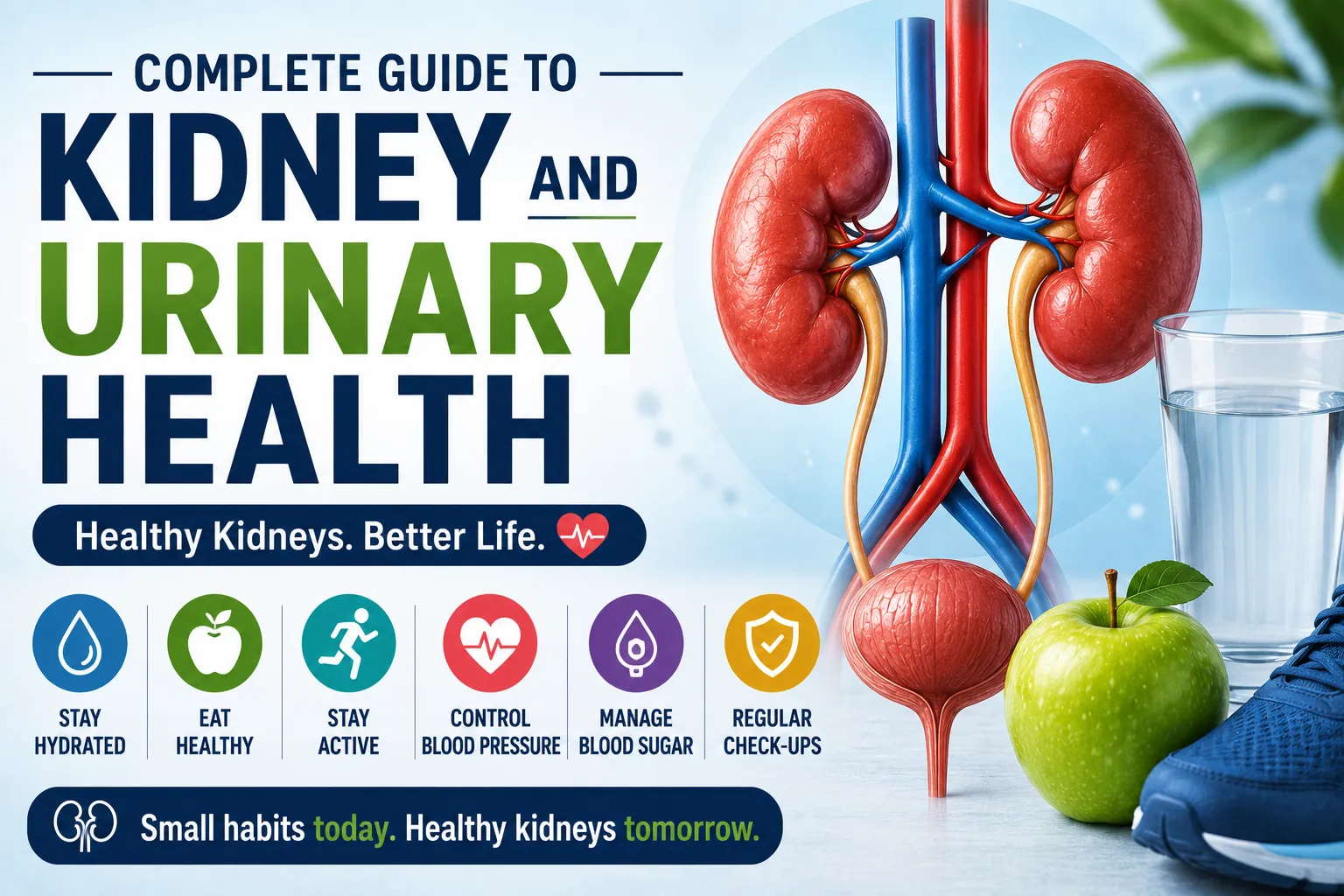

Complete Guide to Kidney and Urinary Health
Your kidneys and urinary system work continuously to remove waste, balance fluids and electrolytes, regulate blood pressure and help maintain the body’s internal environment. Yet kidney and urinary problems can develop quietly, sometimes without obvious symptoms until a condition has progressed.
Good kidney and urinary health therefore involves more than simply drinking water. It includes managing blood pressure and blood sugar, eating a balanced diet, staying physically active, using medicines responsibly, responding to urinary symptoms and getting appropriate screening when risk factors are present.
This guide explains how the kidneys and urinary tract work, common conditions, warning signs, prevention strategies, important tests and when to seek medical care.
Health note: This article is for general educational purposes and does not replace individualized medical advice. Seek professional care for persistent or severe symptoms, blood in the urine, difficulty urinating, severe pain, fever with urinary symptoms, swelling, or other concerning changes.
What Do the Kidneys Do?
Most people have two kidneys. They are bean-shaped organs located toward the back of the abdomen, just below the rib cage.
Their best-known function is filtering the blood and producing urine. The kidneys remove waste products and excess fluid while helping maintain appropriate levels of minerals and electrolytes.
They also perform several other important jobs.
Healthy kidneys help:
- Remove waste from the blood
- Balance body fluids
- Regulate electrolytes such as sodium and potassium
- Help control blood pressure
- Produce hormones involved in red blood cell production
- Support bone health
- Maintain the body’s acid-base balance
The kidneys and urinary tract work together as a system rather than functioning independently.
How the Urinary System Works
The urinary tract consists of:
- Kidneys
- Ureters
- Bladder
- Urethra
The kidneys produce urine. Two narrow tubes called ureters carry urine from the kidneys to the bladder.
The bladder temporarily stores urine.
When you urinate, muscles in and around the bladder coordinate to move urine through the urethra and out of the body.
A problem anywhere along this pathway can affect urinary health.
What Is Kidney Health?
Kidney health refers to how effectively the kidneys perform their functions and whether they are free from significant structural or functional disease.
Kidney disease can develop for many reasons.
Some conditions damage the kidney’s filtering structures directly, while others place prolonged stress on the blood vessels supplying the kidneys.
The two most common causes of chronic kidney disease in adults are diabetes and high blood pressure.
What Is Chronic Kidney Disease?
Chronic kidney disease (CKD) occurs when the kidneys are damaged or have structural problems that impair their ability to filter blood properly.
CKD often develops gradually.
One of its most challenging characteristics is that early disease frequently causes no noticeable symptoms. Testing may therefore detect kidney problems before a person feels unwell.
Early detection can provide an opportunity to address the underlying causes and slow further kidney damage.
For a broader look at how common chronic conditions can affect different organs and systems, see the Complete Guide to Common Health Conditions.
Major Risk Factors for Kidney Disease
Your risk can be higher if you have:
- Diabetes
- High blood pressure
- Heart or blood-vessel disease
- A family history of kidney disease or kidney failure
- Obesity
- Increasing age
- Certain inherited conditions
- Previous kidney injury
- Recurrent kidney problems
Kidney testing is particularly important for people with important risk factors such as diabetes, high blood pressure, heart disease or a family history of kidney failure.
Diabetes and Kidney Health
High blood glucose over time can damage blood vessels and structures within the kidneys.
Diabetes is one of the leading causes of chronic kidney disease.
If you have diabetes, controlling blood glucose and blood pressure and attending recommended medical appointments can help protect kidney function.
Regular kidney assessment is particularly important for people with diabetes because early kidney disease may not produce symptoms.
High Blood Pressure and the Kidneys
Blood pressure and kidney health are closely connected.
Persistently high blood pressure can damage the small blood vessels that help the kidneys filter blood.
At the same time, kidney disease can contribute to high blood pressure, creating a cycle in which one condition can worsen the other.
Managing blood pressure is therefore one of the most important strategies for protecting kidney function.
Why Early Kidney Disease Can Be Difficult to Detect
One of the biggest misconceptions about kidney disease is that it should always cause obvious pain or urinary changes.
That is not necessarily true.
Most people with early CKD do not have symptoms, and many people remain symptom-free until kidney disease is advanced.
This is why risk-based testing is so important.
Feeling healthy does not necessarily prove that kidney function is normal.
Possible Symptoms of Advanced Kidney Disease
When kidney disease becomes more advanced, symptoms may include:
- Fatigue
- Difficulty sleeping
- Poor appetite
- Nausea or vomiting
- Difficulty concentrating
- Changes in urination
- Foamy urine
- Swelling in the legs, feet or ankles
- Itchy or dry skin
- Muscle cramps
- Unexplained weight loss
- Shortness of breath
These symptoms can have many possible causes, so they do not automatically mean someone has kidney disease.
What Does Foamy Urine Mean?
Occasional bubbles in urine are not necessarily a sign of disease.
Persistent or unusually foamy urine, however, can sometimes indicate excess protein in the urine.
Protein leakage can occur when kidney filters are damaged.
A urine test can determine whether albumin or other proteins are present.
The urine albumin-to-creatinine ratio (UACR) is used to assess albumin in urine.
Blood in the Urine
Pink, red or dark-colored urine can sometimes indicate blood.
There are also harmless explanations for changes in urine color, including certain foods and medications.
However, visible blood in the urine should not simply be ignored.
Possible causes include:
- Urinary tract infections
- Kidney stones
- Kidney disease
- Prostate problems
- Certain medicines
- Other conditions affecting the urinary tract
A healthcare professional can determine whether testing is needed.
Changes in Urination
Changes that deserve attention can include:
- Urinating much more often than usual
- Urinating much less than usual
- Difficulty starting urination
- A weak or interrupted urine stream
- Pain or burning
- Feeling unable to empty the bladder
- Repeated nighttime urination
- Sudden changes in urinary habits
The cause can range from relatively minor problems to conditions requiring treatment.
Urinary Tract Infections
A urinary tract infection (UTI) occurs when microorganisms infect part of the urinary system.
UTIs commonly affect the bladder and urethra, although infections can involve the kidneys.
Symptoms can include:
- Burning or pain during urination
- Frequent urination
- A strong urge to urinate
- Lower-abdominal discomfort
- Cloudy urine
- Blood in the urine
- Strong-smelling urine
Some people, particularly older adults, may experience less typical symptoms.
When a UTI May Become More Serious
An infection involving the kidneys can be more serious than a simple bladder infection.
Symptoms such as:
- Fever
- Chills
- Back or side pain
- Nausea
- Vomiting
alongside urinary symptoms may require prompt medical assessment.
Untreated infections can cause kidney damage.
Kidney Stones Explained
Kidney stones are hard deposits that develop from substances in urine.
They can vary considerably in size.
Some stones pass through the urinary tract without causing major problems. Others can become lodged and cause significant pain or obstruct urine flow.
Possible symptoms include:
- Severe pain in the side or back
- Pain that moves toward the lower abdomen or groin
- Blood in the urine
- Nausea
- Vomiting
- Pain during urination
- Frequent urination
A healthcare professional can determine the appropriate evaluation and treatment.
Preventing Kidney Stones
The prevention strategy depends partly on the type of stone someone forms.
General measures may include:
- Drinking adequate fluids
- Following dietary advice appropriate to the specific stone type
- Managing sodium intake
- Following individualized recommendations from a healthcare professional
People with recurrent stones may need metabolic testing and tailored dietary advice rather than relying on generic online recommendations.
Kidney Infection
A kidney infection, also called pyelonephritis, can occur when bacteria or other microorganisms reach the kidneys.
It can develop from a urinary infection that moves upward through the urinary tract.
Symptoms may include:
- Fever
- Chills
- Pain in the back or side
- Nausea
- Vomiting
- Painful urination
- Frequent urination
A suspected kidney infection requires medical evaluation because untreated infection can become serious.
Urinary Incontinence
Urinary incontinence means unintentionally leaking urine.
It can occur for different reasons, including:
- Pregnancy and childbirth
- Aging
- Pelvic-floor weakness
- Prostate problems
- Neurological conditions
- Certain medicines
- Bladder disorders
Incontinence is common, but that does not mean you simply have to accept it.
A healthcare professional can identify the likely cause and discuss treatment options.
Urinary Retention
Urinary retention occurs when a person cannot completely empty the bladder.
It can be:
- Acute, developing suddenly
- Chronic, developing gradually
Possible symptoms include:
- Difficulty starting urination
- Weak urine flow
- Frequent small amounts of urine
- Feeling that the bladder has not emptied
- Lower-abdominal discomfort
People should not routinely hold urine for long periods because doing so can contribute to bladder problems and may increase UTI risk.
Sudden inability to urinate requires urgent medical attention.
Kidney Failure
Kidney failure occurs when kidney function has declined to a level at which the kidneys can no longer adequately perform their essential functions.
Kidney failure is generally defined as kidney function falling to less than approximately 15% of normal.
Treatment options may include:
- Hemodialysis
- Peritoneal dialysis
- Kidney transplantation
The appropriate treatment depends on the person’s overall health, kidney function and individual circumstances.
How Kidney Disease Is Diagnosed
Because early kidney disease may not cause symptoms, testing is important for people at elevated risk.
Two important tests are:
Blood Testing
A blood test measures creatinine, which can be used to estimate how effectively the kidneys filter blood.
The resulting estimate is called the estimated glomerular filtration rate (eGFR).
Urine Testing
A urine test can look for albumin or other abnormalities.
The urine albumin-to-creatinine ratio (UACR) is commonly used to assess albumin leakage.
Understanding eGFR
eGFR estimates how well the kidneys filter blood.
A lower eGFR can indicate reduced kidney function, although one result alone does not necessarily establish chronic kidney disease.
Healthcare professionals interpret eGFR alongside:
- Previous results
- UACR
- Medical history
- Blood pressure
- Other laboratory results
- Symptoms
- Imaging where appropriate
Trends over time can be particularly important.
Understanding UACR
The urine albumin-to-creatinine ratio checks for albumin leakage.
A UACR of 30 mg/g or less is considered normal, while a value above 30 mg/g may indicate kidney disease and may need confirmation with repeat testing.
Do not interpret a laboratory value in isolation. Your healthcare professional can explain what your individual result means.
How to Protect Your Kidneys
Many kidney-health strategies overlap with general health recommendations.
1. Manage Blood Pressure
Know your blood-pressure numbers and follow treatment recommendations if you have hypertension.
2. Manage Blood Sugar
If you have diabetes, work with your healthcare team to manage glucose appropriately.
3. Eat a Balanced Diet
Prioritize nutrient-rich foods and avoid excessive sodium and added sugars.
4. Stay Physically Active
Regular physical activity supports cardiovascular health, blood pressure and weight management.
5. Maintain a Healthy Weight
Excess body weight can increase the risk of several conditions that affect kidney health.
Healthy eating, physical activity and maintaining a healthy weight are important parts of kidney-disease prevention.
Kidney-Friendly Eating for the General Population
People without kidney disease generally do not need a highly restrictive “kidney diet.”
Instead, focus on a balanced eating pattern that supports overall health.
Helpful habits include:
- Eating plenty of vegetables and fruits
- Choosing whole grains
- Including appropriate protein sources
- Limiting excess sodium
- Limiting excessive added sugars
- Choosing healthier fats
- Minimizing heavily processed foods
Heart-healthy food choices, including fresh or frozen fruits and vegetables, whole grains and lower-fat dairy options, can support overall health while reducing excess salt and added sugars.
How Much Water Should You Drink?
Hydration is important, but there is no universal amount of water that every person must drink each day.
Fluid needs vary depending on:
- Body size
- Climate
- Physical activity
- Diet
- Pregnancy
- Illness
- Medications
- Kidney and heart health
People with advanced kidney disease or certain heart conditions may actually need individualized fluid limits.
Do not force excessive amounts of water simply because you believe it will “flush” your kidneys.
Urine Color and Hydration
Urine color can sometimes provide a rough clue about hydration.
Pale yellow urine is generally associated with adequate hydration, while darker urine can occur when urine is more concentrated.
However, urine color is not a diagnostic test for kidney function.
Kidney disease can exist without visible changes in urine.
Don’t Routinely Hold Your Urine
Delaying urination occasionally is unlikely to cause a major problem for most healthy people.
However, routinely holding urine for prolonged periods is not a good bladder habit.
Regularly holding urine can affect bladder muscles and increase the likelihood of developing a UTI.
When you need to urinate, use the bathroom when reasonably possible.
Medicines and Kidney Health
Some medicines can affect kidney function, particularly in certain circumstances or at high doses.
Nonsteroidal anti-inflammatory drugs (NSAIDs) are an important example.
Common NSAIDs include:
- Ibuprofen
- Naproxen
- Diclofenac
These medicines can be useful for appropriate conditions, but people with kidney disease or other risk factors should ask a healthcare professional whether they are appropriate.
Discuss medicines that may injure the kidneys with a healthcare provider.
Be Careful With Herbal Supplements
Herbal products and dietary supplements can contain biologically active substances.
Some may interact with medicines or affect kidney function.
People with kidney disease should be particularly cautious because impaired kidney function can change how the body handles certain substances.
Do not assume that a supplement labeled “natural” is automatically safe for your kidneys.
Smoking and Kidney Health
Smoking damages blood vessels throughout the body and contributes to cardiovascular disease.
Because kidney health depends heavily on healthy blood vessels, avoiding tobacco is an important part of protecting overall kidney health.
If you smoke, quitting can benefit your cardiovascular and general health even if you have smoked for many years.
Alcohol and Kidney Health
Excessive alcohol consumption can contribute to dehydration, high blood pressure and other conditions that may indirectly affect kidney health.
Moderation and overall drinking patterns matter.
People with kidney disease should discuss alcohol consumption with their healthcare professional because individual recommendations can depend on the severity and type of kidney problem.
For another perspective on protecting major organs through everyday risk reduction, see How to Reduce the Risk of Common Chronic Liver Diseases.
Physical Activity and Kidney Health
Exercise does not directly “clean” the kidneys.
Its value comes largely through its effects on overall health.
Regular activity can help:
- Manage blood pressure
- Support healthy weight
- Improve cardiovascular health
- Improve blood-sugar control
- Support physical fitness
Physical activity is an important part of kidney-disease prevention.
Kidney Health and Heart Health
The kidneys and cardiovascular system are closely connected.
People with CKD have an increased risk of cardiovascular disease, including heart attack and stroke.
This makes kidney protection part of a broader strategy for maintaining cardiovascular health.
Managing blood pressure, blood glucose, cholesterol, weight, diet and physical activity can benefit both systems.
Kidney Health for People With Diabetes
If you have diabetes, kidney screening is particularly important because kidney damage may develop before symptoms appear.
Discuss:
- Blood glucose targets
- Blood pressure
- eGFR
- UACR
- Medication choices
- Frequency of kidney testing
with your healthcare team.
Early identification of kidney damage can help guide treatment and monitoring.
Kidney Health During Pregnancy
Pregnancy changes the way the kidneys and cardiovascular system function.
Some urinary symptoms can occur during pregnancy, but symptoms such as painful urination, fever, back pain or blood in the urine require medical attention.
High blood pressure during pregnancy can also be associated with serious complications.
Pregnant people should discuss significant urinary or blood-pressure changes with their maternity or healthcare team.
Men’s Urinary Health
Men can develop urinary problems related to the prostate as they age.
An enlarged prostate can cause symptoms such as:
- Difficulty starting urination
- Weak urine stream
- Frequent urination
- Nighttime urination
- Urgency
- Feeling that the bladder has not emptied completely
These symptoms should be evaluated because different conditions can produce similar urinary changes.
Women’s Urinary Health
Women are more susceptible to certain urinary tract infections, partly because of anatomical differences.
Pregnancy, menopause and changes in pelvic-floor function can also influence urinary health.
Persistent urinary symptoms, recurrent infections or leakage deserve professional evaluation rather than being treated as inevitable.
Children’s Kidney and Urinary Health
Children can also develop urinary tract infections, kidney problems, congenital abnormalities and other urinary conditions.
Warning signs may include:
- Painful urination
- Fever without an obvious cause
- Blood in urine
- Swelling
- Changes in urination
- Poor growth
- Recurrent UTIs
Parents or caregivers should seek appropriate pediatric advice when concerning symptoms occur.
When to Seek Urgent Medical Care
Certain urinary or kidney symptoms require prompt attention.
Seek urgent medical evaluation for situations such as:
- Inability to urinate
- Severe or worsening flank pain
- Fever with urinary symptoms
- Blood in the urine accompanied by significant symptoms
- Severe vomiting with suspected kidney problems
- Sudden major reduction in urine output
- Significant swelling with breathing difficulties
- Severe weakness, confusion or other concerning symptoms
The appropriate response depends on the symptoms and the person’s medical history.
Common Kidney Health Myths
“If My Kidneys Hurt, I Have Kidney Disease”
Not necessarily.
Kidney disease often causes no pain, particularly in its early stages.
“I Need to Drink Huge Amounts of Water to Clean My Kidneys”
There is no need for most healthy people to force excessive water intake.
“Herbal Kidney Cleanses Remove Toxins”
There is no good reason to assume that commercial “kidney detox” products improve kidney function.
Some may actually be harmful.
“Normal Urine Means Healthy Kidneys”
Not necessarily.
Early kidney disease may produce no visible urinary changes.
“Kidney Disease Always Causes Symptoms”
Early CKD is frequently silent. Testing may be necessary to detect it.
A Practical Kidney-Health Checklist
| Area | Healthy Habit |
|---|---|
| Blood pressure | Monitor and manage it |
| Blood sugar | Control diabetes according to medical guidance |
| Diet | Eat a varied, nutrient-rich diet |
| Sodium | Avoid excessive salt |
| Activity | Exercise regularly |
| Weight | Aim for a healthy weight |
| Hydration | Drink appropriate amounts of fluid |
| Medicines | Use medicines responsibly |
| Supplements | Discuss potentially risky supplements |
| Urination | Don’t routinely hold urine |
| UTIs | Seek appropriate treatment |
| Screening | Test if you have kidney-disease risk factors |
| Smoking | Avoid tobacco |
| Symptoms | Investigate persistent or unusual changes |
The Tests That Can Tell You More Than Symptoms
One of the most important lessons about kidney health is that you cannot always tell how well your kidneys are functioning by how you feel.
Early CKD frequently produces no symptoms, which is why people with diabetes, high blood pressure, heart disease or a family history of kidney failure should discuss appropriate screening with a healthcare professional.
Two particularly useful measures are eGFR from a blood test and UACR from a urine test. Together with blood pressure, medical history and other findings, they can give healthcare professionals a clearer picture of kidney health.
Protecting the kidneys also means protecting the conditions that influence them. Managing diabetes and high blood pressure, staying physically active, eating a balanced diet, maintaining an appropriate weight, using medicines carefully and seeking treatment for urinary infections can all contribute to healthier kidneys over time.
The goal is not to find a miracle “kidney cleanse.” It is to build everyday habits that reduce preventable risks while recognizing symptoms and getting appropriate testing before problems have a chance to become advanced.
Continue Reading
Similar Posts

How Antibodies Help the Immune System Fight Infection
Understanding how antibodies work provides a clearer picture of why people develop immunity after certain infections or vaccinations and why the immune system can respond more effectively when it encounters a familiar pathogen again.
Read article
What Is the Difference Between Disease and Disorder
Understanding the distinction can make health information easier to interpret and help explain why doctors sometimes use one term rather than the other.
Read article
Why Blood Pressure Matters for Long-Term Health
Understanding why blood pressure matters can make it easier to recognize the importance of routine screening, healthy habits and appropriate treatment.
Read article

Join 10,000+ Readers Building Healthier Habits
Get actionable wellness tips every week plus our newest articles delivered straight to your inbox.