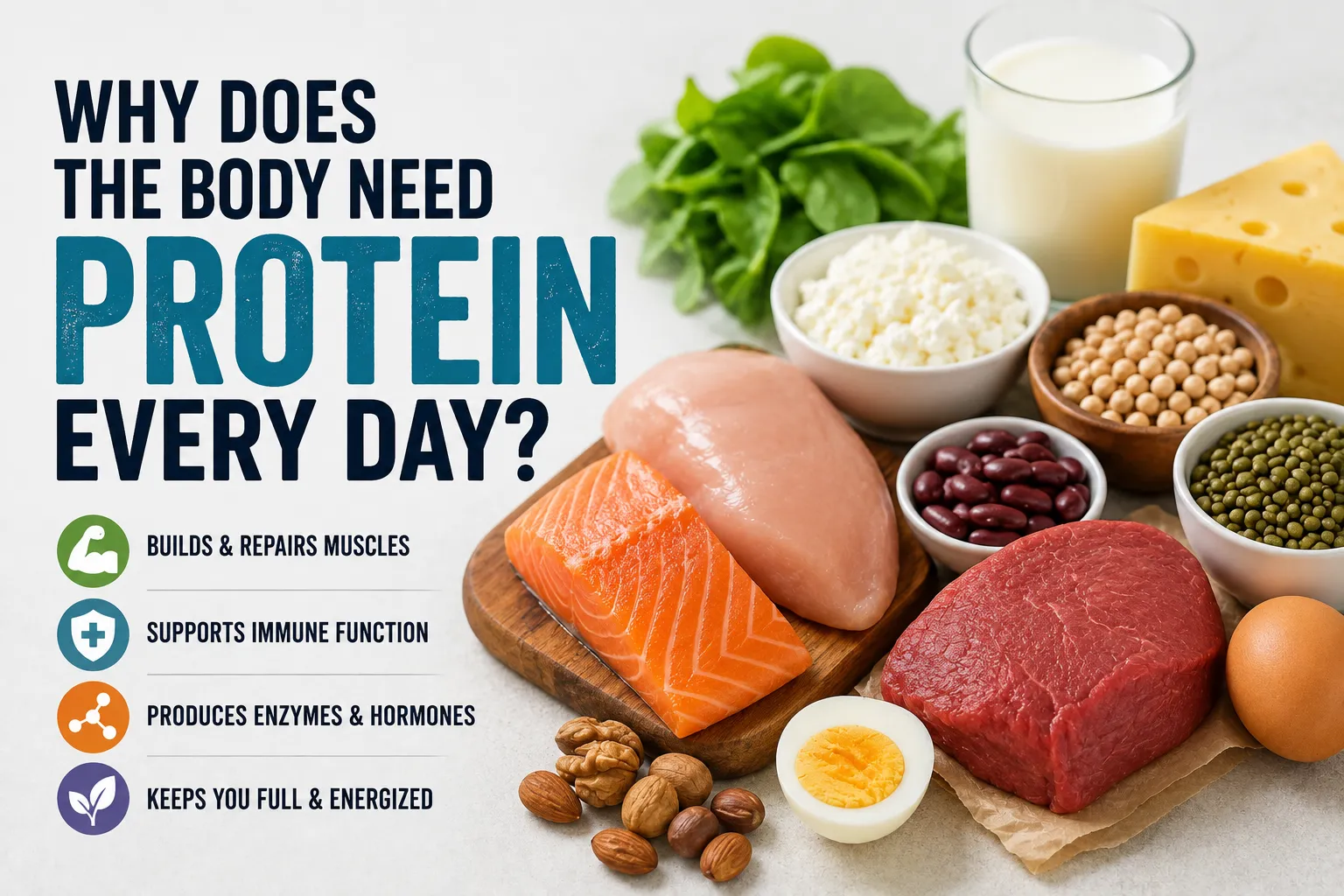

Why Does the Body Need Protein Every Day?
Protein is one of the nutrients the human body depends on every day. It helps build and repair tissues, supports muscles, contributes to immune function and plays a role in many of the chemical processes that keep the body working normally.
Unlike some nutrients that the body can store for long periods, protein is continuously being broken down and rebuilt. That is one reason getting enough protein regularly matters, rather than treating it as something needed only after exercise or during periods of intense physical activity.
From growing children to older adults, protein has an important role throughout life.
For a broader look at how protein fits into an overall healthy eating pattern, see this complete guide to healthy eating and balanced nutrition.
What Is Protein?
Protein is a macronutrient made from smaller compounds called amino acids.
The body uses amino acids to build and maintain tissues and to produce a wide range of molecules involved in normal biological functions.
There are 20 amino acids commonly used to make proteins. The body can produce some of them, while others are considered essential amino acids because they must come from food.
Foods that provide protein include:
- Meat and poultry
- Fish and seafood
- Eggs
- Milk, yogurt and cheese
- Beans and lentils
- Peas
- Soy foods
- Nuts and seeds
- Some whole grains
Eating a variety of protein-containing foods can help provide the amino acids the body needs.
Protein Helps Build and Repair Muscle
One of protein’s best-known functions is its role in maintaining muscle.
Muscle tissue is constantly undergoing processes of breakdown and repair. Physical activity, particularly resistance training, increases the need for muscle repair and adaptation.
Protein provides amino acids that can be used to build new muscle proteins.
However, protein alone does not automatically create larger or stronger muscles. Muscle development also depends on physical activity, sufficient energy intake, sleep and other aspects of nutrition.
For people who exercise regularly, consuming adequate protein can support recovery and help maintain lean muscle tissue.
The Body Needs Protein Even Without Exercise
Protein is sometimes associated primarily with athletes and gym enthusiasts, but everyone needs it.
The body is constantly replacing and repairing cells and tissues, even when a person spends most of the day sitting.
Muscles still require maintenance. Skin, hair, nails, organs and other tissues also rely on proteins and amino acids.
This means protein is not simply an exercise nutrient. It is a basic nutritional requirement for everyday life.
Protein Supports Tissue Repair
Everyday life produces wear and tear on the body.
Minor injuries, normal cellular turnover and tissue maintenance all require building materials.
Protein supplies amino acids used in these processes.
During periods of recovery from illness, injury or surgery, nutritional needs can change, and adequate protein may become particularly important. Specific requirements vary depending on the individual and their circumstances.
Protein Plays a Role in the Immune System
The immune system relies on proteins to perform many of its functions.
Antibodies, for example, are proteins that help the immune system recognize and respond to specific foreign substances.
Other immune-related proteins participate in communication and defense mechanisms.
Adequate nutrition therefore supports the body’s ability to maintain these systems.
Protein is not a magic shield against illness, but insufficient overall nutrition can make it more difficult for the body to maintain normal biological functions.
Enzymes Depend on Protein
Many of the chemical reactions occurring inside the body are controlled or assisted by enzymes.
A large number of enzymes are proteins.
They help the body perform processes involved in digestion, energy production, metabolism and cellular maintenance.
Without these biological catalysts, many chemical reactions would occur too slowly to support normal life.
This is another reason protein is far more than a nutrient associated with muscle.
Protein Helps Transport Substances
Proteins also act as carriers throughout the body.
Certain proteins transport substances through the bloodstream and across cell membranes.
For example, hemoglobin, a protein found in red blood cells, carries oxygen from the lungs to tissues throughout the body.
Other proteins help transport nutrients, hormones and other molecules to where they are needed.
Protein Helps Maintain Fluid Balance
Proteins contribute to the body’s ability to maintain appropriate fluid distribution between the bloodstream and surrounding tissues.
Blood proteins, particularly albumin, help maintain oncotic pressure, which influences the movement of fluid between blood vessels and tissues.
This is one of the many functions of protein that happens continuously without most people noticing it.
Protein Contributes to Hormones and Cell Communication
Some hormones and signaling molecules are made from amino acids or proteins.
These substances help cells communicate and coordinate processes throughout the body.
Protein-based signaling systems are involved in functions ranging from growth and development to metabolism and reproduction.
This illustrates how deeply protein is integrated into normal physiology.
Protein Can Help With Fullness
Protein can also influence appetite and feelings of fullness after eating.
Meals containing adequate protein may be more satisfying than meals dominated by refined carbohydrates or other foods with little protein.
For people trying to manage their weight, including protein as part of balanced meals can make it easier to stay satisfied between meals.
However, total calorie intake, food quality, physical activity and overall eating patterns still matter.
Protein Requirements Change With Age
The body’s need for protein does not remain exactly the same throughout life.
Children and teenagers need protein to support growth and development. Adults need it to maintain tissues and normal body functions.
Older adults may face additional challenges in maintaining muscle mass and strength, particularly when physical activity decreases or appetite changes.
For older people, maintaining adequate protein intake alongside appropriate physical activity can be an important part of preserving physical function.
Individual protein requirements vary based on factors such as body size, age, activity level and health circumstances.
How Much Protein Does a Person Need?
There is no single protein target that is appropriate for every person.
Protein requirements depend on several factors, including:
- Age
- Body size
- Activity level
- Pregnancy or breastfeeding
- Muscle-building goals
- Overall energy intake
- Health status
For healthy adults, general dietary guidelines often provide a baseline protein recommendation, while people who are highly active, older or recovering from certain conditions may have different needs.
Anyone with a medical condition that affects nutrition should discuss individual protein requirements with a qualified healthcare professional.
Protein Quality Matters
Not all protein sources have exactly the same amino acid profile.
Complete proteins provide all nine essential amino acids in sufficient amounts. Many animal-based foods are complete proteins, as are some plant foods such as soy.
Plant-based diets can also provide all essential amino acids by consuming a varied selection of foods.
Beans, lentils, grains, nuts, seeds and soy products can all contribute to overall protein intake.
It is not generally necessary to combine specific plant proteins at every individual meal. Eating a varied diet throughout the day can help provide the amino acids the body requires.
Animal and Plant Protein Both Have a Place
Protein can come from both animal and plant sources.
Animal foods such as fish, eggs, dairy and meat can provide concentrated sources of protein along with other nutrients.
Plant foods can provide protein together with fiber, vitamins, minerals and other beneficial compounds.
The best choice depends on individual dietary preferences, nutritional needs, cultural habits, budget and availability.
A balanced eating pattern can include either or both types of protein sources.
For more on the relationship between protein-rich foods and another important nutrient, see Protein Is Popular, But Are People Eating Enough Fiber?.
Protein Is More Than Protein Powder
Protein supplements have become popular, particularly among people who exercise.
Protein powders and ready-to-drink shakes can be convenient, but they are not required for most people to meet their protein needs.
Ordinary foods can provide substantial amounts of protein while also delivering other nutrients.
For example, yogurt provides protein and calcium, beans provide protein and fiber, while fish can provide protein along with various vitamins and healthy fats.
Supplements may be useful in certain circumstances, but they should generally complement rather than replace a balanced diet.
The growing popularity of protein-focused foods has also influenced consumer nutrition trends, including the continued rise of high-protein foods.
Spreading Protein Across the Day
Because the body continuously uses amino acids, consuming protein throughout the day can be a practical approach.
Instead of getting most of the day’s protein from a single meal, people can include protein in breakfast, lunch, dinner and snacks where appropriate.
Examples include:
- Eggs with whole-grain toast at breakfast
- Yogurt and fruit as a snack
- Beans or lentils with vegetables at lunch
- Fish, poultry or tofu with dinner
- Nuts or seeds as part of a snack
The exact amount and distribution will vary according to individual needs.
Protein and Weight Management
Protein can be useful for people managing their weight because protein-rich foods can contribute to satiety.
However, increasing protein intake does not automatically lead to weight loss.
Weight management involves overall energy balance and is influenced by food choices, physical activity, sleep, genetics and other factors.
A diet focused on protein while ignoring vegetables, fruits, whole grains and healthy fats would not necessarily provide balanced nutrition.
Protein works best as part of an overall healthy eating pattern.
What Happens When Protein Intake Is Too Low?
Consistently inadequate protein intake can make it difficult for the body to maintain tissues and perform normal functions.
Severe protein deficiency can lead to serious health problems, particularly when combined with inadequate overall energy and nutrient intake.
In everyday circumstances, however, protein deficiency is not simply a matter of missing protein at one meal.
The bigger concern is consistently failing to meet the body’s needs over time.
People with restricted diets, poor appetite, food insecurity or certain medical conditions may face a greater risk of inadequate protein intake.
Getting Enough Protein From Everyday Foods
For most people, the simplest approach is to include a protein source in regular meals.
Useful options include:
Animal-based sources
- Eggs
- Fish
- Chicken and other poultry
- Lean meats
- Milk
- Yogurt
- Cottage cheese
Plant-based sources
- Lentils
- Beans
- Chickpeas
- Tofu
- Tempeh
- Peas
- Nuts
- Seeds
- Soy foods
Whole foods can make it easier to build balanced meals because they provide more than protein alone.
Don’t Forget the Rest of the Diet
Protein is essential, but it is only one part of good nutrition.
The body also needs carbohydrates, fats, vitamins, minerals, water and dietary fiber.
A balanced meal might combine a protein source with vegetables, fruit, whole grains or other sources of carbohydrates and healthy fats.
Focusing excessively on one nutrient can distract from the bigger picture.
Healthy eating is ultimately about the overall pattern rather than a single food or nutrient.
When Protein Needs Extra Attention
Certain life stages and circumstances can make protein intake particularly important.
Growing children and teenagers require adequate nutrition to support development. Pregnant and breastfeeding women have increased nutritional demands. Athletes and highly active individuals may require more protein than sedentary adults.
Older adults may also need to pay closer attention to protein and physical activity as maintaining muscle becomes increasingly important.
People recovering from illness or injury may have additional nutritional considerations as well.
Because these needs can vary considerably, individualized advice from a dietitian or healthcare professional can be useful when there are specific concerns.
The Daily Role of Protein
Protein is not just something to think about after a workout or when trying to build muscle.
It is involved in tissue maintenance, muscle repair, immune function, enzymes, transportation, fluid balance and countless other processes that happen inside the body every day.
The practical lesson is straightforward: regularly include nutritious sources of protein as part of a balanced diet.
Whether it comes from beans and lentils, eggs and dairy, fish and poultry, soy, nuts or other foods, protein helps provide the raw materials the body needs to maintain itself.
Understanding its role makes it easier to move beyond the idea that protein is only for athletes. It is a basic part of everyday nutrition, supporting the body from childhood through older age.
Continue Reading
Similar Posts

How Your Environment Affects Everyday Health
Understanding these connections can help people make practical changes that support healthier daily living.
Read article
How Aerobic Exercise Supports Cardiovascular Health
Understanding how aerobic exercise affects cardiovascular health can make it easier to choose activities that are enjoyable, sustainable, and appropriate for your fitness level.
Read article
What Is the Gut Microbiome and Why Does It Matter
Understanding how this ecosystem works can make it easier to understand why diet, lifestyle, medications, and other factors can influence digestive health.
Read article

Join 10,000+ Readers Building Healthier Habits
Get actionable wellness tips every week plus our newest articles delivered straight to your inbox.