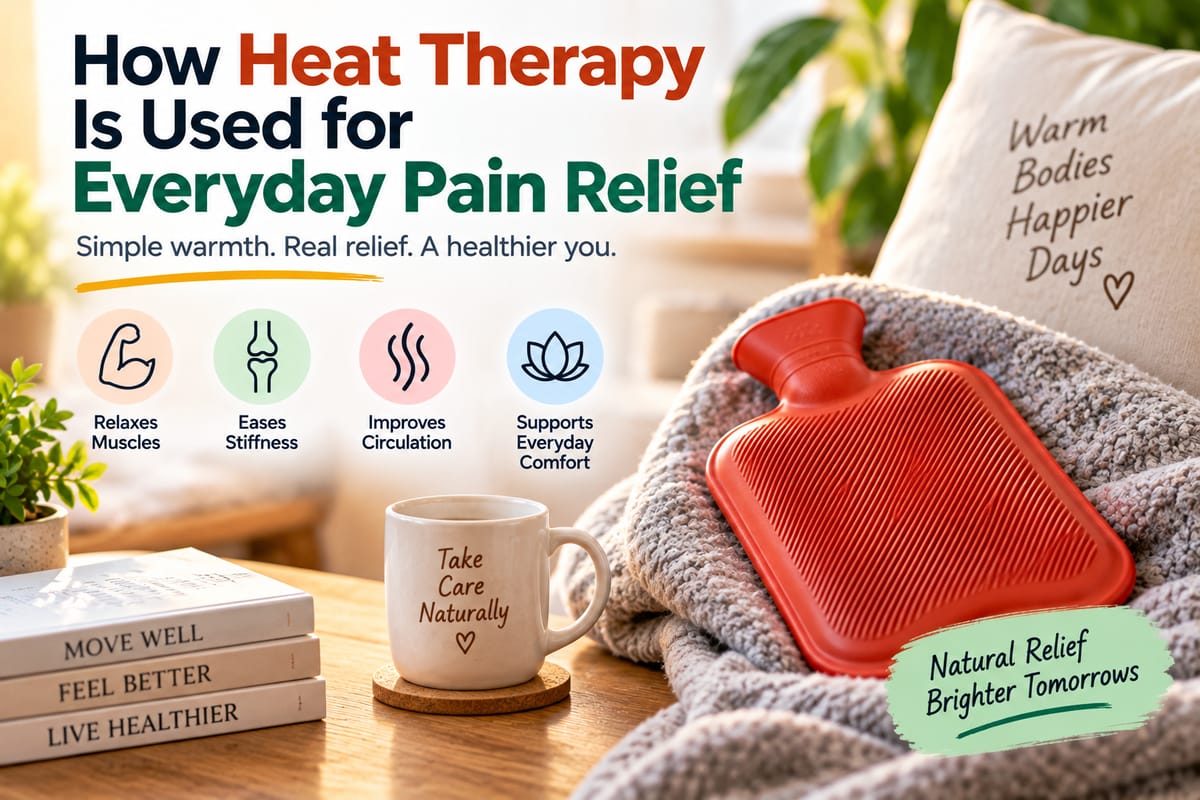

How Heat Therapy Is Used for Everyday Pain Relief
Heat has long been used as a simple way to make certain types of aches, stiffness, and muscle discomfort feel more manageable. A warm shower, heating pad, hot-water bottle, or warm compress can provide temporary relief without requiring complicated equipment.
Heat therapy works primarily by warming tissues and changing local circulation and sensation. It can help muscles relax, make stiff areas feel more comfortable, and temporarily reduce the perception of pain.
However, heat is not appropriate for every type of pain. Using it effectively means understanding when warmth may help, how to apply it safely, and when persistent discomfort requires attention to its underlying cause.
For people interested in broader approaches to managing discomfort, the Natural Pain Relief: Evidence-Based Complete Guide provides a wider look at non-drug strategies and the evidence behind them.
What Is Heat Therapy?
Heat therapy involves applying warmth to part of the body for a controlled period.
Common forms include:
- Heating pads
- Warm compresses
- Hot-water bottles
- Warm baths
- Warm showers
- Heated wraps
- Reusable heat packs
The purpose is generally to provide temporary symptom relief rather than to cure an underlying condition.
Heat can be particularly appealing because it is easy to use at home and can be incorporated into ordinary routines. A warm shower in the morning, for example, may make stiff muscles feel more comfortable before beginning the day.
How Heat Therapy May Relieve Pain
Heat affects the body in several ways.
When an area is warmed, blood vessels can expand, increasing local blood flow. Heat can also affect sensory nerves, potentially reducing the perception of discomfort.
Warmth may help relax tense muscles as well. When muscles are tight, surrounding tissues can feel stiff or painful. Gentle heat may make the area feel looser and more comfortable.
These effects are generally temporary. Heat therapy does not necessarily correct the reason a muscle became tight or explain why recurring pain continues.
Heat Therapy and Muscle Tension
Muscle tension is one of the most common situations in which people turn to heat.
Long periods of sitting, repetitive activities, strenuous exercise, stress, or awkward positioning can leave muscles feeling tight.
Applying gentle warmth may help the area relax.
For example, someone who spends much of the day working at a desk may experience tension around the shoulders and upper back. A warm shower or heating pad may temporarily make those muscles feel less uncomfortable.
Heat can therefore be useful as part of a broader approach that includes movement, posture adjustments, adequate rest, and appropriate strengthening.
Heat Therapy for Stiffness
Stiffness can make movement feel uncomfortable, particularly after periods of inactivity.
Warmth may help an area feel more flexible before gentle movement. Some people find that a warm shower or bath makes it easier to move in the morning or after sitting for a long time.
Heat does not necessarily increase flexibility permanently. Its main role is often to make movement feel more comfortable in the short term.
This distinction matters because pain relief should not automatically be interpreted as evidence that an injury or condition has been resolved.
Heat and Everyday Back Discomfort
Lower back discomfort is another common reason people use heat.
A warm compress or heating pad may temporarily ease muscle tension and make ordinary activities more comfortable for some people.
Heat may be particularly useful when discomfort is associated with muscle tightness rather than a fresh injury.
However, severe, persistent, or unexplained back pain should not simply be managed with heat indefinitely. Symptoms such as significant weakness, loss of sensation, or problems with bladder or bowel control require prompt medical attention.
Heat Therapy for Joint Discomfort
Some people use heat to manage stiffness around joints.
Warmth can make stiff joints feel more comfortable and may help prepare the body for gentle movement.
This can be especially relevant for people who experience recurring joint stiffness. However, the appropriate use of heat depends on the cause of the discomfort.
Long-term joint health involves much more than temporary symptom relief. The How to Protect Joint Health and Reduce Arthritis Risk guide explores broader strategies for supporting joint function and reducing avoidable risks.
Heat Therapy and Exercise Recovery
Physical activity can leave muscles feeling tight or uncomfortable, particularly after unfamiliar or strenuous exercise.
Some people find warmth relaxing after activity. A warm shower or bath can be part of a comfortable recovery routine.
Heat should not, however, be viewed as a substitute for adequate recovery.
Sleep, hydration, appropriate nutrition, rest days, gradual training progression, and sensible exercise programming all contribute to recovery. The How Rest and Recovery Support Healthy Physical Activity guide provides more context on the role of recovery in maintaining physical activity.
Heat Versus Cold Therapy
Heat and cold are both used for pain management, but they produce different effects.
Heat is commonly associated with:
- Muscle relaxation
- Stiffness
- Warmth and comfort
- Temporary relief from some chronic aches
- Preparing stiff areas for gentle movement
Cold is commonly associated with:
- Temporary numbing
- Certain recent injuries
- Swelling management
- Short-term relief from some acute discomfort
The choice should depend on the type of problem.
For example, someone dealing with a stiff muscle may prefer warmth, while a recently injured area that is swollen may call for a different approach.
Neither method is universally appropriate for every kind of pain.
Heat Therapy for Menstrual Cramps
Warmth is also commonly used for menstrual discomfort.
A heating pad or warm compress placed over the lower abdomen may help some people experience temporary relief from menstrual cramps.
The warmth may relax muscles and alter the perception of pain, making the discomfort easier to tolerate.
Heat can be particularly convenient because it can be used while resting, reading, working, or performing other low-intensity activities.
If menstrual pain is unusually severe, suddenly different, or interfering substantially with everyday life, it is worth discussing with a healthcare professional rather than relying solely on home treatments.
Warm Baths and Showers
Heat therapy does not always require a specialized device.
A warm bath can expose large areas of the body to gentle warmth, while a warm shower can be particularly useful for localized muscle tension.
Warm water may also create a relaxing environment, which can be valuable when stress contributes to muscle tension.
The water should be comfortably warm rather than excessively hot. Very hot water can cause burns, dizziness, dehydration, or skin irritation.
How Long Should Heat Therapy Be Used?
Heat therapy should generally be used for a limited period rather than continuously.
A common home approach is to apply gentle warmth for around 15 to 20 minutes, while monitoring how the skin and affected area respond.
There is no need to make a heat source extremely hot to obtain a benefit. Excessive temperature increases the risk of burns without necessarily providing greater pain relief.
People should follow the instructions supplied with commercial heating devices because recommended temperatures and usage times can vary.
How to Use a Heating Pad Safely
Heating pads can be useful, but they need to be handled carefully.
When using one:
- Choose a comfortable, moderate temperature.
- Position the pad over the area rather than directly against sensitive skin when appropriate.
- Limit the duration of each session.
- Check the skin periodically.
- Stop if the area becomes excessively hot, painful, numb, or unusually red.
- Keep electrical heating devices away from water.
- Inspect cords and equipment for signs of damage.
- Follow the manufacturer’s instructions.
A heating pad should not be treated like ordinary bedding or left running unattended.
Why Sleeping With a Heating Pad Can Be Risky
Falling asleep while using a heating pad increases the risk of prolonged heat exposure.
A person who is asleep may not notice that the skin has become too hot. Extended exposure can lead to burns or other tissue damage.
Some people may also have reduced sensation and therefore be less able to recognize excessive heat.
For these reasons, it is safer to use heat while awake and able to monitor the area.
Who Should Use Extra Caution?
Heat therapy is not appropriate for everyone.
People with conditions that affect sensation or circulation may need to seek professional advice before using heat. Someone who cannot reliably feel temperature may not recognize when a heating device is becoming dangerously hot.
Extra caution may also be appropriate for:
- Young children
- Older adults with reduced sensation
- People with certain neurological conditions
- People with significant circulation problems
- Anyone with damaged or fragile skin
If there is uncertainty about whether heat therapy is appropriate, professional guidance is preferable.
When Heat May Not Be the Best Choice
Heat is not always suitable immediately after an injury.
For example, applying strong heat to a newly injured area may not be appropriate when swelling is developing. In such situations, the most suitable form of first aid depends on the nature and severity of the injury.
Heat may also be unhelpful when the underlying cause of pain has not been identified.
A person experiencing recurring pain should avoid assuming that because warmth provides temporary relief, continued self-treatment is sufficient.
Heat Therapy and Inflammation
Inflammation is a complex biological response, and heat can affect circulation in the treated area.
For some conditions, warmth may make an area feel more comfortable. In other situations, especially when there is significant acute swelling, adding heat may not be desirable.
This is one reason it is useful to distinguish between different types of pain rather than treating every painful area in the same way.
The goal of heat therapy is generally comfort and symptom management, not the elimination of every inflammatory response.
Combining Heat With Gentle Movement
Heat can sometimes be most useful when paired with appropriate movement.
For example, someone with mild stiffness may apply gentle warmth and then perform comfortable mobility exercises.
The warmth may make movement feel easier, while movement itself can help maintain mobility.
However, exercises should not be used to push through severe pain. If movement causes significant or worsening symptoms, it is appropriate to stop and reconsider the approach.
Heat as Part of Evidence-Based Self-Care
Heat therapy is one example of a broader category of self-care techniques that can be used to manage everyday discomfort.
Effective self-care generally involves more than finding a single remedy.
It may include:
- Regular physical activity
- Adequate sleep
- Rest and recovery
- Stress management
- Balanced nutrition
- Appropriate hydration
- Ergonomic adjustments
- Gentle mobility
- Professional care when necessary
The Complete Guide to Evidence-Based Self-Care provides a broader framework for evaluating self-care practices and understanding when they can complement professional healthcare.
Common Mistakes When Using Heat
Several mistakes can reduce the usefulness of heat therapy or create unnecessary risks.
Making the Heat Too Hot
More heat does not necessarily mean more relief. Excessive temperatures can damage the skin.
Using Heat for Too Long
Extended exposure can increase the risk of burns, particularly when a person becomes distracted or falls asleep.
Applying Heat to Damaged Skin
Heat should not routinely be applied over burns, open wounds, or significantly irritated skin.
Ignoring New or Severe Symptoms
Temporary relief should not prevent someone from seeking appropriate care when symptoms are severe or unusual.
Treating the Symptom Instead of the Cause
A heating pad can make discomfort feel better without addressing why it is occurring.
Heat Therapy and Chronic Pain
People living with recurring or chronic pain may find heat useful as one part of their symptom-management routine.
For example, someone with recurring muscle stiffness might use warmth before stretching or physical activity. Another person may find a warm bath relaxing at the end of the day.
The important consideration is that chronic pain often requires a broader strategy.
Depending on the cause, management may involve physical therapy, exercise, medication, lifestyle changes, psychological support, medical treatment, or a combination of approaches.
Heat can complement those strategies but should not automatically replace them.
When to Seek Medical Advice
Everyday aches can often improve with rest and basic self-care, but certain symptoms warrant professional assessment.
Consider seeking medical attention when pain:
- Is severe or rapidly worsening
- Follows a serious injury
- Continues for an unusually long time
- Repeatedly returns without an obvious explanation
- Is accompanied by significant swelling
- Causes substantial weakness
- Produces persistent numbness or tingling
- Interferes significantly with normal activities
- Is accompanied by fever or other concerning symptoms
The appropriate response depends on the circumstances and the underlying cause.
Making Heat Therapy Part of a Comfortable Routine
Heat therapy is popular because it is simple, inexpensive, and easy to incorporate into everyday life. A warm shower, heating pad, or compress may temporarily reduce the sensation of certain aches, relax tense muscles, and make stiffness feel easier to manage.
Its benefits are generally best understood as symptom relief rather than a cure.
Using moderate temperatures for limited periods, monitoring the skin, avoiding unattended heating devices, and recognizing when professional care is necessary can make heat therapy a safer part of home self-care.
For people dealing with everyday muscle tension or stiffness, warmth can be one useful tool among many. When combined with appropriate movement, rest, recovery, and other evidence-based habits, it can contribute to a practical approach to managing occasional discomfort while keeping attention focused on long-term health.
Continue Reading
Similar Posts

What Foods Are Considered Anti-Inflammatory?
Certain foods are commonly described as **anti-inflammatory foods** because they contain nutrients and plant compounds associated with healthier inflammatory responses.
Read article
When Natural Self Care Is Not Appropriate
Knowing when to stop relying on self-care and seek appropriate medical attention is an important part of using natural approaches responsibly.
Read article
How Botanical Extracts Are Produced
Understanding how botanical extracts are produced also helps explain why an extract is not necessarily equivalent to simply consuming the original plant.
Read article

Join 10,000+ Readers Building Healthier Habits
Get actionable wellness tips every week plus our newest articles delivered straight to your inbox.