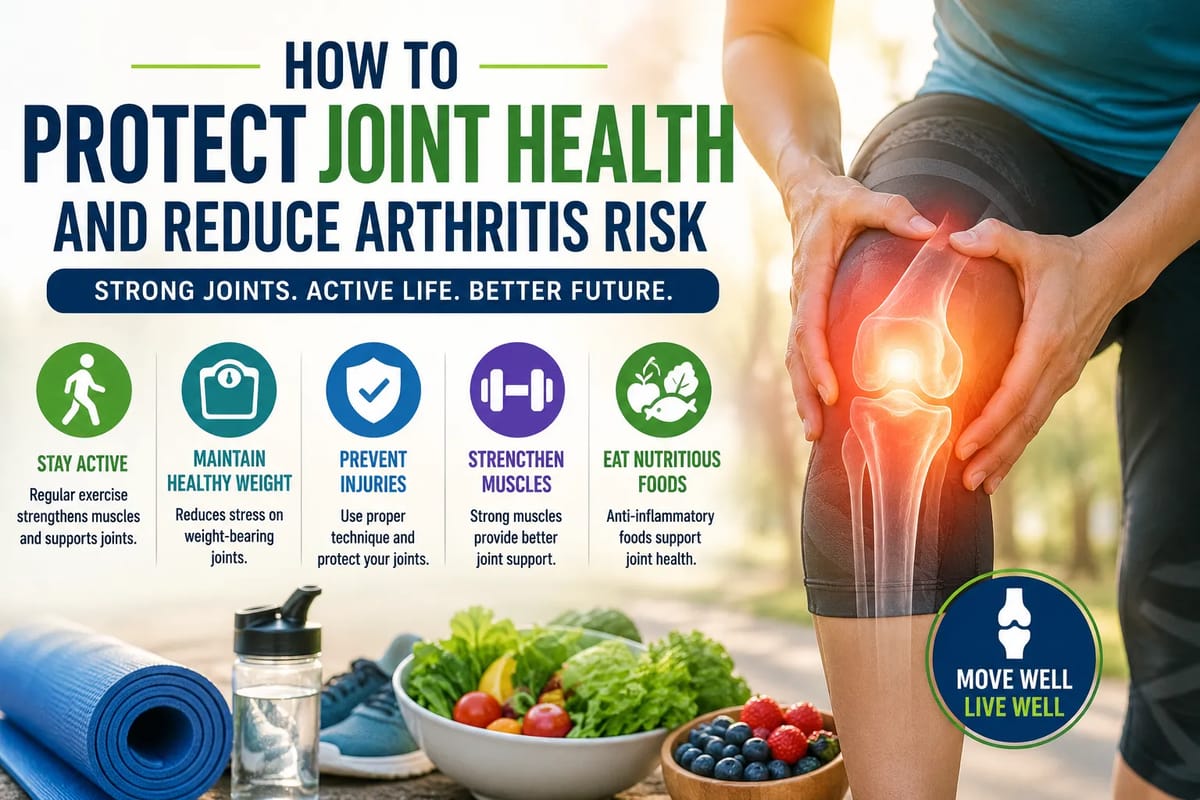

How to Protect Joint Health and Reduce Arthritis Risk
Healthy joints make many everyday activities possible, from walking and climbing stairs to lifting groceries, exercising, and simply getting out of bed. Yet joint health is often overlooked until pain, stiffness, or reduced mobility begins to interfere with daily life.
Arthritis is not a single disease. It describes a group of conditions that affect joints and surrounding tissues, with osteoarthritis being the most common type. While some risk factors—such as age, genetics, and certain joint abnormalities—cannot be changed, several lifestyle and injury-related factors can influence joint health. (NIAMS)
The good news is that protecting your joints does not require extreme measures. Regular movement, maintaining a healthy weight, preventing injuries, and responding appropriately to persistent symptoms can all play an important role.
What Is Arthritis?
Arthritis refers to conditions that cause inflammation, pain, stiffness, or other problems involving joints and surrounding tissues. Osteoarthritis, rheumatoid arthritis, gout, lupus, and other conditions can affect the joints in different ways.
Osteoarthritis occurs when tissues within a joint gradually change and break down. It commonly affects the knees, hips, hands, neck, and lower back. Although it becomes more common with age, it is not simply an unavoidable consequence of getting older. (NIAMS)
A person’s risk can be influenced by several factors, including previous joint injuries, repetitive joint stress, body weight, genetics, joint structure, and aging. (NIAMS)
Keep Your Body Moving
One of the most important things people can do for their joints is stay physically active.
Regular physical activity helps strengthen the muscles surrounding joints, supports mobility, and can improve physical function. For people who already have arthritis, activity can also help reduce pain and delay disability. (CDC Stacks)
Walking, cycling, swimming, dancing, gardening, and other moderate activities can provide useful movement without requiring a complicated exercise program.
For adults with arthritis, the CDC has recommended working toward at least 150 minutes of moderate-intensity physical activity each week, provided the activity is appropriate for the person’s health and abilities. (CDC Stacks)
If you’re currently inactive, there is no need to start with long workouts. Breaking activity into shorter periods can make it easier to build a sustainable routine.
Include Strength Training
Aerobic activity is only one part of joint-friendly fitness.
Strength training can help build the muscles that support and stabilize joints. Stronger muscles may help reduce the physical demands placed directly on joints during everyday movement.
Simple exercises using body weight, resistance bands, weights, or other forms of resistance can be incorporated into a fitness routine. Beginners should increase resistance gradually and prioritize proper technique.
Maintain a Healthy Weight
Body weight can have an important relationship with joint health, particularly for weight-bearing joints such as the knees and hips.
Excess body weight can increase the mechanical load placed on joints. Maintaining a healthy weight may reduce the likelihood of developing knee osteoarthritis and can help limit activity-related problems associated with arthritis. (CDC)
This does not mean that everyone who develops arthritis is overweight. Osteoarthritis can occur in people of different body sizes, and factors such as genetics, age, joint structure, and previous injuries also matter. (NIAMS)
Rather than focusing on rapid weight loss, a sustainable approach built around nutritious foods, regular movement, adequate sleep, and long-term healthy habits is generally more practical.
Protect Your Joints From Injury
A previous injury can increase the risk of developing osteoarthritis in the affected joint later in life.
Knee injuries, for example, are associated with a substantially higher risk of knee osteoarthritis. Injuries can occur during sports, at work, in falls, or through accidents. (CDC)
Protective habits can therefore make a difference.
Before exercising or participating in sports:
- Warm up gradually.
- Use appropriate equipment.
- Wear supportive footwear when appropriate.
- Learn proper movement and lifting techniques.
- Increase training intensity gradually.
- Allow adequate recovery after demanding activity.
- Do not ignore significant pain or instability.
NIAMS also recommends warming up before physical activity, using appropriate protective equipment and shoes, cooling down afterward, and giving the body time to recover. (NIAMS)
Avoid Overloading Your Joints
Exercise is generally beneficial for joint health, but repeatedly placing excessive stress on a joint can contribute to injury.
This can be particularly relevant for people whose jobs, sports, or hobbies involve repetitive movements. Repetitive joint stress and occupational activities have been associated with osteoarthritis risk. (NIAMS)
The goal is not to avoid using your joints. Instead, balance activity with recovery and use good technique.
If a particular movement repeatedly causes pain, swelling, or instability, modifying the activity and seeking professional advice may be more appropriate than simply pushing through it.
Eat for Overall Health
There is no single food that can guarantee protection from arthritis.
However, a balanced eating pattern can support healthy body weight and overall health, both of which are relevant to maintaining mobility and reducing some modifiable arthritis risks.
Build meals around a variety of:
- Vegetables and fruits
- Whole grains
- Beans and other legumes
- Nuts and seeds
- Protein-rich foods
- Healthy sources of fats
- Adequate fluids
A healthy eating pattern is particularly useful when combined with regular physical activity rather than treated as a standalone strategy.
Do Not Assume Joint Pain Is Just Aging
Persistent joint symptoms deserve attention.
Osteoarthritis symptoms can develop gradually and may include pain during activity, stiffness after periods of inactivity, swelling, reduced range of motion, or changes in the way a joint functions. (NIAMS)
Other forms of arthritis can have different symptoms and causes. Rheumatoid arthritis, for example, is an inflammatory autoimmune condition and requires a different approach from osteoarthritis.
Seeking medical evaluation when symptoms persist can help identify the underlying problem and determine appropriate treatment.
Early diagnosis can be particularly important for inflammatory forms of arthritis, where timely medical management may help prevent or limit joint damage. (CDC Stacks)
Pay Attention to Recurrent Swelling and Stiffness
Occasional muscle soreness after unfamiliar exercise is different from recurring joint symptoms.
Consider talking with a healthcare professional if you experience:
- Persistent or worsening joint pain
- Repeated swelling
- Significant stiffness
- Reduced ability to move a joint
- Joint instability
- Symptoms that interfere with normal activities
- Pain following a significant injury
A healthcare professional can help determine whether symptoms are related to osteoarthritis, another form of arthritis, an injury, or a different condition.
Joint Health Is a Long-Term Investment
There is no guaranteed way to prevent every type of arthritis. Some risk factors cannot be controlled, and certain forms of arthritis are influenced by genetics, immune-system activity, age, or structural factors.
But protecting joint health is still worthwhile.
Regular physical activity, appropriate strength training, maintaining a healthy weight, preventing injuries, allowing adequate recovery, and getting persistent symptoms evaluated can all contribute to healthier movement over time. These measures are also consistent with evidence-based approaches recommended for reducing arthritis-related pain and disability. (CDC)
The most effective strategy is rarely a single exercise, supplement, or dietary trick. It is the accumulation of small, sustainable habits that help keep muscles strong, joints moving, injuries to a minimum, and health problems identified before they become more difficult to manage.
Building Stronger Joints for the Years Ahead
Joint health is something worth protecting long before serious pain appears. Staying active, respecting the body’s limits, maintaining a healthy weight, and taking injuries seriously can help preserve mobility and independence.
And when joint symptoms do appear, getting the right diagnosis matters. Arthritis is not simply an inevitable part of growing older, and persistent pain or stiffness should not automatically be dismissed as “wear and tear.” (NIAMS)
Note: This article provides general health information and is not a substitute for individualized medical advice. People with persistent joint symptoms, significant injuries, or existing medical conditions should speak with a qualified healthcare professional.
Continue Reading
Similar Posts

How Vector Control Prevents Infectious Diseases
Vector control includes a wide range of measures designed to reduce contact between people and disease-carrying organisms.
Read article
How Sun Exposure Affects Skin Cancer Risk
Understanding how sun exposure affects the skin can make prevention more practical. Protection is not about avoiding daylight altogether. Instead, it involves reducing unnecessary ultraviolet exposure and recognizing situations when the skin is particularly vulnerable.
Read article
How Type 2 Diabetes Risk Develops
Understanding how type 2 diabetes risk develops can make the condition easier to prevent or manage. Risk factors do not guarantee that someone will develop diabetes, and some people develop the condition without having an obvious single cause. Instead, risk tends to emerge from the interaction of several factors over time.
Read article

Join 10,000+ Readers Building Healthier Habits
Get actionable wellness tips every week plus our newest articles delivered straight to your inbox.