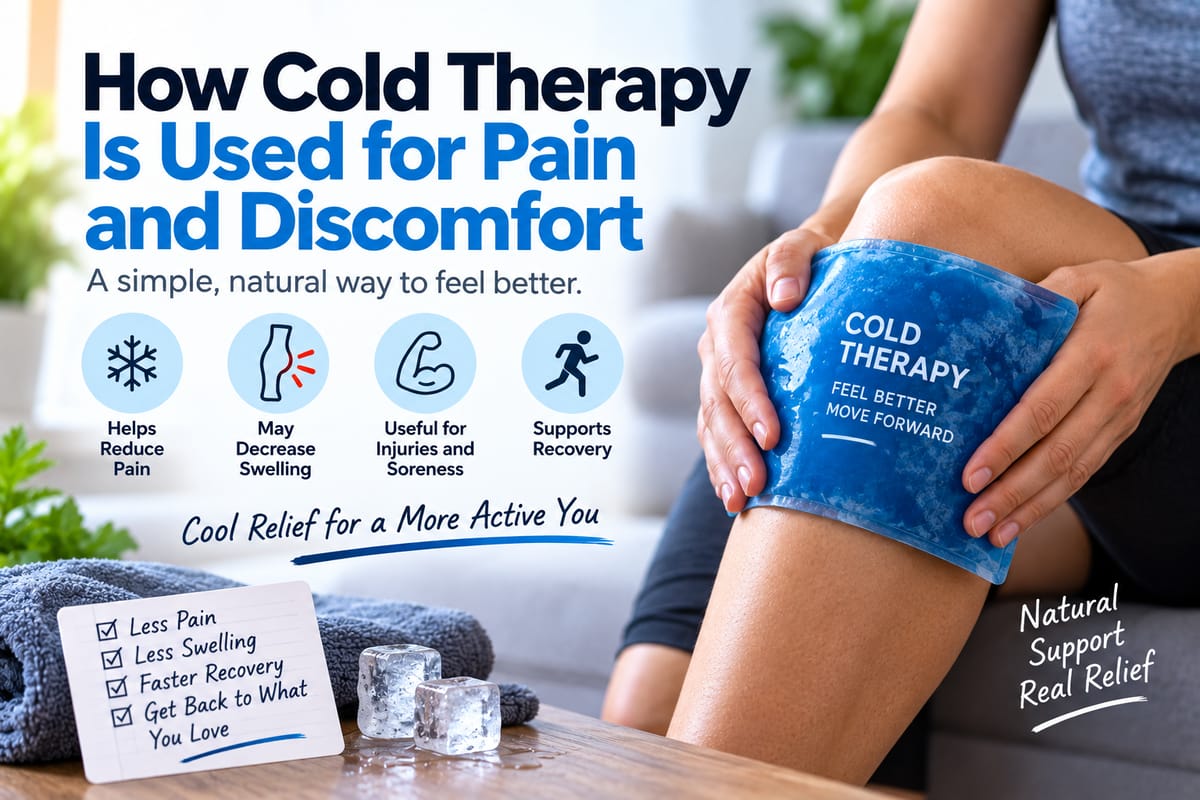

How Cold Therapy Is Used for Pain and Discomfort
Cold therapy is a simple technique that has been used for generations to help manage pain, swelling, and physical discomfort. From applying an ice pack after a minor injury to using a cold compress for a sore joint, cooling an uncomfortable area can provide temporary relief and make everyday recovery more manageable.
Cold therapy is sometimes called cryotherapy, although the term can describe a much broader range of treatments. At home, cold therapy generally means applying something cold to a specific area of the body for a limited period.
Understanding how cold therapy works, when it may be useful, and how to use it safely can help people make more informed decisions about managing minor aches and injuries.
What Is Cold Therapy?
Cold therapy involves exposing part of the body to a cool or cold temperature for a controlled amount of time. Common approaches include:
- Ice packs
- Gel cold packs
- Bags of frozen vegetables wrapped in cloth
- Cold compresses
- Chilled towels
- Specialized reusable cooling wraps
The goal is not to freeze the skin or make an area as cold as possible. Instead, controlled cooling can temporarily reduce sensation and may help manage swelling and discomfort.
Cold therapy is generally considered a supportive self-care technique rather than a treatment that addresses the underlying cause of chronic pain or injury.
For a broader look at non-drug approaches to managing discomfort, the Natural Pain Relief — Evidence-Based Complete Guide provides additional context on different strategies and the importance of considering the evidence behind them.
How Cold Therapy May Reduce Pain
One of the main reasons cold therapy can feel helpful is that cooling affects how nerves in the treated area transmit signals.
When tissue becomes colder, nerve activity can temporarily slow. This can reduce the intensity of pain signals reaching the brain and create a numbing sensation.
Cold can also make an uncomfortable area feel less sensitive. For someone dealing with a minor injury or temporary soreness, this effect may make movement and rest more comfortable.
However, the pain-relieving effect is generally temporary. Cold therapy does not necessarily eliminate the underlying cause of pain.
How Cold Therapy May Help With Swelling
Swelling is a normal part of the body’s response to many injuries. Small blood vessels and surrounding tissues can change in response to trauma, contributing to inflammation and fluid accumulation.
Applying cold may cause blood vessels near the surface of the skin to narrow temporarily. This can influence local blood flow and may help limit swelling when cooling is used appropriately.
This is one reason cold therapy is commonly used after certain minor injuries, particularly during the early stages when swelling and discomfort are prominent.
It is important to recognize, however, that inflammation is not always harmful. Inflammation is part of the body’s normal healing response. The purpose of cold therapy is generally to manage symptoms rather than completely eliminate the body’s inflammatory processes.
When Cold Therapy May Be Useful
Cold therapy can be useful in several everyday situations, particularly when discomfort is temporary and localized.
Minor Sprains and Strains
After a minor sprain or strain, a person may experience pain, swelling, and tenderness around the affected area.
A wrapped cold pack may provide temporary relief while the person rests and protects the injured area.
Cold therapy is only one part of managing an injury. The appropriate approach can depend on the severity and type of injury.
Exercise-Related Soreness
Physical activity can sometimes leave muscles feeling sore or uncomfortable, particularly after unfamiliar or strenuous exercise.
Cooling may temporarily reduce the sensation of soreness for some people. It should not replace adequate rest, nutrition, hydration, gradual training progression, or appropriate recovery.
The relationship between activity and recovery is explored further in How Rest and Recovery Support Healthy Physical Activity.
Minor Joint Discomfort
Cold therapy may also be used for temporary discomfort around joints.
Someone experiencing soreness after physical activity, for example, may find that a cold compress makes the area feel more comfortable.
For people experiencing recurring joint problems, however, symptom relief should be considered alongside strategies for protecting long-term joint function. Resources such as How to Protect Joint Health and Reduce Arthritis Risk discuss broader approaches to maintaining joint health.
Minor Bumps and Bruises
A cold pack can sometimes help make a recently bumped or bruised area feel less painful. Cooling may also help limit some of the swelling that occurs after minor trauma.
The cold source should always be separated from the skin with a cloth or other suitable barrier.
How to Apply Cold Therapy Safely
Using cold therapy correctly matters because excessive exposure can damage the skin and underlying tissue.
A basic approach is to:
- Choose an appropriate cold source. A reusable cold pack or wrapped ice pack can work well.
- Protect the skin. Place a thin cloth or towel between the cold source and the skin.
- Apply it for a limited period. Short applications are generally preferable to prolonged exposure.
- Remove the cold source if the area becomes excessively numb or painful.
- Allow the skin to return toward its normal temperature.
- Check the skin afterward. Look for unusual discoloration, persistent numbness, blistering, or other concerning changes.
There is no advantage to keeping an ice pack on the body for as long as possible. Longer exposure does not necessarily provide better pain relief and can increase the risk of cold-related skin or tissue injury.
Why Ice Should Not Be Applied Directly to Skin
Direct contact between ice and skin can be uncomfortable and potentially damaging.
Very cold temperatures can injure skin tissue, particularly when exposure is prolonged. A cloth barrier helps moderate the temperature reaching the skin while still allowing cooling to occur.
The same principle applies to frozen items taken directly from a freezer. A bag of frozen food may be convenient as a makeshift cold pack, but it should still be wrapped before being placed against the body.
What Cold Therapy Feels Like
Cold therapy usually produces several sensations as the area cools.
A person may initially notice:
- Coolness
- Tingling
- Mild discomfort
- Increasing numbness
As the area becomes colder, sensation may decrease. This is one reason people should monitor the area rather than simply leaving the cold pack in place indefinitely.
If the skin becomes unusually pale, very painful, blistered, or persistently numb, the cold treatment should be stopped and the area should be assessed.
Cold Therapy Versus Heat Therapy
Cold and heat are both commonly used for physical discomfort, but they are not interchangeable.
Cold therapy is often associated with situations involving recent irritation, swelling, or acute discomfort.
Heat therapy is commonly used to create a warming and relaxing sensation and may be useful for certain forms of muscle stiffness or chronic discomfort.
The appropriate choice depends on the situation, the underlying problem, and the individual’s response.
Rather than assuming that one approach is always better, people can consider what is causing the discomfort and whether professional guidance is appropriate.
Can Cold Therapy Treat Chronic Pain?
Cold therapy may provide temporary symptom relief for some people with recurring or chronic pain, but it should not automatically be considered a treatment for the underlying condition.
Chronic pain can have many causes, including musculoskeletal conditions, nerve-related problems, inflammatory disorders, and previous injuries. Treating symptoms without understanding the underlying cause may leave an important health issue unaddressed.
For recurring pain, it can be useful to combine appropriate medical evaluation with evidence-based self-care strategies. The Complete Guide to Evidence-Based Self-Care explains how self-care can complement, rather than replace, appropriate professional care.
Situations Where Cold Therapy May Not Be Appropriate
Cold therapy is not suitable for everyone or every situation.
Extra caution may be necessary for people who have conditions that affect:
- Circulation
- Skin sensation
- Nerve function
- The body’s response to cold
- The ability to recognize tissue damage
People with reduced sensation may not notice when an area is becoming excessively cold. Someone with circulation problems may also need specific advice before using cold treatments.
Cold should also not be applied over broken skin unless a healthcare professional specifically recommends an appropriate method.
When there is uncertainty about whether cold therapy is appropriate, especially in the presence of an underlying medical condition, professional advice is preferable.
Signs That an Injury Needs More Than Home Care
Cold therapy is intended for symptom management and should not be used to delay evaluation of a potentially serious injury.
Medical assessment may be appropriate when there is:
- Severe or worsening pain
- Significant swelling
- Obvious deformity
- Inability to use or bear weight on the affected body part
- Persistent or worsening numbness
- Major bruising following substantial trauma
- An open wound
- Symptoms that do not improve as expected
- Repeated episodes of unexplained pain
For serious injuries, the priority is determining what happened and what treatment is actually required.
Common Mistakes With Cold Therapy
Several mistakes can make cold therapy less useful or increase the risk of injury.
Applying Ice Directly to the Skin
Direct ice-to-skin contact can expose the skin to unnecessarily extreme temperatures. Always use an appropriate barrier.
Keeping the Cold Pack on Too Long
More cooling is not necessarily better. Prolonged exposure can increase the risk of skin and tissue damage.
Falling Asleep With a Cold Pack
A person may fail to notice excessive cold exposure while sleeping. Cold packs should be used while awake and monitored.
Ignoring Persistent Symptoms
Temporary improvement after applying cold does not necessarily mean an injury has healed. If symptoms continue, worsen, or repeatedly return, the underlying cause may need evaluation.
Using Cold Therapy for Every Type of Pain
Different pain conditions respond differently to different approaches. Cold therapy can be useful in some circumstances but may not be the most appropriate strategy for every type of discomfort.
Cold Therapy as Part of a Broader Recovery Strategy
Cold therapy works best when viewed as one tool within a larger approach to physical well-being.
Depending on the situation, recovery may also involve:
- Appropriate rest
- Gradual return to activity
- Gentle movement
- Adequate sleep
- Balanced nutrition
- Hydration
- Strength and mobility exercises
- Appropriate medical treatment when necessary
For someone recovering from physical activity, rest and gradual progression can be particularly important. Simply reducing pain temporarily does not necessarily mean that the body is ready for strenuous activity again.
Similarly, people experiencing repeated joint discomfort may benefit from addressing contributing factors rather than relying exclusively on cold applications.
How to Make Cold Therapy Part of Safe Self-Care
A sensible approach to cold therapy begins with understanding what you are trying to accomplish.
If the goal is temporary relief from minor soreness or localized swelling, a properly wrapped cold pack may be a practical option. The treatment should be brief, monitored, and stopped if the skin develops concerning symptoms.
It is also helpful to pay attention to the body’s response. If cooling consistently makes discomfort worse, causes unusual skin changes, or does not provide meaningful relief, another approach may be more appropriate.
Most importantly, self-care should complement good health decisions rather than replace them. Persistent, severe, or unexplained pain deserves attention to its underlying cause.
Using Cooling Wisely for Everyday Discomfort
Cold therapy remains popular because it is inexpensive, accessible, and relatively simple to use. For certain minor injuries and temporary forms of discomfort, controlled cooling can provide short-term pain relief and may help with swelling.
Its usefulness, however, depends on applying it appropriately. A cold pack should never be treated as a cure-all, and excessive cooling can cause harm.
When combined with sensible rest, gradual recovery, appropriate physical activity, and evidence-based self-care, cold therapy can serve as one practical option for managing temporary pain and discomfort while the body recovers.
Continue Reading
Similar Posts

What Foods Are Considered Anti-Inflammatory?
Certain foods are commonly described as **anti-inflammatory foods** because they contain nutrients and plant compounds associated with healthier inflammatory responses.
Read article
When Natural Self Care Is Not Appropriate
Knowing when to stop relying on self-care and seek appropriate medical attention is an important part of using natural approaches responsibly.
Read article
How Botanical Extracts Are Produced
Understanding how botanical extracts are produced also helps explain why an extract is not necessarily equivalent to simply consuming the original plant.
Read article

Join 10,000+ Readers Building Healthier Habits
Get actionable wellness tips every week plus our newest articles delivered straight to your inbox.