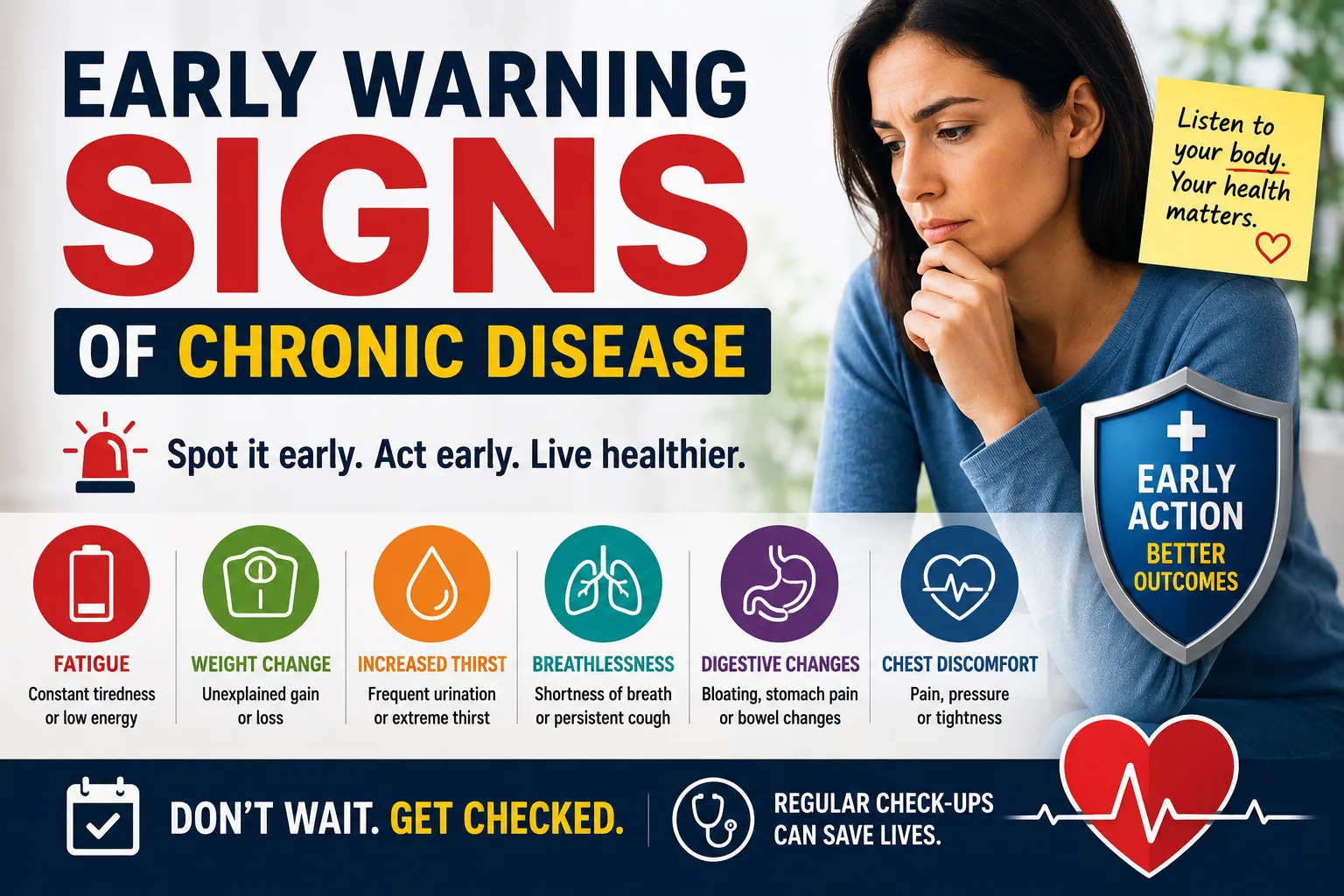

Early Warning Signs of Chronic Disease
Chronic diseases often develop gradually, and one of the most difficult things about them is that the earliest changes may be easy to overlook.
Some people notice persistent symptoms that gradually become part of everyday life. Others have few or no obvious symptoms until a condition has progressed. Chronic kidney disease, for example, can develop slowly with few symptoms, which is why testing can be important for people at higher risk.
Chronic diseases include conditions such as heart disease, stroke, cancer, diabetes, and chronic respiratory diseases. Together, these noncommunicable diseases account for a substantial share of deaths worldwide.
Recognizing potential warning signs does not mean diagnosing yourself. Instead, it means understanding when a persistent change in your health deserves attention.
Understanding these warning signs is one part of healthy living and what it includes, alongside prevention, healthy habits, and appropriate healthcare.
What Are Chronic Diseases?
Chronic diseases are generally long-lasting conditions that develop through a combination of genetic, physiological, environmental, and behavioral factors.
Major categories include:
-
Cardiovascular diseases
-
Diabetes
-
Cancer
-
Chronic respiratory diseases
-
Chronic kidney disease
-
Some neurological conditions
-
Certain long-term liver and digestive disorders
Many chronic conditions can be managed effectively, particularly when they are identified early.
Detection, screening, treatment, and appropriate long-term management are important parts of addressing noncommunicable diseases.
Why Early Warning Signs Matter
Early symptoms can sometimes provide an opportunity to seek medical advice before a condition becomes more difficult to manage.
However, symptoms alone are not always reliable indicators of disease.
A person can feel healthy while having:
-
High blood pressure
-
Elevated blood glucose
-
High cholesterol
-
Early kidney disease
-
Certain cancers
-
Other conditions that may initially produce few noticeable symptoms
This is why routine healthcare and appropriate screening can be just as important as paying attention to how you feel.
1. Unexplained or Persistent Fatigue
Everyone feels tired occasionally.
Fatigue becomes more worth discussing with a healthcare professional when it is:
-
Persistent
-
Unusual for you
-
Interfering with daily activities
-
Getting progressively worse
-
Occurring alongside other unexplained symptoms
Persistent fatigue can have many possible causes, including sleep problems, nutritional deficiencies, infections, medication effects, mental health conditions, anemia, hormonal disorders, and chronic diseases.
Fatigue by itself does not identify a particular illness.
The important point is to notice a significant change from your normal energy level and consider whether it persists.
2. Unexplained Changes in Weight
Unexpected weight loss or weight gain can sometimes signal an underlying health issue.
Unintentional weight changes may be associated with a wide range of factors, including:
-
Changes in appetite
-
Hormonal conditions
-
Digestive problems
-
Medication effects
-
Metabolic disorders
-
Chronic infections
-
Other medical conditions
Weight naturally fluctuates, so a small change is not automatically concerning.
However, substantial or persistent unexplained changes deserve medical attention, particularly when accompanied by other symptoms.
3. Changes in Blood Pressure
High blood pressure is one of the most important chronic disease risk factors, but it often produces no obvious symptoms.
That makes blood-pressure measurement particularly valuable.
Rather than waiting for symptoms, adults should discuss appropriate blood-pressure monitoring with their healthcare provider.
A reading that is consistently elevated should be evaluated rather than dismissed simply because the person feels fine.
Understanding major risk factors for disease can also help put high blood pressure and other silent risk factors into a broader context.
4. Increased Thirst and Frequent Urination
Persistent excessive thirst or unusually frequent urination can have several causes.
One possibility is elevated blood glucose.
Diabetes can develop gradually, and some people may have relatively mild symptoms at first.
Other symptoms that may occur with diabetes can include:
-
Increased hunger
-
Unexplained weight loss
-
Fatigue
-
Blurred vision
-
Slow-healing wounds
-
Recurrent infections
These symptoms are not specific to diabetes, so testing is necessary to determine the cause.
5. Persistent Changes in Breathing
Shortness of breath should not automatically be attributed to getting older or being out of shape.
Persistent breathing difficulties can occur with conditions affecting the lungs, heart, blood, or other body systems.
Warning signs may include:
-
Breathlessness during activities that previously felt easy
-
Persistent cough
-
Wheezing
-
Reduced exercise tolerance
-
Unexplained chest discomfort
-
Breathing difficulties that are becoming more frequent
Chronic respiratory diseases are among the major groups of noncommunicable diseases.
New or worsening breathing problems should be assessed by a healthcare professional.
6. A Persistent or Changing Cough
A cough commonly occurs with temporary respiratory infections.
A cough that persists, repeatedly returns, or changes significantly deserves attention, particularly when it occurs alongside:
-
Shortness of breath
-
Chest pain
-
Unexplained weight loss
-
Coughing up blood
-
Persistent fatigue
-
Recurrent respiratory problems
There are many possible causes, including asthma, chronic respiratory disease, allergies, reflux, medication effects, infections, and other conditions.
The duration and accompanying symptoms help determine whether further evaluation is appropriate.
7. Changes in Bowel Habits
Persistent changes in bowel habits can have many explanations.
Changes may include:
-
Ongoing constipation
-
Persistent diarrhea
-
Significant changes in stool appearance
-
New changes in bowel frequency
-
Recurrent abdominal discomfort
Diet, medications, infections, stress, and digestive disorders can all affect bowel habits.
However, persistent or unexplained changes should be discussed with a healthcare professional, particularly when accompanied by bleeding, significant pain, unexplained weight loss, or other concerning symptoms.
8. Persistent Digestive Problems
Recurring abdominal pain, prolonged bloating, unexplained nausea, persistent indigestion, or continuing changes in appetite can have numerous causes.
Some are relatively minor, while others may require medical evaluation.
The key distinction is between an occasional digestive problem and a persistent change that does not resolve or repeatedly interferes with daily life.
Keeping track of when symptoms occur, what foods or medications are involved, and whether other symptoms appear can provide useful information during a medical consultation.
9. Swelling in the Legs or Feet
Unexplained swelling, particularly when persistent, can have several causes.
Fluid retention may occur because of:
-
Certain medications
-
Kidney problems
-
Heart-related conditions
-
Liver disease
-
Circulatory problems
-
Prolonged inactivity
-
Other medical conditions
Sudden swelling, especially when it affects one leg and occurs with pain or breathing difficulties, can require urgent medical assessment.
The cause matters more than the swelling itself, so persistent swelling should not simply be treated as a normal consequence of aging.
10. Changes in Urination
Changes in urination can sometimes provide clues about health.
These may include:
-
Urinating much more frequently
-
Difficulty urinating
-
Pain during urination
-
Blood in the urine
-
Significant changes in urine volume
-
Repeated nighttime urination
Urinary symptoms can result from infections, prostate conditions, diabetes, kidney disease, medications, or other causes.
Chronic kidney disease deserves particular attention because it can develop with few symptoms. Blood and urine tests can help identify kidney disease early in people at risk.
11. Persistent Skin Changes
The skin can sometimes reflect changes occurring elsewhere in the body.
Persistent changes such as:
-
A sore that does not heal
-
A new or changing mole
-
Persistent unexplained itching
-
Unusual discoloration
-
Recurrent unexplained rashes
-
Changes in the texture of the skin
may warrant medical assessment.
Not every skin change is a sign of chronic disease. Many have harmless explanations.
The important consideration is whether a change is persistent, unusual, rapidly changing, or accompanied by other symptoms.
12. Changes in Vision
Vision can naturally change with age, but sudden or persistent changes should not automatically be dismissed.
Potential warning signs include:
-
Increasingly blurred vision
-
Difficulty seeing at night
-
New visual disturbances
-
Loss of part of the visual field
-
Persistent eye pain
-
Recurrent visual changes
Some chronic conditions, including diabetes and cardiovascular disorders, can affect the eyes.
Sudden loss of vision or a sudden major change in vision requires urgent medical attention.
13. Persistent Headaches
Headaches are extremely common and usually have relatively benign causes.
However, a new pattern of frequent or severe headaches may deserve medical evaluation.
Pay attention to:
-
Headaches that are becoming more frequent
-
Headaches that are increasingly severe
-
Headaches accompanied by neurological symptoms
-
Headaches that interfere significantly with daily activities
-
A major change from your usual headache pattern
A healthcare professional can help determine whether further investigation is appropriate.
14. Persistent Pain
Pain that does not resolve as expected can be an important reason to seek medical advice.
Depending on its location and characteristics, persistent pain may involve the:
-
Chest
-
Abdomen
-
Back
-
Joints
-
Muscles
-
Pelvis
-
Head
Chronic pain has many possible causes and does not automatically indicate a serious disease.
However, repeatedly masking unexplained pain without investigating its underlying cause can delay appropriate care.
15. Changes in Exercise Tolerance
One of the most useful warning signs can be a change in what your body normally handles comfortably.
For example, someone who previously walked several kilometers without difficulty may notice that ordinary activity now causes unusual:
-
Breathlessness
-
Fatigue
-
Weakness
-
Dizziness
-
Chest discomfort
-
Rapid heartbeat
A gradual decline in physical capacity can have many explanations, including reduced activity, poor sleep, anemia, medication effects, heart or lung problems, and other conditions.
A noticeable unexplained change is worth discussing with a healthcare professional.
16. Slow-Healing Wounds
A wound that takes unusually long to heal can sometimes indicate an underlying problem.
Diabetes, poor circulation, infection, and other health conditions can interfere with normal wound healing.
People with diabetes in particular should pay close attention to foot and skin health and follow their healthcare provider’s recommendations for monitoring.
A wound that becomes increasingly painful, swollen, red, warm, or produces discharge may require prompt medical attention.
17. Recurrent Infections
Repeated infections may sometimes warrant further investigation.
The significance depends on:
-
The type of infection
-
How frequently it occurs
-
How severe it is
-
How long it lasts
-
The person’s age
-
Existing medical conditions
-
Medications that affect the immune system
Recurrent infections do not automatically mean that someone has a chronic disease, but a recurring pattern can be useful information for a healthcare professional.
18. Persistent Sleep Problems
Poor sleep is common, but persistent sleep difficulties can affect overall health and may sometimes occur alongside chronic conditions.
Potential concerns include:
-
Long-term insomnia
-
Loud habitual snoring
-
Repeated nighttime awakening
-
Excessive daytime sleepiness
-
Waking up gasping or choking
-
Persistent difficulty functioning during the day
Sleep problems can have many causes, including stress, medications, sleep disorders, mental health conditions, and physical illness.
Persistent sleep difficulties deserve attention rather than being accepted indefinitely as normal.
Some Chronic Diseases Have No Early Warning Signs
This is one of the most important facts to understand.
Waiting for symptoms is not an effective strategy for every chronic disease.
Conditions such as high blood pressure and some forms of early kidney disease can exist without obvious symptoms. Detection and screening are important components of preventing and managing chronic disease.
This is why routine healthcare visits and risk-appropriate screening can matter even when someone feels completely healthy.
For more information on how screening fits into prevention, see essential health screenings for men and women.
Know Your Personal Risk Factors
Risk is not the same for everyone.
Factors that can influence chronic disease risk include:
-
Age
-
Family history
-
Tobacco exposure
-
Physical inactivity
-
Diet
-
Alcohol use
-
Body weight
-
Blood pressure
-
Blood glucose
-
Cholesterol
-
Environmental exposures
-
Existing medical conditions
Knowing your risk factors can help you and your healthcare provider determine which preventive measures and screening approaches are appropriate.
Prevention Starts Before Symptoms Appear
Prevention is not simply about reacting to warning signs.
Many chronic disease risks can be reduced through long-term health habits and appropriate medical care.
Important areas include:
Stay Physically Active
Regular physical activity is associated with broad health benefits and is an important part of chronic disease prevention.
Eat a Balanced Diet
A healthy dietary pattern can help manage several chronic disease risk factors, including weight, blood pressure, blood glucose, and cholesterol.
Avoid Tobacco
Not using tobacco or quitting tobacco use is one of the most important steps people can take to reduce chronic disease risk.
Limit Harmful Alcohol Use
Excessive alcohol consumption can contribute to multiple health problems.
Monitor Important Health Measures
Depending on age and individual risk, healthcare professionals may recommend monitoring blood pressure, cholesterol, blood glucose, or other measures.
Raised blood pressure, high blood glucose, high cholesterol, and overweight or obesity are important metabolic risk factors for noncommunicable disease.
Screening Is Different From Diagnosis
Screening looks for disease or risk in people who may not have noticeable symptoms.
A diagnostic test, by contrast, is generally used when there are symptoms, signs, or other reasons to investigate a particular condition.
Not everyone needs every screening test.
The appropriate screening schedule depends on factors such as age, sex, family history, previous results, and individual risk.
That is why people should discuss screening with qualified healthcare professionals rather than ordering every available test.
When a Symptom Needs Urgent Attention
Some symptoms should not wait for a routine appointment.
Seek emergency medical care for symptoms such as:
-
Severe or persistent chest pressure
-
Sudden difficulty breathing
-
Sudden weakness or numbness, especially on one side
-
Sudden difficulty speaking or understanding speech
-
Sudden loss of vision
-
Fainting or severe unexplained confusion
-
Severe allergic reactions
-
Other rapidly developing symptoms that feel life-threatening
These symptoms can have several possible causes, including medical emergencies unrelated to chronic disease.
When in doubt about a potentially serious or rapidly worsening symptom, seek urgent professional medical advice.
Keep a Record of Persistent Changes
One practical way to prepare for a medical appointment is to keep track of changes in your health.
Record:
-
When the symptom started
-
How frequently it occurs
-
What makes it better or worse
-
Whether it is getting more severe
-
Other symptoms occurring at the same time
-
Relevant medications or supplements
-
Recent changes in diet, activity, sleep, or weight
A simple record can make it easier to describe a pattern that might otherwise be difficult to remember.
Don’t Diagnose Yourself From a Symptom List
Many chronic disease warning signs are nonspecific.
Fatigue, headaches, weight changes, digestive problems, or poor sleep can have dozens of possible causes.
Reading about symptoms online can help you recognize when to seek care, but it cannot establish a diagnosis.
A qualified healthcare professional can consider the complete picture and determine whether examination, laboratory testing, imaging, or other evaluation is appropriate.
Early Attention Can Make a Difference
Early detection is an important part of chronic disease management.
Primary healthcare approaches can strengthen early detection and timely treatment, potentially reducing the need for more intensive and expensive care later.
This does not mean every disease can be prevented or cured by finding it early.
It means that identifying risk or disease at an appropriate stage can give healthcare professionals more opportunities to manage the condition effectively.
Pay Attention Without Living in Fear
Recognizing possible warning signs of chronic disease is about awareness, not anxiety.
A persistent symptom does not automatically mean something serious is wrong. At the same time, a symptom that is unusual for you, keeps returning, or progressively worsens should not simply be ignored.
The most effective approach combines awareness of your own health, appropriate preventive care, knowledge of personal risk factors, and timely conversations with healthcare professionals.
Many chronic diseases are influenced by modifiable risk factors, and prevention, early detection, screening, and appropriate treatment are key components of reducing their impact.
Your body does not always provide an obvious warning when something is wrong. Sometimes the earliest warning is simply a change from what is normal for you. Paying attention to that change—and knowing when to ask for professional advice—can be an important part of protecting your long-term health.
Continue Reading
Similar Posts

Broccoli Sprouts Linked to Multistate Salmonella Outbreak: What Consumers Need to Know
For consumers, the most important step is to determine whether recalled broccoli sprouts are in the refrigerator, freezer, or kitchen and to avoid eating, serving, or selling them.
Read article
How Antibodies Help the Immune System Fight Infection
Understanding how antibodies work provides a clearer picture of why people develop immunity after certain infections or vaccinations and why the immune system can respond more effectively when it encounters a familiar pathogen again.
Read article
How Botanical Extracts Differ From Whole Herbs
Understanding how extracts differ from whole herbs can make it easier to interpret supplement labels, compare products, and evaluate claims about herbal ingredients.
Read article

Join 10,000+ Readers Building Healthier Habits
Get actionable wellness tips every week plus our newest articles delivered straight to your inbox.